Announcements
Ask a roomful of engineering students to name career directions and you’ll hear software, core, semiconductor, maybe management. You will almost never hear ‘sustainability engineering,’ and that absence is exactly why it deserves attention. It is one of the most misunderstood technical careers in India — dismissed as soft, vague, or activist — when in reality it is becoming one of the more rigorous and well-funded directions an engineer can take.
Sustainability engineering is not environmentalism with a degree attached. It is the hard technical work of making industrial systems use less energy, produce less waste, emit less, and run more efficiently — and crucially, doing so in ways that make economic sense rather than just moral sense. It sits at the intersection of engineering and constraint: how do you run a factory, a power system, a process, a building, to a real environmental target without breaking the economics? That is an optimization problem, and a deeply technical one.
What a Sustainability Engineer Actually Does
Energy systems and efficiency: designing, auditing, and optimizing how industrial operations use energy, integrating renewables, cutting consumption without cutting output. This is squarely an engineering discipline, drawing on thermodynamics, electrical systems, and process knowledge.
Process and resource efficiency: redesigning manufacturing and industrial processes to use fewer raw materials, recover and reuse waste, and close loops. The circular-economy idea, translated into actual plant engineering.
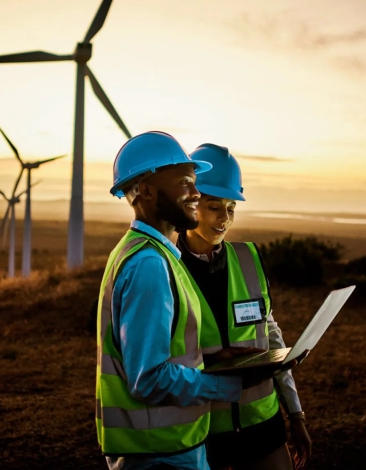
Emissions and environmental performance: measuring, modeling, and reducing the environmental footprint of operations, increasingly under real regulatory and reporting pressure. This is becoming a board-level concern for large companies, which means it is becoming a well-resourced engineering function.
Sustainable design: building environmental performance into products and systems from the start, rather than bolting it on, across everything from buildings to manufacturing to mobility.
Why the Demand Is Durable
The first driver is regulation and reporting. Large companies face mounting requirements to measure and disclose their environmental performance, and increasingly to improve it. Disclosure that used to be voluntary is becoming expected or mandatory, and you cannot report or improve what you cannot engineer. That creates durable demand for engineers who can do the technical work behind the numbers.
The second is economics. Energy and resource efficiency are often directly profitable. A factory that uses less energy and wastes less material costs less to run. As energy costs and resource constraints bite, the business case for sustainability engineering strengthens on its own, independent of any regulation.
There is a third, India-specific reason: the country’s industrial growth ambitions and its environmental constraints are on a collision course, and engineering the reconciliation is enormous, long-term work. A nation that intends to manufacture far more, while managing its energy, water, and emissions, needs a large supply of engineers who can make industry both bigger and cleaner at once. That is not a niche; it is a structural national need.
A Program Built for This Track
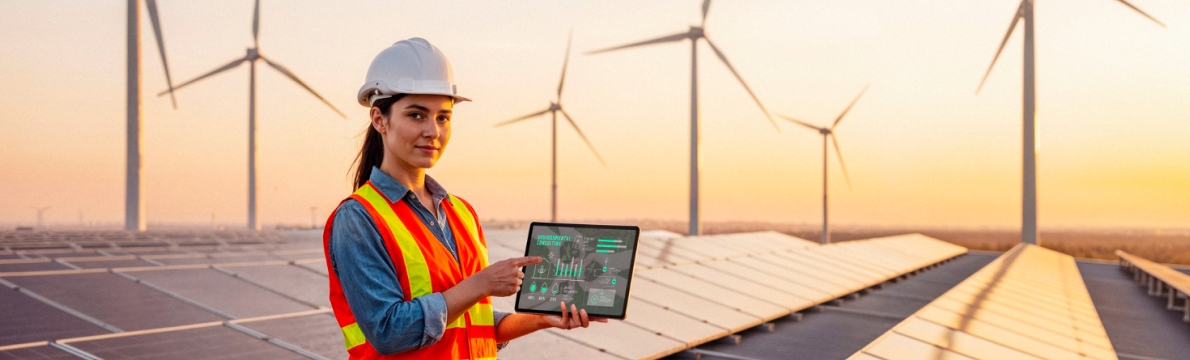
NAMTECH’s Master Program in Sustainability Engineering and Management treats this discipline as a core engineering function — the optimization problem it actually is — rather than a policy elective or a management add-on. The two-year, full-time, residential program at the IIT Gandhinagar Research Park — with a 150-acre permanent campus developing in Godhavi, Ahmedabad — integrates energy systems, process efficiency, emissions management, and sustainable manufacturing operations with the cross-functional judgment a modern plant requires.
NAMTECH is founded by ArcelorMittal Nippon Steel India, one of the world’s largest steel producers, which gives the sustainability program an unusual grounding: the problems students work on are drawn from real industrial operations at significant scale, not from theoretical case studies. Industry partners include KPMG India, a leading voice in sustainable business practice, which co-designs and co-delivers the program, ensuring the curriculum reflects both the rigorous demands of corporate sustainability and real-world advisory experience. Admission does not require GATE or CAT as a hard gate; freshers with a B.E./B.Tech. and 60% marks are eligible.
The Opportunity
Because sustainability engineering is under-chosen relative to its growth, the competition for entry is thinner than in the headline directions. An engineer who builds real competence in energy systems, process efficiency, or environmental performance enters a field that needs them and doesn’t yet have enough of them. The career nobody told you about is, for the right engineer, exactly the kind you want: important, growing, and quietly short of people.

01 July, 2026