Announcements
Every engineering student gets told the same thing: sustainability is the future. What nobody tells you is what that actually looks like as a career — what you’d be doing from 10am -6pm, who’d be paying you, and whether your engineering degree qualifies you for any of it.
Most career guides answer this with the same handful of roles. Solar engineer, EV technician, ESG analyst, Sustainability consultant, Environmental consultant, Green building specialist. These are real jobs and also the most crowded entry points in a market where demand for green talent is growing 15–20% annually but qualified supply is running at only 6–8% (NLB Services, 2025).
The more interesting question is what’s being created right now that most people haven’t mapped yet. Here’s what that looks like — and why, if you’re an engineering graduate, this market is more open to you than you think.
Why these jobs exist now — and why they’re not going away
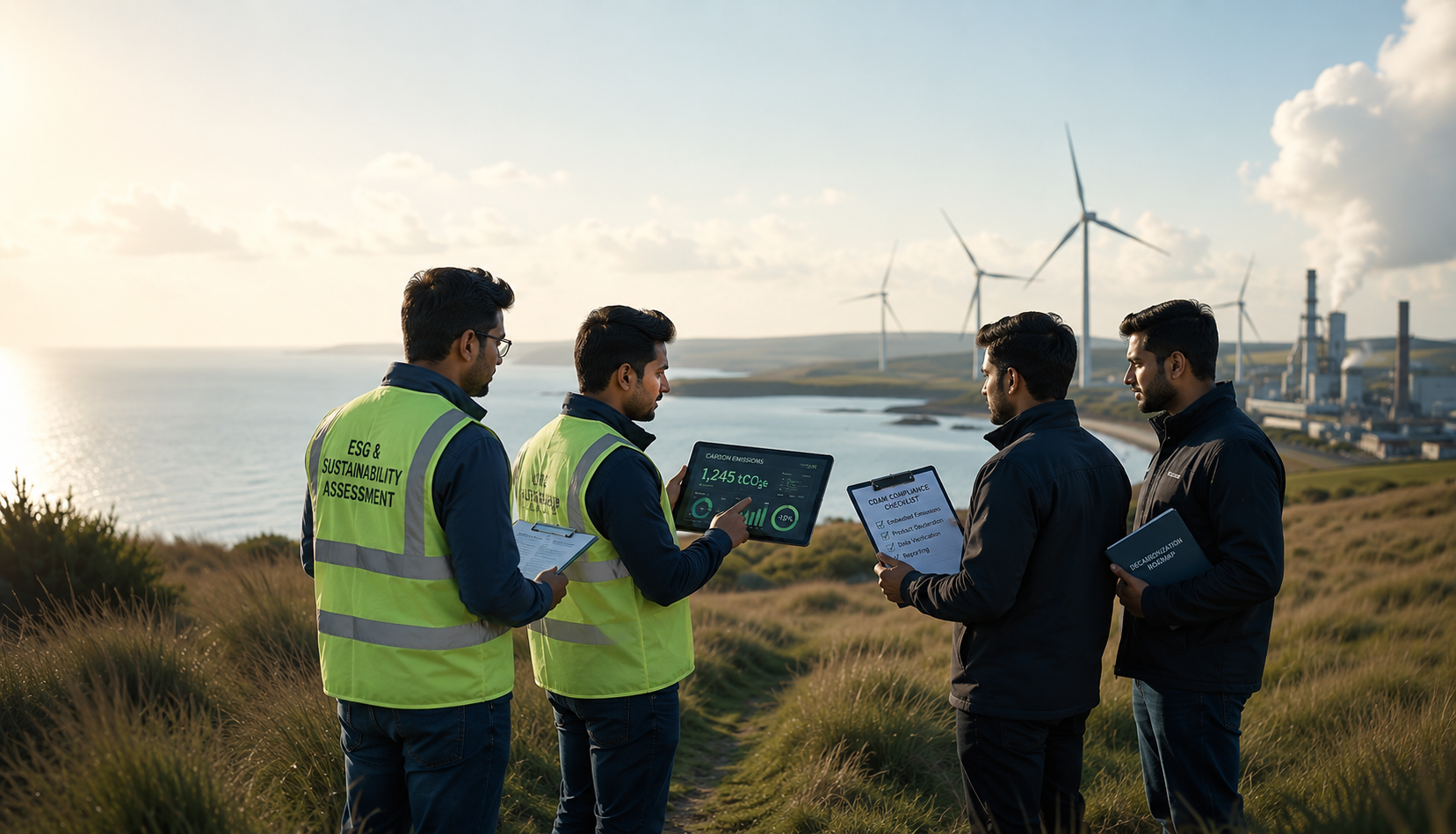
In 2026, three separate authorities released binding mandates that directly create demand for sustainability-trained engineers. Not guidelines. Not targets. Mandates — with named deadlines, named entities, and financial consequences for non-compliance.
SEBI now requires India’s top 1,000 listed companies to get 49 ESG metrics independently verified by a third party. Not just reported — verified. Shop-floor data: emissions, energy use, water consumption, waste, pay equity. That rollout covers the top 500 companies from FY 2025-26 and all top 1,000 by FY 2026-27.
The European Union activated CBAM on January 1, 2026. Every Indian shipment of steel, aluminum, cement, and fertilizer to Europe now attracts a carbon cost — calculated on the embedded emissions in the product. India is expected to absorb 18% of total global CBAM liabilities, nearly double its share of EU import value (Fastmarkets, March 2026).
The Government of India issued binding GHG intensity targets to 282 industrial entities under the Carbon Credit Trading Scheme in October 2025. India’s carbon market is now operational — and the engineers who can generate, verify, and trade credits within it don’t yet exist at scale.
Three mandates. All engineering-dependent. All hiring.
This isn’t companies choosing to be responsible. It’s compliance with legal deadlines. The roles these mandates create don’t disappear when sustainability falls out of a news cycle — they grow as the deadlines tighten and the penalties become real.
8 sustainability jobs in India hiring engineers right now

1. BRSR Core Assurance Engineer
Every major listed company in India now needs someone to verify that their reported emissions, energy use, and water figures actually match what’s happening on the plant floor. That someone needs to know what a distributed control system is. It’s essentially an audit function — except instead of checking financial statements, you’re tracing whether the numbers coming out of a factory are real.
Who’s hiring: KPMG India, EY, PwC, Deloitte, Sattva Consulting.
Salary: ₹6–9 LPA entry; ₹15–25 LPA senior (Glassdoor India, May 2026).
2. CBAM Decarbonization Specialist
Indian steel and aluminum exporters now pay a carbon cost on every shipment to Europe. The GTRI estimated exporters unable to demonstrate verified low-carbon production may need to cut prices by 15–22% to stay competitive. Your job is to help them prove their footprint is lower — or actually make it lower. That means understanding the manufacturing process well enough to find where emissions come from, and building a roadmap to reduce them. This role barely has a name yet. That’s the opportunity.
Who’s hiring: KPMG, EY, Deloitte; in-house at JSW Steel, Tata Steel, Hindalco, Vedanta.
Salary: ₹8–20 LPA mid level (EY/Deloitte JDs, Indeed India 2026).
3. Carbon Credit Analyst
When a factory installs more efficient equipment or switches to cleaner fuel, that reduction in emissions can become a tradeable credit under India’s new carbon market. You verify that the reduction actually happened, calculate what it’s worth, and make sure it holds up to scrutiny. Part engineering, part GHG accounting, part regulatory navigation. The talent pool for it is almost nonexistent.
Who’s hiring: EKI Energy Services, Coral Future, KPMG, EY, TERI, CEEW.
Salary: ₹6–15 LPA entry to mid level (Dheya Insights, 2026).
4. Industrial Circularity Engineer
India recycled 20.7 million tonnes of plastic packaging waste since EPR regulations kicked in — and the systems to handle e-waste and battery scrap are still being built. This is about designing the infrastructure that recovers value from products once they’re done: reverse logistics, closed-loop manufacturing, material recovery systems. Most companies are only beginning to staff for this.
Who’s hiring: Tata Steel, Hindustan Unilever, Titan, Maruti Suzuki.
Salary: ₹5–18 LPA depending on seniority (CEEW Green Economy Report, 2024).
5. Green Hydrogen Process Engineer
India’s National Green Hydrogen Mission targets 5 MMT of annual production by 2030 and is expected to create over 6 lakh jobs. The engineering challenge — designing and scaling electrolyzer systems — is real and largely unsolved at scale. This is one of the few roles actively recruiting postgraduate engineers early, because experienced green hydrogen engineers simply don’t exist in India in any meaningful number. Being early here is a genuine structural advantage.
Who’s hiring: Reliance Industries, Adani New Industries, L&T, ACME Cleantech, ReNew Power, NTPC. Salary: ₹6–18 LPA entry to mid level (NLB Services, 2025).
6. Climate Risk Analyst
Banks are building internal teams to assess how climate change affects their loan books — which assets are exposed to flooding or heat stress, which industries face stranded-asset risk as carbon prices rise. This function is being built inside Indian operations of global banks right now, driven by RBI climate disclosure guidance and parent-bank regulatory requirements. SBI, Standard Chartered Bengaluru, MSCI Mumbai, and JPMorgan Bengaluru are all actively hiring for it — and almost no Indian career guide covers it.
Who’s hiring: Standard Chartered (Bengaluru), UBS (Pune), MSCI (Mumbai), JPMorgan (Bengaluru), S&P Global Sustainable1.
Salary: ₹4–9 LPA entry; ₹12–22 LPA mid level (Mentoria, 2026).
7. Embodied Carbon / LCA Engineer
Life Cycle Assessment calculates the total carbon footprint of a product from raw material to disposal. It’s now a CBAM compliance requirement, a procurement standard for large infrastructure clients, and a reporting need for sustainability-focused manufacturers. India’s green building market covers 15.9 billion sq ft across 19,330+ registered projects. The gap is engineers who combine process knowledge with LCA tools like SimaPro or One Click LCA — a rare combination in India right now.
Who’s hiring: WSP India, Mott MacDonald, AECOM, JLL Sustainability, CBRE GWS.
Salary: ₹4–7 LPA fresher; ₹10–20+ LPA senior (Indeed India JDs, 2025–26).
8. Sustainability Data Engineer
A company with 200 plants can’t compile its SEBI BRSR filing manually. Someone needs to build the data pipelines that pull ESG metrics from across the organization, validate them, and make them auditable for XBRL submission. It’s a data engineering problem with a compliance layer on top — not yet a standard job title in India, but actively being built into roles at MSCI, JPMorgan, TCS, and S&P Global right now.
Who’s hiring: MSCI, JPMorgan, S&P Global, TCS, Persistent Systems.
Salary: ₹10–25 LPA mid to senior level (Glassdoor India; LinkedIn JDs, 2026).
What these roles actually pay
| Role | Entry Level | Mid Level | Source |
| BRSR Core Assurance Engineer | ₹6–9 LPA | ₹15–25 LPA | Glassdoor India, May 2026 |
| CBAM Decarbonization Specialist | ₹8–12 LPA | ₹15–20 LPA | EY/Deloitte JDs, 2026 |
| Carbon Credit Analyst | ₹6–8 LPA | ₹10–15 LPA | Dheya Insights, 2026 |
| Industrial Circularity Engineer | ₹5–8 LPA | ₹12–18 LPA | CEEW Report, 2024 |
| Green Hydrogen Process Engineer | ₹6–10 LPA | ₹14–18 LPA | NLB Services, 2025 |
| Climate Risk Analyst | ₹4–9 LPA | ₹12–22 LPA | Mentoria, 2026 |
| Embodied Carbon / LCA Engineer | ₹4–7 LPA | ₹10–20 LPA | Indeed India JDs, 2026 |
| Sustainability Data Engineer | ₹8–12 LPA | ₹18–25 LPA | Glassdoor India, 2026 |
| ESG Analyst (for comparison) | ₹4.7–6.6 LPA | ₹9–12 LPA | Glassdoor India, 75 reports, May 2026 |
Entry-level numbers are honest — most of these roles start between ₹4–9 LPA. But the real story is what happens two to three years in.
Mid-level green roles are expected to see 18–22% salary increases in 2026 — because there aren’t enough qualified people to fill them (NLB Services, 2025).
When supply is this thin, being one of the qualified people matters more than it does in crowded markets. That’s the actual case for these careers.
Do you need a postgraduate degree to get into these roles?
For most of the roles above — honestly, yes. Not because a postgraduate degree is a checkbox, but because of what these roles actually require: engineering knowledge, financial literacy, and regulatory fluency operating at the same time, in the same person.
A standard B.Tech gives you the engineering foundation. A standard MBA in sustainability gives you the business lens. A standard M.Tech in environmental engineering gives you some of the technical depth. None of them gives you all three — which is exactly what a BRSR Core assurance engagement, a CBAM decarbonization project, or a climate risk modeling function actually demands.
The roles where postgraduate training is non-negotiable are the ones with the highest earning potential and the clearest regulatory demand. KPMG and EY sustainability practices list a postgraduate qualification as preferred or required for these engagements. Standard Chartered and MSCI add GARP’s Sustainability and Climate Risk (SCR) credential or the CFA Institute’s Certificate in ESG Investing as standard requirements.
What this market needs is a postgraduate program that integrates engineering, management, and sustainability policy from the ground up — and builds it around the specific regulatory and industrial problems these employers are actually trying to solve.
Where NAMTECH’s Master Program in Sustainability Engineering and Management fits

Most sustainability programs teach you about the field. NAMTECH’s Master Program in Sustainability Engineering and Management is built to make you operational inside it — inside real industrial systems, live regulatory frameworks, and the organizations hiring for the roles above.
The faculty are the clearest signal of what the program is actually built for. The curriculum is co-designed with KPMG India and senior sustainability leaders from global industry and academia. When the people leading these functions help design what you learn, the gap between your training and what the market actually needs closes considerably.
The six-month industry internship in the final semester solves a specific problem most postgraduate students underestimate: most green job postings ask for two to three years of experience in a field that barely existed three years ago. The internship is how you build that work record before you graduate — the difference between being screened out and getting the interview.
The first sustainability cohort begins August 2026. Admissions are open.
The green economy isn’t a future state. In 2026, India it’s a compliance obligation, an export competitiveness problem, and a capital allocation decision happening simultaneously across every major sector. The engineers who understand how to operate at that intersection — technically rigorous, regulatory-aware, and commercially literate — are the ones this market is actively looking for and can’t find enough of. That gap is the opportunity.
Frequently asked questions
Is sustainability a good postgraduate career option for engineers?
Yes — and the regulatory case in 2026 is stronger than it has ever been. SEBI BRSR Core, EU CBAM, and India’s CCTS are all active and creating structured demand for engineers with sustainability expertise. NLB Services projects India’s green sector will generate 7.29 million jobs by FY28, with demand growing 15–20% annually against a talent supply at only 6–8%.
What is BRSR Core and why is it creating jobs?
SEBI’s BRSR Core requires India’s top listed companies to get third-party reasonable assurance on 49 ESG metrics — emissions, energy, water, waste. The requirement covers the top 500 companies from FY 2025-26 and all top 1,000 by FY 2026-27. Verifying these metrics requires engineers who can trace operational data to source records — creating demand for BRSR assurance engineers at Big Four firms and SEBI-accredited providers.
MBA in sustainability vs. master’s in sustainability engineering — what’s the difference?
An MBA in sustainability approaches the field from a business strategy and CSR lens. A master’s in sustainability engineering builds from an engineering foundation and adds management, policy, and technical sustainability systems depth. The roles created by BRSR Core, CBAM, and CCTS need the latter — engineering credibility isn’t optional for these functions.

12 June, 2026