Announcements
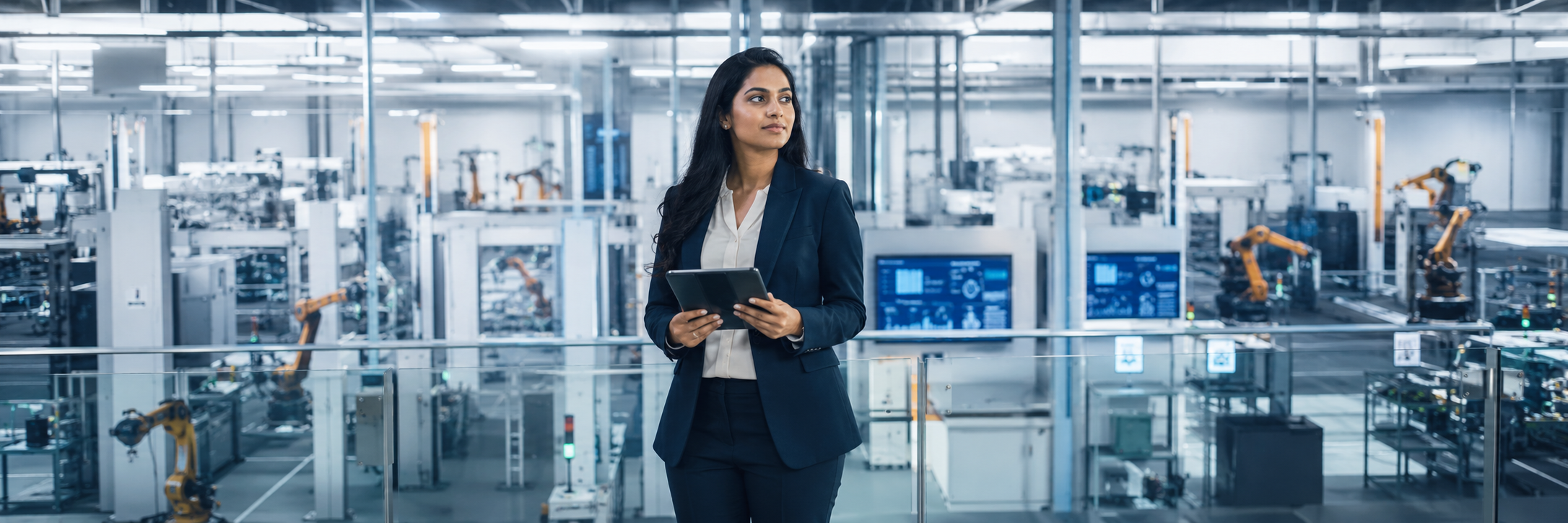
The word “factory” still conjures a specific image: noise, grease, rows of workers doing repetitive tasks under fluorescent light. That image is now roughly two industrial revolutions out of date. The factory being built in India today is closer to a data centre with a physical output — sensor-dense, software-defined, and run by a small number of people who understand systems rather than a large number who operate machines.
Understanding what that factory looks like, and who it hires, is one of the more consequential things an engineering graduate can figure out right now.
From steel and labor to software and data
The technical name for this shift is smart manufacturing, or Industry 4.0. Stripped of jargon, it means factories where machines are connected, generate continuous data about their own performance, and increasingly make decisions — adjusting themselves, flagging failures before they happen, rerouting work — without a human pressing a button.
The economics are pulling hard in this direction. Mordor Intelligence reports that manufacturers moving from pilot projects to full-scale industrial-IoT rollouts are cutting unplanned downtime by as much as 20%. Growth in the sector is shifting away from hardware and toward software and integration, which tells you where the value — and the jobs — are moving. IMARC Group sizes India’s smart manufacturing market at USD 13.1 billion in 2025, while Grand View Research projects it could approach USD 78 billion by 2033 at a growth rate near 16%. As with all market forecasts the firms differ, but the trajectory is not in dispute.
The policy tailwind is real — and so is the caveat
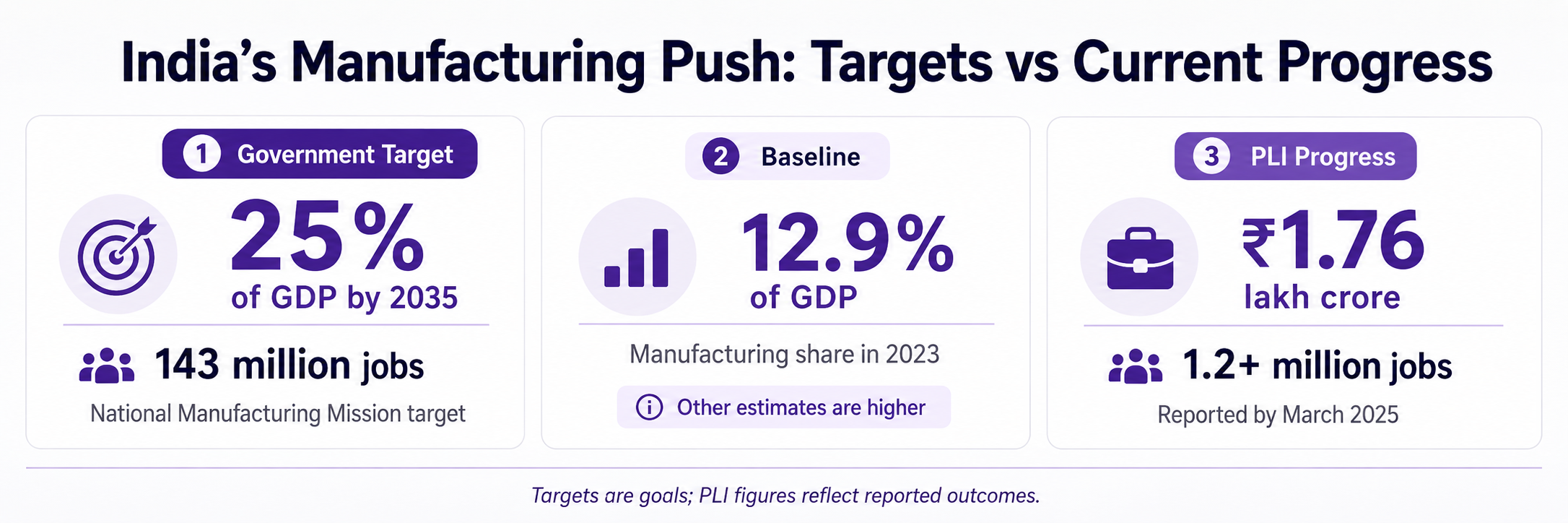
This isn’t happening in a vacuum. India’s National Manufacturing Mission, announced in the 2025–26 Union Budget, sets a target of raising manufacturing’s share of GDP to 25% by 2035 and generating 143 million jobs along the way. It’s important to be precise here: these are government targets, not results, and the baseline itself is debated — the Economic Survey cites manufacturing at 12.9% of GDP in 2023, while other estimates put it closer to 17%.
The Production Linked Incentive scheme, however, has moved from target to measurable outcome. As of March 2025, the government reports the scheme has drawn ₹1.76 lakh crore in actual investment across its approved applications and created more than 1.2 million jobs. That’s real capital committing to Indian factory floors, and capital of that scale reshapes hiring.
So who actually runs this factory?
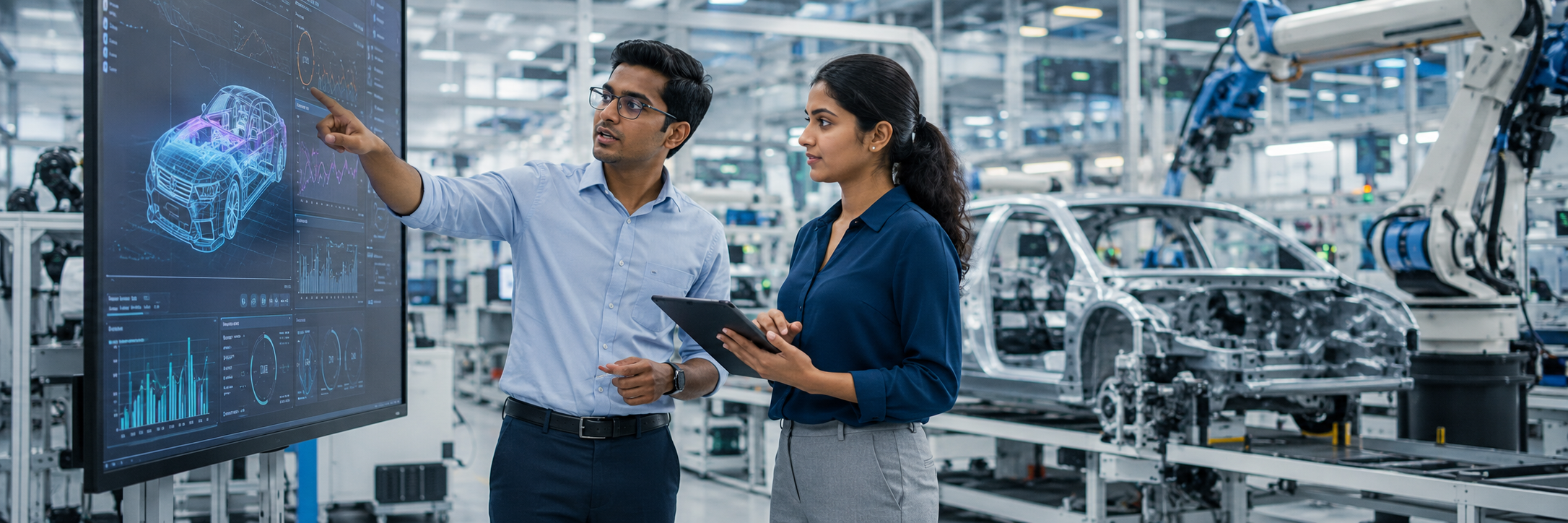
Here is where most career advice gets it wrong. The factory of 2030 does not primarily need more pure coders, and it does not primarily need more traditional mechanical engineers. It needs people who sit at the intersection — who can read the data coming off a production line, understand the physical process generating it, and make a business decision about what to change. Someone who is fluent in the machine and the model and the margin.
The World Economic Forum’s Future of Jobs Report 2025 supports this directly: demand for AI and big-data specialists in India is projected to grow more than 60% by 2030, and roughly 30% of Indian companies say they plan to hire based on skills rather than credentials — a notably higher share than the global average. The factory of 2030 is a skills-based hiring environment, and the scarce skill is the hybrid one.
The engineers gaining the most attention today aren’t specialists confined to a single discipline. They’re professionals who combine technical expertise with an understanding of manufacturing operations, business processes, and decision-making. As factories become more connected and data-driven, organizations increasingly value engineers who can bridge technology and management rather than operate in silos.
This shift is also influencing higher education. A growing number of institutions are introducing techno-managerial programs that blend engineering with industry, operations, and leadership, preparing graduates to solve real manufacturing challenges instead of working within a single functional domain. Hands-on learning through industry projects, smart manufacturing labs, and factory-based capstones is becoming a defining feature of these programs.
The factory of 2030 is unlikely to employ people based solely on whether they come from “core” engineering or IT. It will reward professionals who understand the entire manufacturing ecosystem—from machines and automation to data, software, and business outcomes.

11 August, 2026