Announcements
The world is currently undergoing a rapid transformation which exceeds the ability of most industries to stay relevant with these changes. Businesses must change their operations due to climate concerns, increasing energy needs, and new environmental regulations. Companies are no longer questioning whether to adopt sustainable practices, their immediate focus is on implementation.
They are now working to build the operational capabilities required to achieve sustainability goals at speed. This economic transition has led to the emergence of the green economy as a new job market, where business, technology, policy, and environmental responsibility intersect. This is where an MBA or Master’s in Energy and Sustainability becomes highly relevant. Let’s analyse what this really means.
Understanding the Green Economy
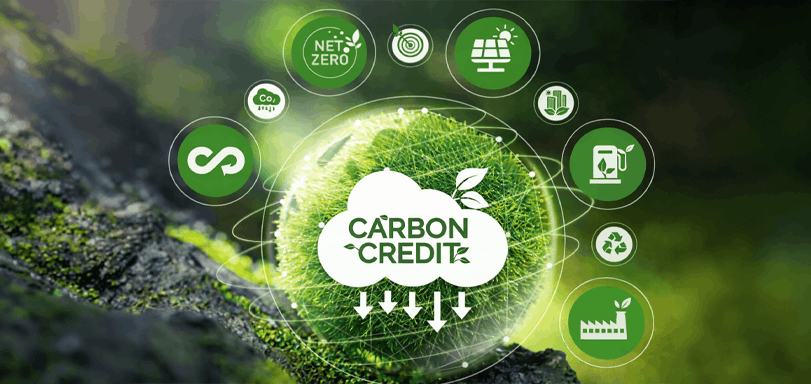
The green economy enables economic growth while protecting the environment, allowing businesses to innovate and generate profits. It includes sectors such as renewable energy, sustainable infrastructure, circular manufacturing, electric mobility, carbon markets, and climate finance.
Governments are allocating billions of dollars toward clean energy transition projects. Corporations are setting net-zero emissions targets. Investors are placing greater importance on ESG performance. As a result, organisations now need professionals who possess both business strategy expertise and sustainability knowledge. This is the gap that specialised MBA or Master’s is designed to fill.
Bridging Business and Sustainability
A standard MBA program provides training in leadership, finance, marketing, and operations. An MBA or Master’s in Energy & Sustainability adds another dimension by demonstrating how organisational decisions impact environmental outcomes and long-term financial systems.
Students learn how to evaluate renewable energy investments, design sustainable supply chains, and build business models that reduce carbon impact. Instead of studying project finance in isolation, you explore how solar farms are funded and how wind energy projects scale across countries. Similarly, operations management shifts its focus toward resource efficiency and low-carbon logistics. The program delivers business education through a new lens.
Learning the Mechanics of the Energy Transition
The global energy system is currently experiencing one of its most significant transformations. Renewable energy sources such as solar, wind, hydrogen, and bioenergy are gradually replacing fossil fuel dependence.
An MBA or Master’s in Energy and Sustainability teaches students how this transition works in practice.
You explore topics like:
- Renewable energy technologies
- Energy markets and regulations
- Carbon pricing and climate policy
- Sustainable infrastructure planning
- Corporate decarbonisation strategies
The goal is to move beyond theory and understand the real economics behind this transition.
Developing Skills Companies Are Actively Hiring For
The green economy isn’t just an environmental movement—it’s a massive employment shift.
Businesses are increasingly hiring professionals who specialise in sustainability, ESG consulting, renewable energy analysis, climate finance, and clean technology strategy. The MBA or Master’s equips students with analytical tools as well as hands-on experience.
Through case studies, industry partnerships, and internships, students gain a clear understanding of how organisations implement sustainability strategies. Employers are looking for professionals who can answer questions like:
- How do we reduce emissions without hurting profitability?
- Which renewable energy investment makes financial sense?
- How do we meet ESG reporting requirements?
- What sustainability strategy strengthens our brand and operations?
These are business problems as much as environmental ones.
Shaping Future Business Leaders
Training business leaders today requires new approaches to solving emerging challenges. Companies now treat sustainability as a core part of their operations. Board members evaluate climate risks, investors track sustainability performance, and consumers choose brands that align with their values.
Future leaders must make decisions that balance growth, risk, regulation, and environmental responsibility.
An MBA or Master’s in Energy and Sustainability prepares professionals to lead organisations through these complexities. It provides a holistic perspective, showing how business success is closely linked to environmental responsibility.
Career Opportunities Across Industries
One of the most significant advantages of this specialisation is its ability to open opportunities across multiple industries.
Graduates often work in sectors such as:
- Renewable energy companies
- Energy consulting firms
- Sustainability divisions within large corporations
- Climate-focused startups
- Government policy and international organisations
- ESG and sustainable finance roles in investment firms
These skills are transferable across industries, as sustainability is becoming a universal priority.
Why Does Timing Matter?
The next ten years will be crucial in shaping how the world addresses climate change and energy security. With increasing investments in climate solutions and clean energy infrastructure, the demand for professionals who understand this transition will continue to rise.
An MBA or Master’s in Energy & Sustainability equips students with the skills needed to thrive in this fast-growing industry and positions them for stronger career opportunities.
The Bigger Picture
The green economy is not a future concept, it already exists. It is shaping how businesses operate, invest, and build competitive advantage.
At the core of this transformation is the need for professionals who understand both complex energy systems and sustainable business practices. An MBA or Master’s in Energy and Sustainability prepares individuals to meet this demand and help organisations achieve their environmental goals.
As economic growth and environmental responsibility become increasingly interconnected, the demand for this expertise will only continue to grow.

30 March, 2026