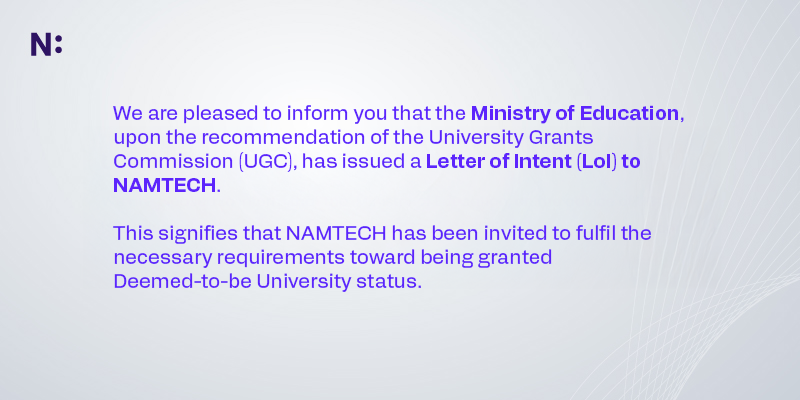
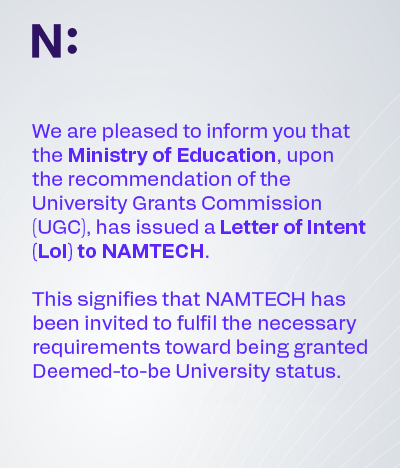
Announcements
 |
| 
Tech-driven industries today need professionals who can understand both technology and business. That is why many institutes are launching techno-managerial and other hybrid program that sit between engineering and management, often combining elements of manufacturing, operations, automation and analytics.
Because these program are relatively new, the usual shortcuts students use — brand, fees, campus — are not enough to judge them. Before enrolling, have a close look at what the program will actually teach you and where it can realistically take you. These questions are a good starting point.
1. What skills will I actually gain by the end of the program?
The most important question is not “Which institute is this?” but “What will I be able to do after two years here?” A serious techno-managerial program should give you a clear mix of skills like understanding systems such as manufacturing lines, automation, quality or supply chains, along with the ability to manage projects, people and processes. If you can’t see this skill mix clearly in the curriculum, the program may not be truly techno-managerial, even if it uses that label.
2. How much hands-on learning does the program offer?
In a technology-oriented management degree, learning cannot stay on slides and in classrooms. Hydraulic lab, Pneumatic lab, pilot lines, simulators and workshops should be part of your regular timetable, not occasional add-ons. This is especially important if the program talks about areas such as robotics, semiconductors, industrial automation or digital manufacturing. Practical exposure is what turns abstract concepts into confidence on the shop floor or in an operations role.
3. What kind of industry projects and internships are built into the curriculum?
Employers hiring for techno-managerial roles look for graduates who have applied ideas in real settings. Structured industry projects, mandatory internships and a capstone linked to a live industry problem are all signals that the program is designed with practice in mind. When you evaluate a program, look for clear descriptions of these components: who the industry partners are, how projects are allocated and how the work is evaluated.
4. Who will be teaching the core courses?
Faculty background is a strong indicator of how grounded your learning will be. A good techno-managerial program usually brings together academics and specialists who have worked in manufacturing, R&D, plant operations, technology development or consulting. When someone who has designed a process, managed a production line or implemented a technology upgrade teaches you a framework, the examples and discussions become much more job-relevant.
5. How closely does the institute work with industry?
Active collaboration with industry is essential for these program. Joint labs with companies, industry advisory boards, guest lectures by practitioners and co-designed courses are all positive signs. These linkages influence not just placements, but also the relevance of classroom discussions, the quality of projects and your exposure to real tools, systems and decision environments.
6. What are alumni doing now?
The techno-managerial program are relatively new, alumni outcomes often tell you more than brochures. It helps to see which sectors graduates are joining – for example, manufacturing, automotive, electronics, consulting, digital operations or tech-enabled services – and what kinds of roles they take up: operations management, project management, manufacturing excellence, supply chain, product and program roles. Career progression in the first few years after graduation is one of the clearest indicators of program quality.
7. How updated and future-oriented is the curriculum?
Technology, manufacturing and operations are all changing quickly under the influence of Industry 4.0, automation, analytics and AI. The curriculum should show clear integration of these themes rather than treating them as optional extras. It is worth asking when the syllabus was last revised and how new topics are introduced. A curriculum that does not keep pace with industry will limit how relevant your learning is by the time you graduate.
8. What is the balance between technical and managerial courses?
Not all techno-managerial program are structured the same way. Some are closer to an engineering degree with a few management subjects; others are more like a management degree with limited technical depth. A well-designed techno-managerial program makes the balance explicit and includes integrative courses that connect the two sides. As a student, you should clearly understand how many credits are technical, how many are managerial and where they intersect.
9. Is the program recognised for further study or credit transfer?
If you are considering higher studies in the future, it is reasonable to ask about academic recognition and credit transfer possibilities, both in India and abroad. Accreditation status, program structure and alignment with broader academic frameworks all matter here. This helps you see whether the degree fits well into the wider ecosystem or is positioned as a very niche offering.
10. What kind of placement and career support exists for techno-managerial roles?
Finally, it is important to understand how the institute supports your transition across industries such as semiconductors, manufacturing and robotics. Generic placement support is useful, but hybrid programs also need guidance that is specific to techno-managerial roles: resume building for operations and tech-linked profiles, preparation for role-specific interviews and introductions to relevant recruiters like Micron, AMNS, Volvo. Strong mentoring and career services can significantly improve outcomes, particularly in newer program formats where students are still defining typical career paths.
Asking these questions upfront helps you move beyond marketing language and focus on what truly matters: the skills you will build, the relevance of learning to modern industry and the long-term impact of the program on your career.
If you have any further questions or would like to get more clarity about the techno-managerial program offered by NAMTECH and the career opportunities available after this course, book a free counselling session today.
India needs more than just managers or engineers. It needs Techno-Managers, who can innovate as well as manage.

10 December, 2025