Announcements
What jobs can graduates pursue after a Master’s in Robotics Engineering?
Robotics careers in India span design, programming, integration and AI. Common roles include robotics engineer, automation engineer, robot programmer, systems integration engineer, controls engineer, computer vision or AI engineer, solution designer, solution implementer and fault diagnostics engineer. With experience and management training, graduates can move into automation project manager and operations leadership roles.
Which industries employ robotics engineering graduates?
Robotics jobs for engineers are offered by automotive and component makers, steel and heavy engineering, electronics and semiconductor manufacturing, energy, logistics and warehousing, consumer goods, and automation solution providers. Companies among NAMTECH’s listed recruiters include Mahindra, Honda, Hyundai, Bharat Forge, L&T, ArcelorMittal, AM/NS India, Micron, Schneider Electric, Bosch Rexroth, Addverb and Gridbots. For NAMTECH School of Robotics careers, the program offers 100% placement assistance through its corporate network.
What does a robotics engineer do in the manufacturing sector?
In manufacturing, a robotics engineer designs and programs robotic cells for tasks like welding, painting, assembly, material handling and inspection. They integrate robots with conveyors, sensors, PLCs and vision systems, commission them on the line, improve cycle times, ensure safety, and diagnose faults to keep production running.
Can robotics graduates work in artificial intelligence roles?
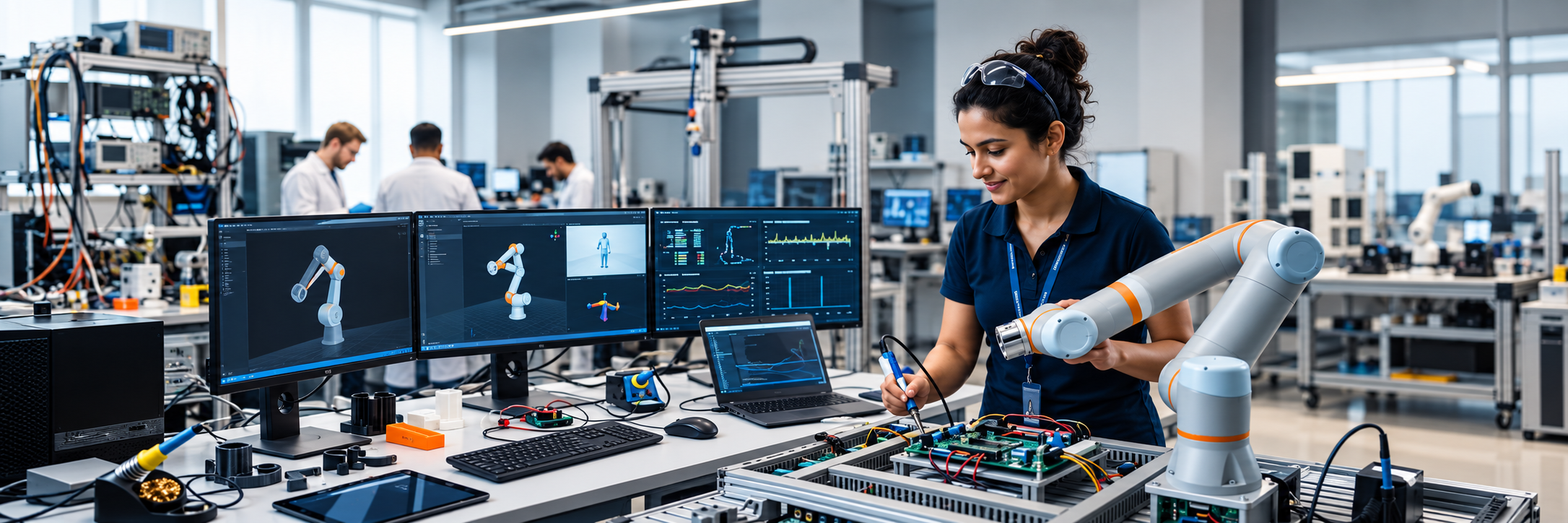
Yes. Many robotics roles are AI roles in practice: computer vision for inspection and picking, machine learning for predictive maintenance, and planning algorithms for mobile robots. Graduates with strong Python and AI skills can work as AI developers, vision engineers or perception engineers. Computer Vision and AI is a core subject in NAMTECH’s robotics program.
What career opportunities are available in industrial automation?
Industrial automation offers roles in robot programming, PLC and SCADA engineering, system integration, commissioning, maintenance, and automation sales and application engineering. Integrators, machine builders, and automation brands such as ABB, FANUC, Siemens, Rockwell Automation and Festo (all NAMTECH School of Robotics industry partners) employ engineers across these functions.
Can a robotics master’s graduate become a systems integration engineer?
Yes. Systems integration is one of the most common career paths. Integration engineers bring robots, grippers, sensors, vision, PLCs and software together into a working cell and hand it over to production. NAMTECH’s curriculum includes a dedicated course on robotic components and integration, and lists system integrators among its graduates’ target roles.
Are robotics engineers employed in healthcare and medical technology?
Yes. Robotics is used in surgical systems, rehabilitation and assistive devices, hospital logistics, laboratory automation and medical device manufacturing. The core skills are the same as in industrial robotics: kinematics, control, sensing and software. Engineers working in healthcare robotics also need to learn domain-specific safety and regulatory standards.
What skills can improve career prospects in robotics engineering?
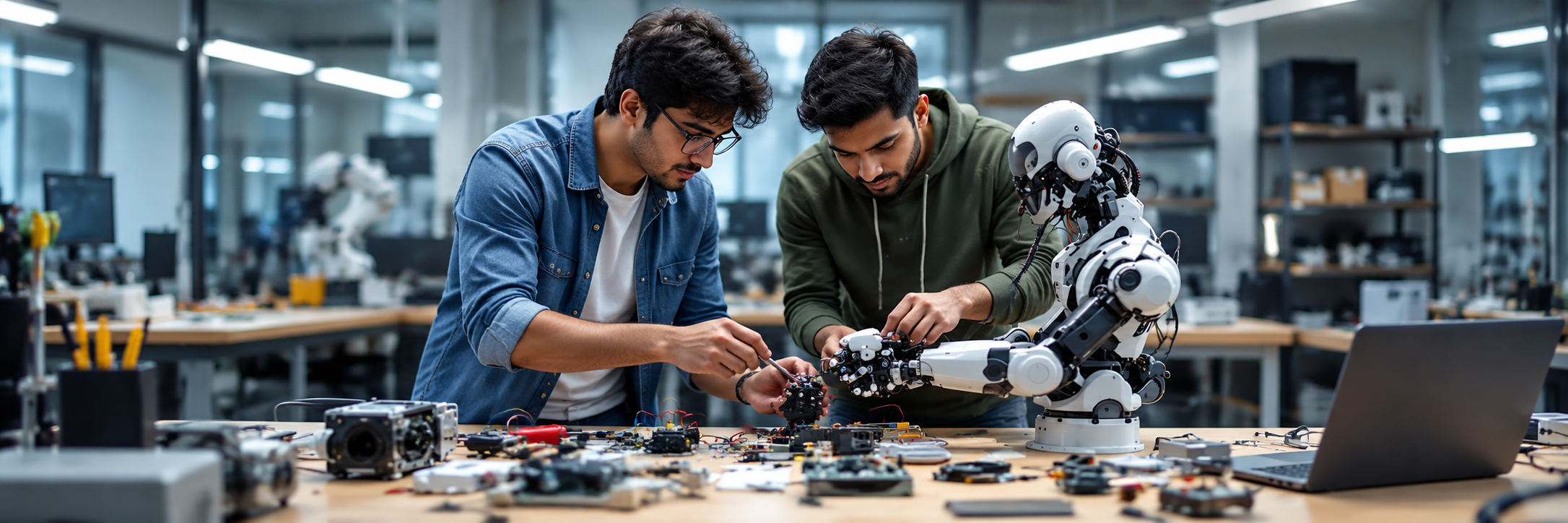
Hands-on experience with industrial robots, Python and ROS, computer vision and AI, PLCs, and systems integration make the biggest difference. Management skills such as project management, lean, safety and supply chains help you progress into leadership roles. A strong internship or capstone project on a real industry problem also gives you proof of skills that employers value.
Can robotics graduates build careers in autonomous systems?
Yes. Autonomous systems include mobile warehouse robots, drones, autonomous vehicles and field robots. They rely on perception, localisation, path planning and control, all skills taught in robotics programs. NAMTECH’s labs cover warehousing robotics, aerial systems and vision-based applications, which give students direct exposure to autonomy.
Does a Master’s in Robotics support entrepreneurship and start-up opportunities?
Yes. Robotics start-ups are growing in areas like warehouse automation, inspection, agritech and low-cost automation for small manufacturers. NAMTECH’s program includes a professional-skills course on entrepreneurship and new venture creation, along with design thinking and financial analysis, to help students who want to build their own ventures.

30 October, 2026