Announcements
Step outside in almost any Indian city today and you’ll hear it before you see it: the quiet hum of an electric scooter instead of a petrol engine. Delivery riders on electric two-wheelers. E-rickshaws lined up outside metro stations. Electric autos weaving through traffic. India’s EV boom isn’t a future prediction anymore. It’s already on the street, and it’s growing faster in two-wheelers and three-wheelers than almost anywhere else in the world.
Behind every one of those vehicles is a battery pack. And behind every battery pack is an engineer who designed it, tested it, and made sure it’s safe, efficient, and built to last. That job, EV battery engineering, is one of the fastest-growing, least talked-about career paths in Indian engineering right now.
India’s EV Boom Is Being Led by Two-Wheelers, Three-Wheelers and Four-Wheelers
While passenger EVs get most of the media attention, the real growth story in India is happening in two-wheelers and three-wheelers. India’s electric two-wheeler market is projected to grow at a CAGR of over 28% through 2034, and electric three-wheelers are expected to grow from about $1.3 billion in 2025 to nearly $3.8 billion by 2034. Electric two-wheeler sales already hit over 1.1 million units in a single financial year, up 21% from the year before, while electric three-wheeler sales jumped 57% in the same period.
This isn’t a small niche. India is on track to lead the world in electric three-wheeler and e-rickshaw adoption, and government targets aim for EVs to make up 80% of two- and three-wheeler sales by 2030. Every one of those vehicles needs a battery pack engineered for Indian roads, Indian heat, and Indian driving patterns. That is exactly why EV battery engineering jobs in India are growing so quickly right now.

The four-wheeler segment is catching up fast too. Electric four-wheeler registrations nearly doubled in FY26, rising 91.3% year-on-year, and passenger EV sales grew 102% year-on-year in Q2 2026 alone, outpacing the broader passenger vehicle market by a wide margin. With four-wheelers projected to keep leading India’s overall EV market value through the next decade, battery engineering demand is set to grow across two-wheelers, three-wheelers, and passenger cars at the same time, not just the smaller vehicle categories.
What Does an EV Battery Engineer Actually Do?
EV battery engineering isn’t one job. It’s a whole cluster of specialized roles, and most engineering students have barely heard of most of them.
- Cell chemistry engineers work on the materials inside the battery cell itself, improving energy density and lifespan.
- Battery Management System (BMS) engineers design the hardware and firmware that monitors battery health, estimates charge levels, and keeps the pack safe.
- Thermal management engineers solve one of the hardest problems in Indian EVs: keeping battery packs cool and safe in extreme heat.
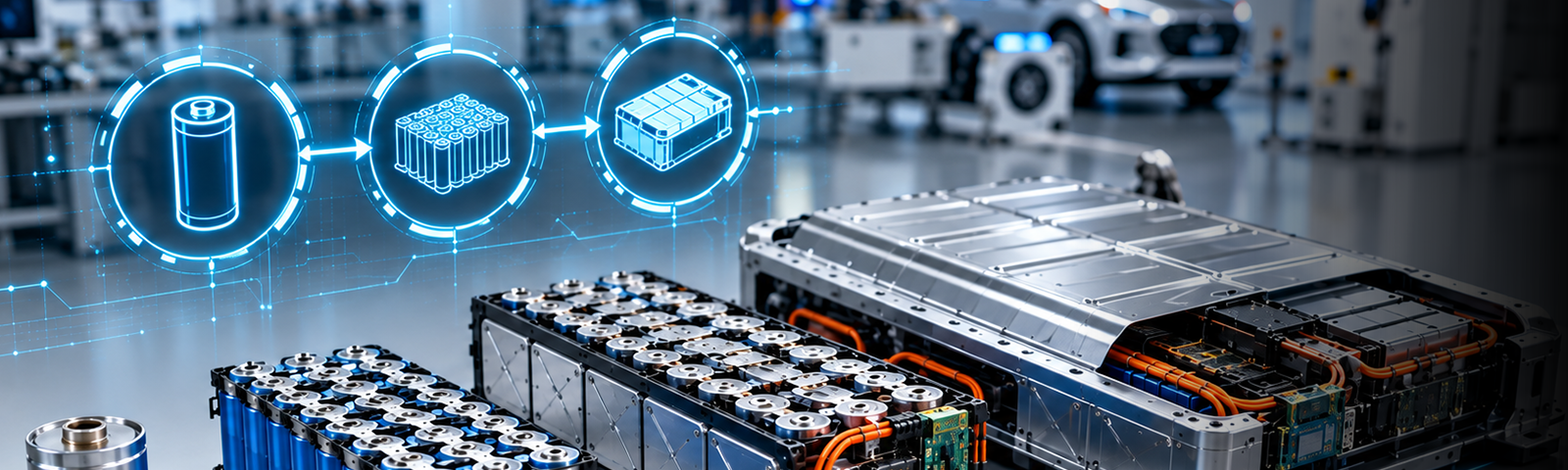
- Battery pack design engineers handle the mechanical structure, safety casing, and integration of the pack into the vehicle.
- Battery recycling and circular economy engineers are an emerging specialization, as India starts building the infrastructure to recover and reuse materials from old EV batteries.
This is a genuinely interdisciplinary field. It pulls in electrical engineering, mechanical design, chemistry, embedded systems, and safety engineering, all focused on one part of the vehicle that happens to be its most expensive and most critical component.
The Job Opportunity Nobody’s Talking About
Here’s what makes this moment unusual. India’s EV industry overall is projected to create 30 to 40 million direct and indirect jobs by 2030. But most career conversations still focus on vehicle design, software, or charging infrastructure. Battery engineering, arguably the most technically demanding and highest-value part of the EV, gets far less attention than it deserves.
That’s starting to change, and fast. India’s battery market is projected to grow from roughly $14 billion in 2026 to over $23 billion by 2031. A big part of that growth is the Production-Linked Incentive scheme for Advanced Chemistry Cells, which is funding new battery gigafactories across the country specifically to reduce India’s heavy reliance on imported lithium-ion cells. Every one of those factories needs battery engineers, and right now, demand is outpacing the number of engineers trained specifically for this work.
Recruiters are already noticing. Companies from Tata and Ola to Exide, Amara Raja, and a wave of EV-focused startups are hiring aggressively for battery-specific roles, not just general automotive engineers. For students choosing a specialization today, electric vehicle jobs in India in the battery space are quietly becoming some of the most secure and highest-growth options in the entire auto sector.
Why This Is the Right Moment to Specialize
Three things are converging at once. First, two-wheeler and three-wheeler EV sales are growing at some of the fastest rates in the world, and lithium-ion battery packs power the vast majority of them. Second, India is investing heavily in building domestic battery manufacturing capacity, specifically to close the gap created by importing over 80% of its lithium-ion cells today. Third, very few Indian engineering programs offer real, hands-on training in battery design, testing, and manufacturing, which means the students who do get this training will stand out immediately.
This combination, rising demand, growing domestic manufacturing, and a genuine skills shortage, is exactly the kind of moment where an early, deliberate career choice can pay off for years to come.
How NAMTECH Trains Engineers for This Exact Career
This is precisely the gap the Master Program in Automotive Technology and Management at NAMTECH is built to close.
Delivered through NAMTECH’s Automotive Centre of Excellence, the program is developed with support from CAAR, the Centre for Advanced Automotive Research at IIT Madras, and covers Electric Mobility, alternate fuels, and vehicle technologies including IC engines, EVs, and hydrogen and fuel cell systems. NAMTECH is also building dedicated experience centers and mini-factories specifically to give students hands-on exposure to battery manufacturing and vehicle manufacturing, not just classroom theory.
Students in the program go through immersion experiences at automotive test agencies and at two-wheeler and four-wheeler manufacturing companies and their vendors, the exact environment where battery engineering actually happens. With more than 350 million vehicles on Indian roads and over 25 million vehicles manufactured every year, the program is designed to place graduates directly into techno-managerial roles across India’s automotive and EV ecosystem, battery engineering included.
The Bottom Line
EV battery engineering isn’t a niche specialization anymore. It’s becoming one of the most important, most in-demand roles in India’s entire automotive industry, and the country’s two-wheeler and three-wheeler boom is only accelerating that demand. The engineers who build real expertise in battery systems now, while the field is still under the radar, are the ones who will be leading India’s battery gigafactories and EV manufacturing lines a few years from now.
If you want to build a career at the center of India’s EV revolution instead of on the sidelines of it, it’s worth seeing what hands-on battery and automotive training actually looks like. Explore the Master Program in Automotive Technology and Management and apply on the NAMTECH admissions page →
Frequently Asked Questions
-
What is EV battery engineering?
EV battery engineering covers the design, testing, and management of the battery systems that power electric vehicles. This includes cell chemistry, Battery Management Systems (BMS), thermal management, pack design, and increasingly, battery recycling. It’s a specialized field within automotive and electrical engineering.
-
Is EV battery engineering a good career in India right now?
Yes. India’s EV market, especially two-wheelers and three-wheelers, is growing rapidly, and the government’s push to build domestic battery manufacturing through schemes like the Production-Linked Incentive for Advanced Chemistry Cells is creating strong demand for battery-focused engineers. It’s a field with high growth and relatively few specialized graduates right now, which makes it a strong career bet.
-
What skills do I need to become an EV battery engineer?
Depending on the specific role, useful skills include electrochemistry fundamentals, embedded systems programming (like C/C++), control algorithms for battery management, thermal and mechanical design, and safety testing standards. A background in electrical, mechanical, or automotive engineering is the most common starting point.
-
Which companies hire EV battery engineers in India?
Automakers like Tata Motors, Mahindra, and Ola Electric, battery manufacturers like Exide and Amara Raja, and a growing number of EV-focused startups and gigafactories are actively hiring for battery-specific engineering roles, not just general automotive positions.
-
Why are two-wheelers and three-wheelers important for EV battery careers in India?
Two-wheelers and three-wheelers make up the largest and fastest-growing share of India’s EV market, and nearly all of them run on lithium-ion battery packs. This segment is driving most of the near-term demand for battery engineers, testers, and pack designers in the country.
-
How does NAMTECH’s Automotive program prepare students for EV battery careers?
The Master Program in Automotive Technology and Management includes dedicated mini-factories for hands-on battery and vehicle manufacturing experience, a curriculum developed with IIT Madras’s Centre for Advanced Automotive Research, and industry immersion programs with real two-wheeler and four-wheeler manufacturers, giving students direct exposure to how EV batteries are actually built and tested.

06 October, 2026