Announcements
The stereotype is still a man on a factory floor in a hard hat. The data has stopped agreeing with the stereotype.
The Old Assumption
For years, the story of women in Indian manufacturing was a story of decline — their share of formal manufacturing jobs actually fell from roughly 21% in 2015-16 to under 19% by 2022-23.
If you stopped reading there, you’d conclude the sector was moving backward.
The newer numbers tell a more complicated story — and one that points to where Indian manufacturing is heading next.
The Data Nobody’s Talking About
In electronics manufacturing — one of India’s fastest-growing industrial segments — women now make up nearly 70% of the direct workforce in mobile phone manufacturing, and close to 30% of the sector’s total workforce overall, according to the Ministry of Electronics and IT.
That’s not a diversity footnote.
That’s women making up the majority of the workforce behind one of India’s largest manufacturing export categories.
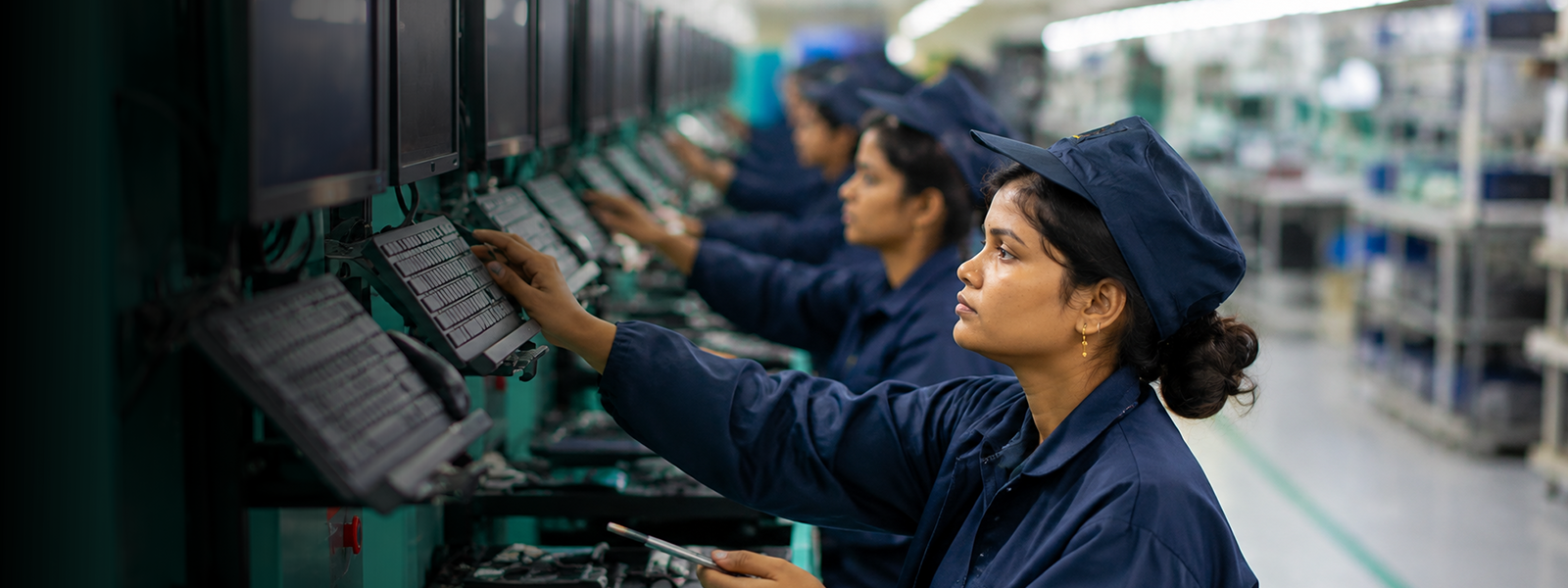
The semiconductor sector tells a similar story from a different starting point. Women currently make up about a quarter of the workforce, with industry targets pushing that figure to 35% by 2030.
Chip design roles already show a narrower gender gap than many people might expect from a hardware-heavy field.
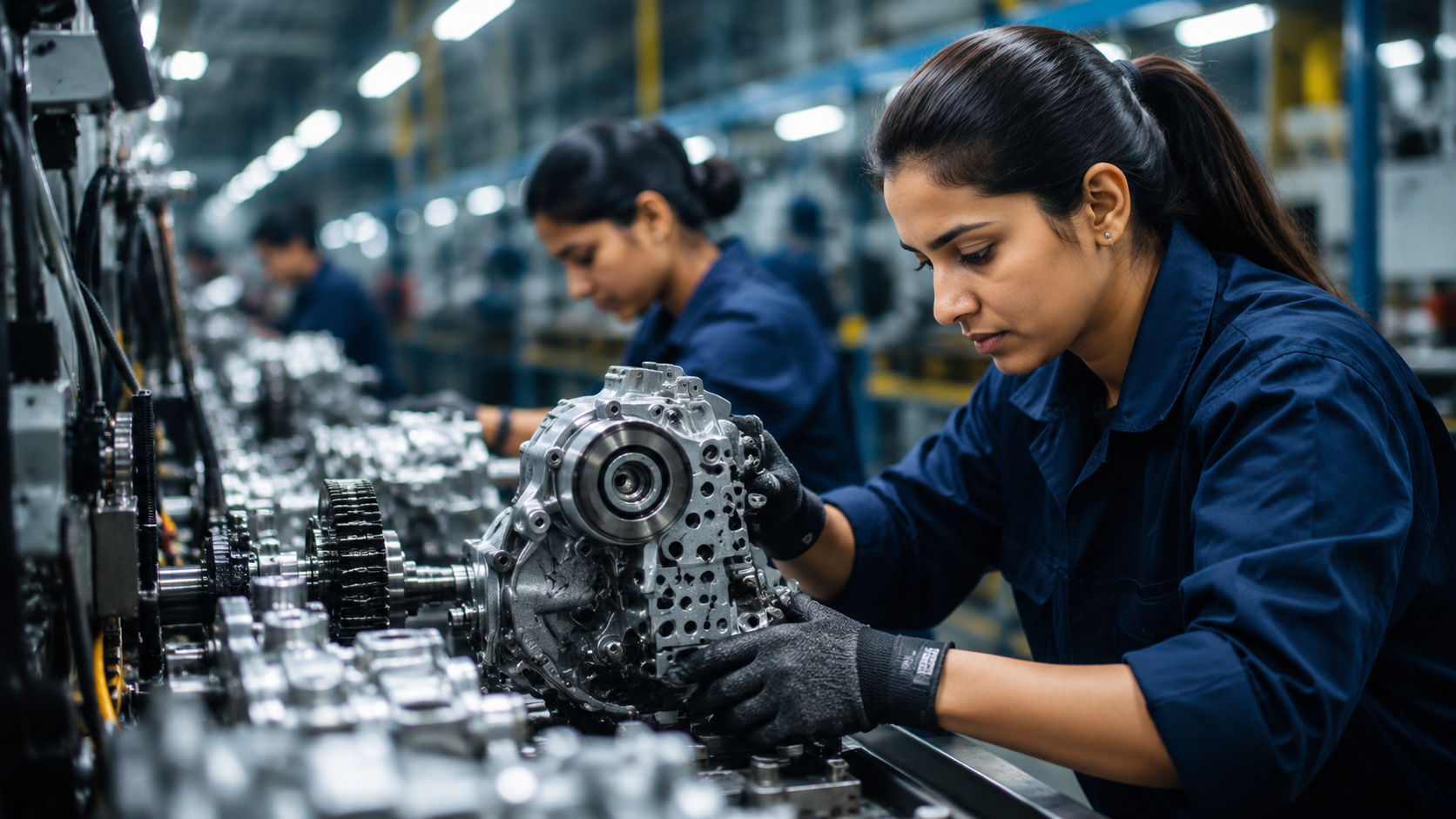
Put together, the pattern is clear: in some of the newest and most technically demanding corners of Indian manufacturing — electronics, semiconductors and precision assembly — women are becoming an increasingly important part of the workforce.
The stereotype hasn’t caught up with the factory floor.
Why This Signal Matters More Than the Slogan
It’s tempting to file this under corporate social responsibility.
That’s the wrong file.
A workforce becoming more diverse in some of the highest-growth, highest-precision segments of manufacturing is a signal about where the talent pipeline is expanding — not simply where a company’s diversity report needs a good headline.
Manufacturers investing in inclusive hiring aren’t doing charity.
They’re recruiting from the talent pool that is growing with the industry.
And as India moves deeper into advanced electronics, semiconductors, automation and smart manufacturing, that talent pool will become increasingly important.
Closing the Gap Means Closing the Skills Gap
The real bottleneck isn’t willingness.
It’s access to the same hands-on, industry-aligned technical training that has historically been easier for men to find.
The question now isn’t whether women belong in India’s next generation of factories. The data is already answering that.
The question is whether India’s technical education ecosystem is giving them the skills to participate across the entire manufacturing value chain — not just on the production line, but in design, automation, digital systems, engineering and management.
That is where industry-embedded education becomes important.
NAMTECH’s seven master programs — spanning Smart Manufacturing, Semiconductor Manufacturing, Robotics, Automotive, Sustainability Engineering, Heavy Industry Engineering and Data Analytics & AI — are built around industry co-designed curricula, hands-on learning and capstone projects.
The model is designed to prepare engineers for day-zero readiness: the ability to step into a modern industrial environment and contribute from the start.
To encourage greater participation of women in advanced manufacturing, NAMTECH also offers a 75% scholarship for eligible women candidates. This initiative supports greater inclusivity while helping talented engineers access industry-aligned education that prepares them for high-growth manufacturing careers.
The Factory Floor Is Changing. So Is Who Builds It.
The fastest-growing parts of India’s manufacturing economy aren’t waiting for women to enter the factory floor.
They’re already being built by them.
The next step is making sure women have the technical education, industry exposure and engineering pathways to shape what happens beyond the factory floor, too.

22 August, 2026