Announcements
Most engineers don’t see the transition coming until they’re already in the middle of it.
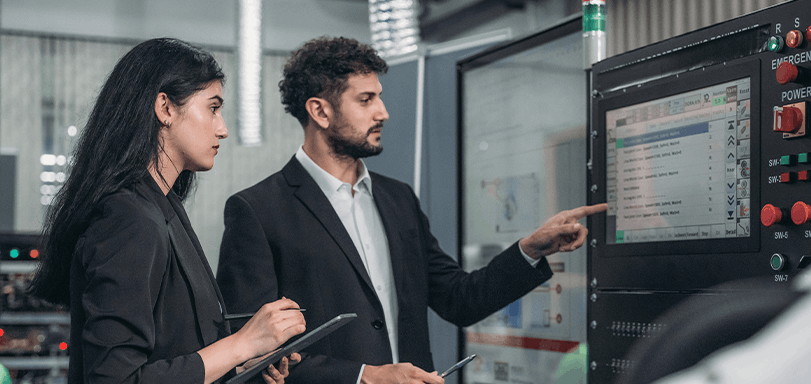
You spend the first few years of your career building a specific kind of competence- technical, domain-specific, earned through execution. Then at some point, often without much warning, the job starts asking you to do things that competence doesn’t directly prepare you for. Lead a team. Manage a client relationship. Make a decision that involves business trade-offs you weren’t trained to reason about. Represent your work to people who don’t share your technical frame of reference.
This is a predictable transition, but most engineering education doesn’t treat it as one. The result is that engineers who are technically strong often find themselves navigating the shift through improvisation learning management and strategy informally, picking it up on the job, sometimes struggling because the underlying skills were never actually developed.
Techno-manager programs are built around the premise that this transition can be prepared for deliberately rather than survived accidentally. The structure varies by institution, but the core idea is consistent: take someone who already has technical depth and build the managerial and strategic layer on top of it, with enough specificity that the two connect rather than sit alongside each other as separate bodies of knowledge.
What engineers tend to find when they engage with these programs seriously is that their existing background gives them a real advantage. The habits of mind that engineering develops structured problem analysis, comfort with complexity, attention to how systems interact transfer directly into good management practice. The challenge isn’t usually the conceptual side of strategy or operations. It’s the communication layer: learning to translate technical reality into language that business stakeholders can act on, and learning to translate business goals into technical requirements that teams can execute. That gap, once bridged, tends to unlock significant career mobility.
The industries where this combination is most in demand- manufacturing, automotive, robotics, energy are ones where technical and business decisions are deeply intertwined. A leader in a smart factory environment who doesn’t understand what the automation systems are actually doing is flying partially blind. One who understands both the technology and the operational economics can make decisions that their purely technical or purely managerial peers simply can’t.
The practical career argument is straightforward. Purely technical roles, absent a move into deep specialisation, often have a relatively defined ceiling in terms of leadership progression. Techno-managerial roles Technical Project Manager, Product Manager, Operations Manager, Strategy and Innovation positions put people into high-stakes decision-making earlier and keep them there. The compounding effect over a career is substantial.
There’s also something worth naming about the communication development that good techno-manager programs provide. Engineers frequently underestimate how much of professional influence depends on the ability to explain complex ideas simply, present under pressure, and navigate stakeholder dynamics that don’t follow engineering logic. These skills aren’t soft in the pejorative sense they’re genuinely difficult to develop and genuinely consequential. Programs that take them seriously tend to produce professionals who are more effective in a wider range of situations.
The caveat is real: this path isn’t the right fit for every engineer. If your goal is deep technical research, specialised expertise, or an academic career, a technical master’s is almost certainly the better investment. But for engineers who look ahead and see themselves leading projects, building teams, making strategic decisions in technology-driven environments the techno-manager path isn’t a departure from engineering. It’s an extension of it.
To know more about in techno-manager program, click here.

20 March, 2026