Announcements
Industry 4.0 readiness is now a core hiring requirement for many engineering roles, rather than a “nice-to-have” differentiator. Employers are looking for graduates who can operate in digitally enabled environments where data, automation, and interconnected systems influence everyday decisions.
Industry 4.0 readiness in engineering graduates is typically assessed through project discussions, internship experience, and the clarity of a candidate’s thinking. Hiring managers seek evidence that graduates can apply engineering fundamentals, work responsibly with data, and contribute effectively to modern production and engineering environments.
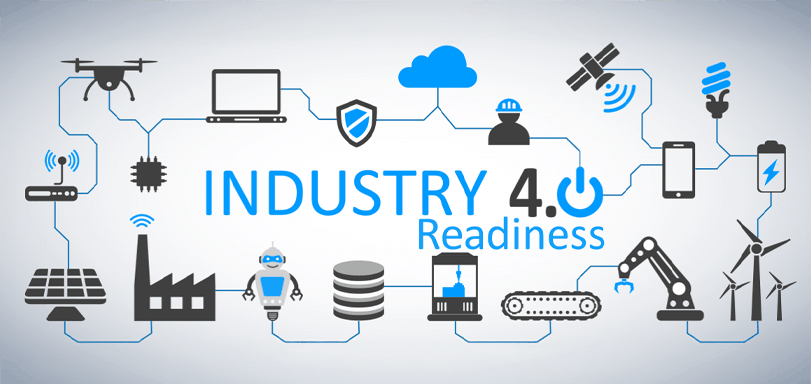
The following are the key parameters on which employers evaluate Industry 4.0 readiness:
1. It starts with how you apply engineering fundamentals
Strong fundamentals still matter, but employers are far more interested in how graduates use them. They want to see whether classroom learning can be applied to real problems with real limitations.
Graduates stand out when they can explain:
- How a concept helped improve quality, reduce errors, or increase efficiency
- Why a particular method or approach was suitable for the situation
- What constraints existed, such as time pressure, cost limits, machine capability, safety requirements, or incomplete information, and how they worked within them
Industry 4.0 readiness becomes visible when candidates demonstrate the ability to work with real-world conditions rather than ideal textbook assumptions.
2. Comfort with data and digital tools matters more than expertise
Most modern engineering environments rely on continuous measurement. Employers do not expect fresh graduates to be data scientists, but they do expect basic data confidence and sound judgement.
Strong candidates can clearly explain a simple improvement loop:
- What was measured and why it mattered
- What the data revealed
- What action was taken
- What changed as a result
Familiarity with everyday tools such as spreadsheets, dashboards, and basic visualisations is also important. In interviews, readiness is revealed less by the tools mentioned and more by how clearly candidates explain the impact of their actions.
3. Smart manufacturing exposure adds practical credibility
Smart manufacturing is no longer limited to large, high-end factories. Even mid-scale operations now use sensors, automation, and digital workflows. Employers therefore value graduates who are comfortable with these concepts.
Relevant exposure may come from:
- Sensor-based monitoring projects
- Robotics or mechatronics projects involving system integration
- Basic exposure to PLCs or control systems through labs or training
What further strengthens a candidate’s profile is an understanding of trade-offs. Automation improves consistency but increases maintenance complexity. Sensors improve visibility, but poor data quality can lead to incorrect decisions. Employers value graduates who recognise both benefits and limitations.
4. Systems thinking separates strong candidates from average ones
Industry 4.0 readiness depends as much on how candidates think as on what they know. Employers prefer graduates who view engineering problems as system-level challenges rather than isolated technical tasks.
This becomes evident when candidates naturally discuss:
- How design decisions affect manufacturability, quality, and cost
- How process changes influence safety, throughput, and operator workload
- How automation impacts training needs and failure risks
- How machines, people, software, and supply chains interact
Graduates who can see beyond their immediate task tend to adapt more quickly in real industrial roles.
5. Employers test readiness through uncertainty, not perfect questions
Real industrial problems are rarely well defined. This is why employers often ask open-ended questions during interviews.
Industry 4.0 readiness is clear when candidates can:
- Break unclear problems into logical steps
- Clearly state what is known and what still needs to be discovered
- Make reasonable assumptions and articulate them clearly
- Suggest simple tests or pilots before scaling solutions
- Adjust their approach based on results
Learning agility is as important as prior knowledge. Employers value candidates who can learn quickly and also know when to ask questions.
6. Business awareness and collaboration are part of readiness
Engineering decisions are evaluated on impact, timelines, feasibility, and risk, not only on technical correctness.
Employers look for graduates who can connect technical work to:
- Cost, efficiency, quality, and safety outcomes
- Clear communication and documentation
- Collaboration with production, maintenance, quality, and operations teams
- Openness to feedback and continuous improvement
Modern engineering work is inherently cross-functional, and readiness includes the ability to work effectively with others.
7. Showing Industry 4.0 readiness in resumes and interviews
Employers often scan resumes quickly, so readiness must be evident through concrete evidence rather than claims.
Effective approaches include:
- Describing projects using context, action, and outcome
- Including measurable results wherever possible, even if the improvements are small
- Explaining what was built, measured, or improved during Industry 4.0-related courses
- Avoiding long lists of certificates without practical application
What matters most is not the course title, but how the learning was applied to solve real problems.
Final Perspective
Industry 4.0 readiness is not about knowing every technology before starting a career. Employers primarily look for graduates who can apply fundamentals, think in systems, use data responsibly, and learn quickly in modern engineering environments.
When project discussions and explanations reflect practical judgement, measurable outcomes, and an understanding of real operational impact, Industry 4.0 readiness becomes clear and credible.

06 March, 2026