Announcements
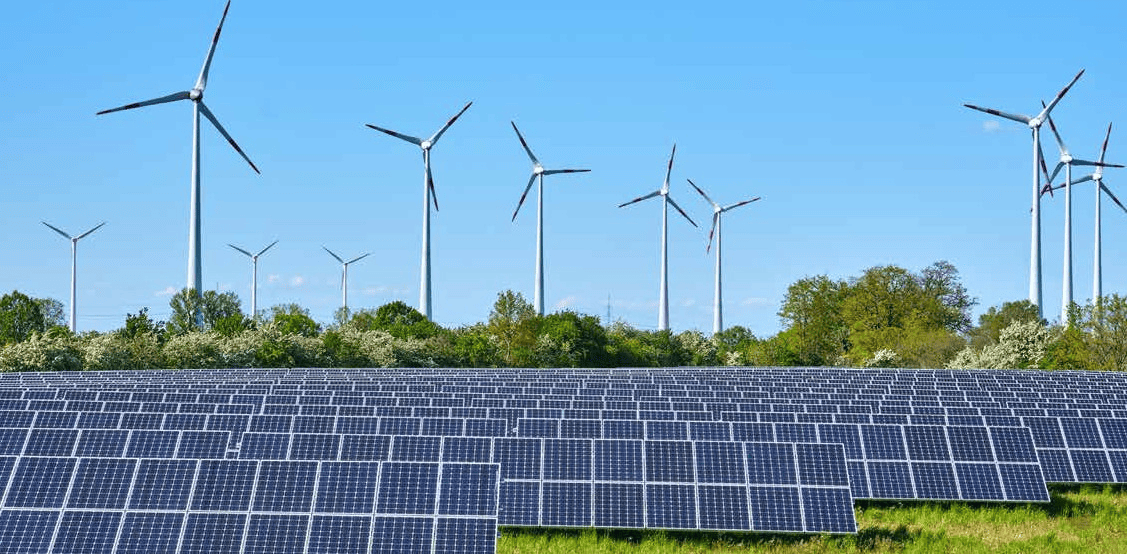
India’s journey towards energy transition has reached a significant milestone by achieving half of its installed electricity capacity from non-fossil fuel sources, five years ahead of the planned 2030 target. The actual goal is to achieve 500 Gigawatts (GW) of non-fossil electricity capacity by 2030, which forms a key part of India’s Panchamrit commitments, which also includes meeting 50% of energy requirements from renewable sources, reducing total projected carbon emissions by 1 billion tonnes, lowering the carbon intensity of the economy by 45% and achieving net-zero emissions by 2070. India is well on track to meet these goals, provided the right emphasis is placed in the right areas without procrastination.
Driven by both domestic regulations and global investor expectations, Environmental, Social and Governance (ESG) compliance has effectively become a license to operate. Companies must demonstrate responsible environmental practices, ethical governance and a positive social impact, without meeting ESG standards, organisations risk losing investment opportunities, market credibility and access to global value chains.
Sustainable development is no longer a question of why, but when. Proactive sustainability unlocks access to global markets, green finance, and advanced technology partnerships. The entire world is rushing towards sustainability meanwhile; India has set a whole array of initiatives and activities in motion. Every major sector of India’s fast-growing economy, contributes nearly 18% to global growth, has begun implementing climate initiatives. The extent may differ across industries, but the intention to act is universal.
In India, the energy sector is the largest contributor to Greenhouse Gas (GHG) emissions, followed by agriculture and industrial processes and product use. According to a report by Ministry of Environment, Forest and Climate Change, India’s historical cumulative CHG emissions from 1850 to 2019 account for less than 4% of the world, despite being home to 17% of the world’s population. This reflects India’s relatively low historical responsibility for climate change, even as it prepares for future challenges.
However, there is no room for complacency, India has miles to go. Global Industries are rushing toward net-zero. Indian industries must align or risk losing competitiveness. Sustainability must evolve from a project into a cultural instinct. It requires leadership commitment, measurable KPIs, and accountability at every level. Integrating sustainability into decision-making aligns profitability with responsibility. But the challenges are significant. Many Indian manufacturing companies are struggling to make the transition. For example, steel and cement producers are working to shift from traditional blast furnaces to alternative fuel technologies. Such a transformation requires substantial capital expenditure and strong support from the government.
Different estimates suggest that India will require $100-150 billion investment annually to meet its climate goals; the Economic Survey suggested “India needed to follow a multi-faceted approach tailored to regional specificities, covering policy initiatives, sector-specific strategies, development of resilient infrastructure, research and development, and securing financial resources for adaptation efforts.”
India’s stands within the Global Community
India as the fastest growing economy, not only needs to tackle climate change nationally, but it also has a greater role, particularly to the Global South. India’s role as a significant emerging economy creates both responsibility and opportunity to lead in clean technology adoption, devising actionable plans, and handholding where required.
Among other efforts, India is supporting the International Solar Alliance (ISA) and the Coalition for Disaster Resilient Infrastructure (CDRI) programs, which show the country’s willing to stick out for climate protection on a global level.
Net zero is not just an isolated target of one country, any nation; it warrants a cumulative action, it involves handholding of the have-nots, it necessitates devising, setting, and working towards a common goal, on the lines of our guiding philosophy of “Vasudevya kutumbakam”.
Building a Sustainable Future Through Education and Innovation
Ensuring a world free from poisonous air, polluted water, and contaminated food, as well as carbon-neutral transport, infrastructure, and dwelling units, is the task at hand for everyone in the world. The principal task is for all constituents to rededicate themselves to the cause in unison. A habit must be ingrained and adopted by everyone. Policies created must be innovative, collaborative and needs to be multi-sectoral and multi-disciplinary, aiming to position India as a global leader in sustainable energy while safeguarding the development aspirations.
India’s net-zero journey depends on the convergence of education, innovation, and industry. India needs specialised hubs for climate innovation, sustainable manufacturing, and energy efficiency. Every sustainability-trained graduate becomes a multiplier for nationwide change.
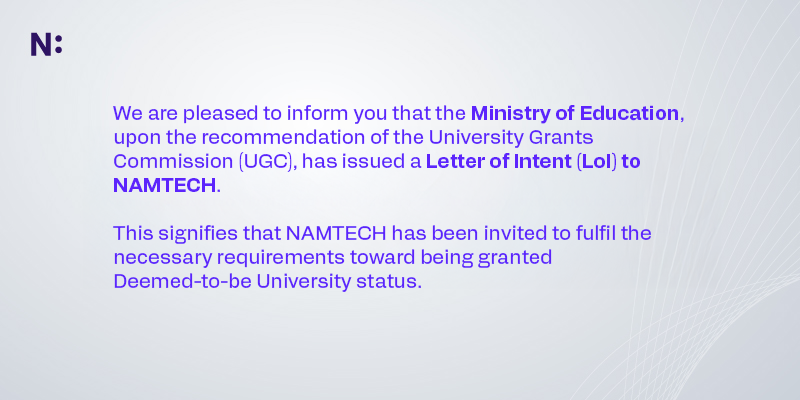
Engineers must be skilled in renewable systems, circular design, and ESG metrics alongside technical expertise. Curricula should integrate sustainability principles, cross-disciplinary problem-solving, and real-world projects. At NAMTECH, we have taken the initiative to train engineers and transform them into smart managers equipped for sustainable development. India will need many more institutions like NAMTECH to address this challenge in the years ahead. Academia–industry collaboration can ensure graduates are impact-ready from day one. Achieving carbon neutrality targets requires deep integration of sustainability into strategy, R&D, and workforce skills.
We don’t own this world; we have borrowed it from our future generations. We are all duty-bound to pass a greener and safer world to future generations.

08 January, 2026