Announcements
Walk into any engineering campus during placement season and you’ll hear the same questions: Should I sit for IT companies? Should I prepare for GATE? Should I apply for an MS abroad?
What far fewer students ask is the question the hiring market is already answering: Who is going to build, run, and optimize the factories India is creating today?
In 2024, Indian manufacturers installed a record 9,100 industrial robots, according to the International Federation of Robotics’ World Robotics 2025 report. That placed India sixth globally in annual robot installations, ahead of Germany, while the country’s operational stock of industrial robots crossed 52,000 units. Every robot installed requires engineers to program, integrate, maintain, and continuously improve it. Many of those engineers are now being hired for roles that barely existed a few years ago.
The Jobs Arrived Before the Degrees
Engineering education is still largely organized around traditional disciplines such as mechanical, electrical, electronics, and civil engineering. Manufacturing, meanwhile, is hiring for roles that cut across all of them.
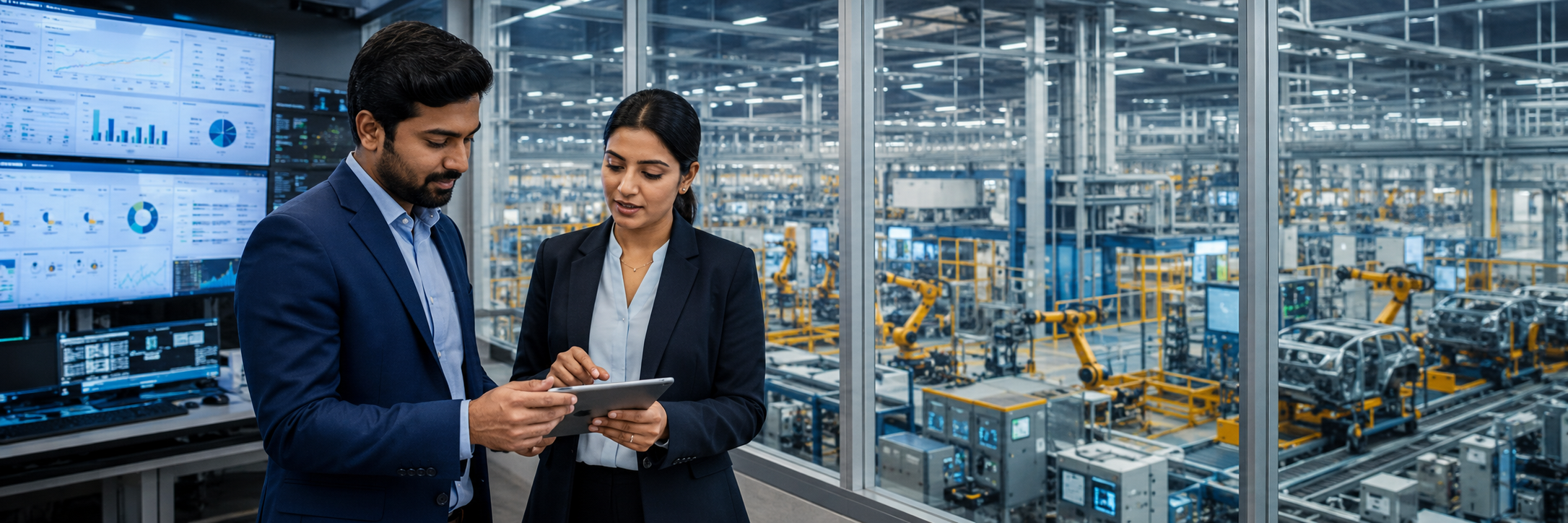
Today’s manufacturers are recruiting for roles such as Digital Manufacturing Engineer, Smart Factory Engineer, Manufacturing Execution Systems (MES) Specialist, Automation Controls Engineer, Industrial IoT Engineer, and Digital Twin Engineer. These positions combine mechanical engineering with automation, software, AI, and systems thinking. They are not simply updated job titles—they reflect an entirely new way of designing and operating modern factories.
The gap between what industry needs and what many graduates are trained for is becoming increasingly visible. According to the World Economic Forum’s Future of Jobs Report 2025, nearly 40% of workplace skills will change by 2030, while 63% of employers identify skill gaps as the biggest barrier to business transformation. The challenge isn’t a shortage of engineering talent—it’s a shortage of engineers with the interdisciplinary capabilities these roles demand.
Industry Has Already Moved
The shift is no longer limited to a handful of automation companies.
India’s largest manufacturing investments are creating demand for a new generation of engineers. Tata Electronics is building a semiconductor fabrication plant in Dholera, Micron is establishing its assembly and testing facility in Sanand, and the HCL–Foxconn joint venture is developing another semiconductor facility near Jewar.
Alongside these projects, companies including Larsen & Toubro, Schneider Electric, Bosch, Rockwell Automation, and ArcelorMittal Nippon Steel are actively hiring across automation, robotics, semiconductor manufacturing, and smart factory operations.
The factories are already under construction. The hiring is already underway.
A Market Growing Faster Than the Talent Pool
Compensation reflects that demand. According to Glassdoor India’s 2026 estimates, Automation Engineers earn an average salary of around ₹8 LPA, while Robotics Engineers, Controls Engineers, and IoT Engineers typically earn between ₹6–7 LPA, with experienced professionals earning significantly more.
The market itself continues to expand. IMARC Group projects India’s robotics market to grow from USD 1.98 billion in 2025 to USD 7.38 billion by 2034, while the country’s Industry 4.0 market is expected to nearly triple during the same period. Grand View Research similarly identifies India as one of the fastest-growing Industry 4.0 markets in the Asia-Pacific region.
Forecasts differ in size, but not in direction. Manufacturing is becoming more digital, more connected, and increasingly driven by automation and data.
Preparing Engineers for What’s Next
Academic curricula typically evolve over years. Manufacturing technologies evolve much faster. By the time new specializations make their way into classrooms, the jobs they were designed for have often evolved again. According to a TeamLease analysis, India could face a shortage of 250,000–300,000 semiconductor professionals by 2027, underscoring how quickly demand is outpacing talent supply.
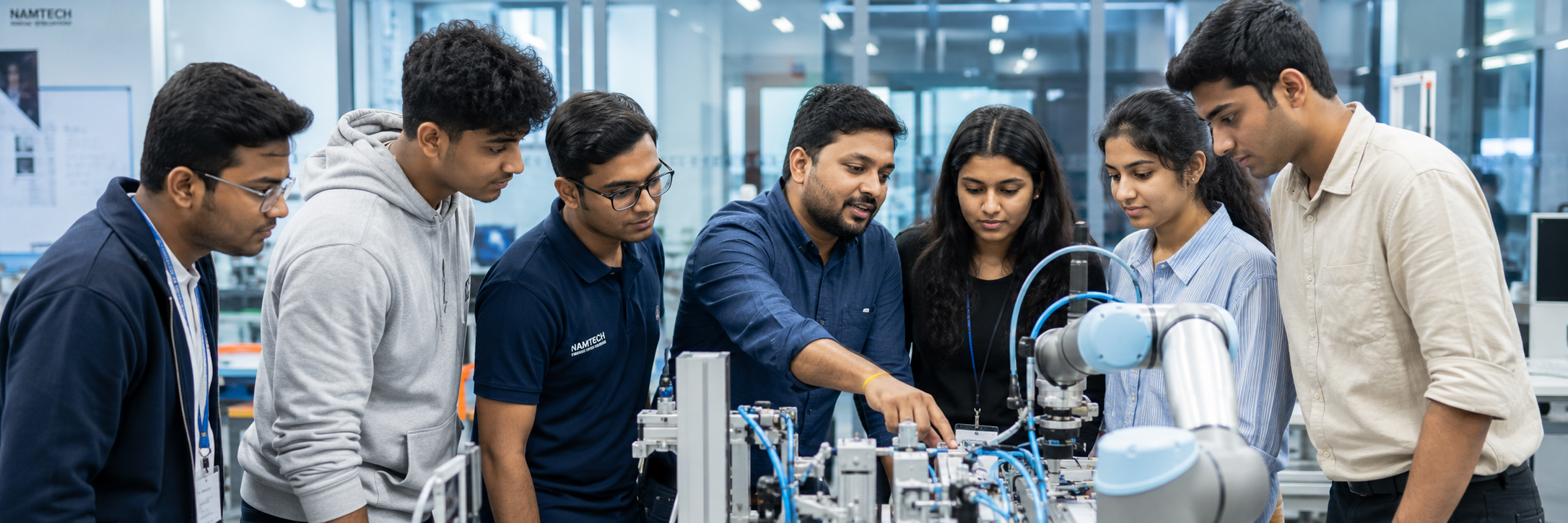
This is the gap NAMTECH (New Age Makers’ Institute of Technology)—a not-for-profit initiative by ArcelorMittal Nippon Steel India—was established to address.
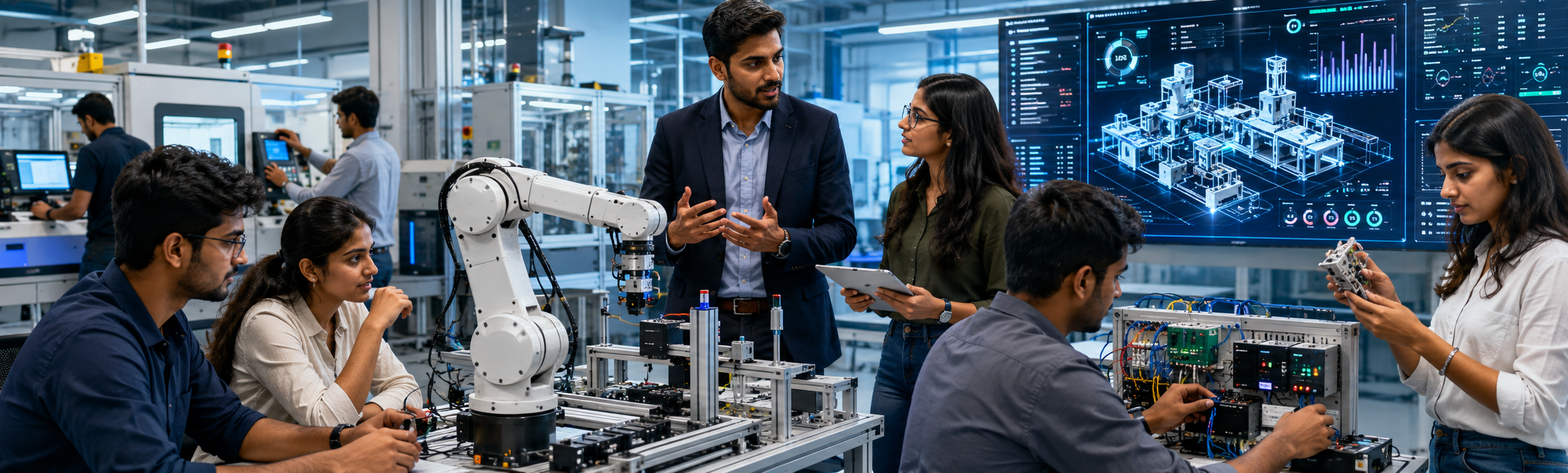
Its two-year techno-managerial master programs are built around the capabilities modern manufacturing demands, with specializations in Smart Manufacturing, Robotics Engineering, Semiconductor Manufacturing, Sustainability Engineering and Data Analytics & AI. Through industry-led learning, on-campus micro-factories, and six-month industry capstone projects, students gain practical experience before entering the workforce.
As manufacturing continues to evolve, the most valuable engineering degree may not be the most familiar one—it will be the one designed for the jobs industry is creating next.

14 August, 2026