Announcements
For generations, the image of a manufacturing engineer has remained largely unchanged. It was someone responsible for machines, production lines, factory layouts, and operational efficiency. Engineering disciplines were clearly defined, roles were specialised, and expertise often stayed within departmental boundaries.
That picture no longer reflects the reality of modern manufacturing.
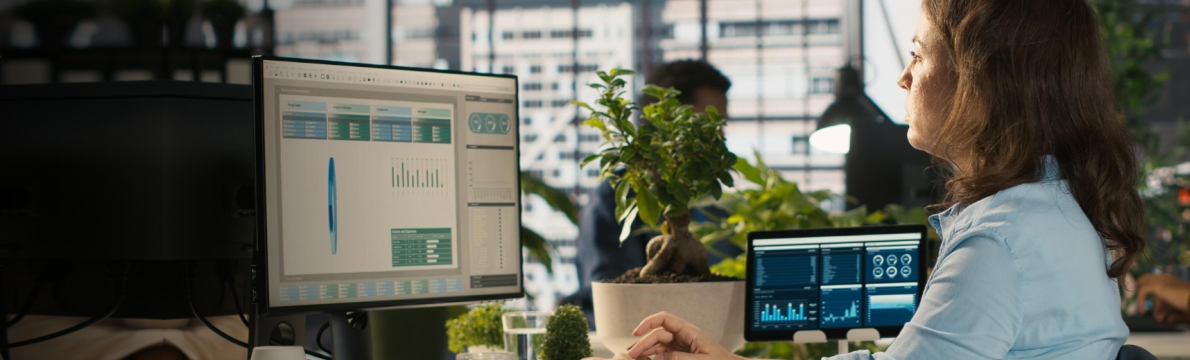
Walk into a leading manufacturing facility today, and you’ll find engineers working with collaborative robots, analysing production data in real time, improving processes through Artificial Intelligence (AI), reducing energy consumption, and designing systems that balance productivity with sustainability. Manufacturing is no longer driven by a single technology or a single discipline—it is powered by the convergence of many.
The engineer of tomorrow won’t simply understand machines.
They’ll understand intelligent systems.
This shift is redefining engineering careers worldwide and giving rise to a new kind of professional—one who combines Artificial Intelligence (AI), Robotics, Data Analytics, and Sustainability with engineering expertise.
The future of manufacturing isn’t creating four different careers.
It’s creating one.

Manufacturing Is No Longer Built Around One Discipline
For decades, industries hired specialists.
Mechanical engineers designed machines.
Electrical engineers managed electrical systems.
Automation engineers programmed controllers.
Data analysts interpreted numbers.
Sustainability experts focused on environmental impact.
Each discipline contributed independently.
Today’s manufacturing environment looks very different.
A single production line may include intelligent robots, connected sensors, predictive maintenance algorithms, energy monitoring systems, and digital dashboards that continuously optimise performance.
None of these technologies operate in isolation.
They depend on one another.
As manufacturing systems become increasingly connected, the engineer responsible for improving them must also think across disciplines rather than within them.
The factory has become an ecosystem.
So has engineering.
AI Is Transforming Manufacturing Decisions
Artificial Intelligence is often associated with chatbots and automation software, but its impact on manufacturing goes much deeper.
Manufacturers now use AI to predict machine failures before they happen, optimise production schedules, improve quality inspection, reduce downtime, and identify operational inefficiencies that would otherwise remain invisible.
Instead of reacting to problems, manufacturers can anticipate them.
This shift changes the role of engineers.
Rather than spending valuable time solving repetitive issues, engineers increasingly focus on interpreting insights, improving systems, and making strategic decisions supported by intelligent technologies.
AI doesn’t replace engineering.
It enhances engineering.
Robotics Has Evolved Beyond Automation
Industrial robots have existed for decades.
What’s changing is their role.
Modern robotic systems are more flexible, collaborative, and intelligent than ever before. They can safely work alongside people, adapt to changing production requirements, and integrate seamlessly with AI-driven manufacturing systems.
Today’s engineers don’t simply operate robots.
They configure them, optimise workflows around them, analyse their performance, and ensure they contribute to overall manufacturing efficiency.
As robotics becomes more accessible across industries—from automotive and electronics to healthcare and logistics—the ability to understand robotic systems is becoming an essential manufacturing skill rather than a specialised one.
Why Data Analytics Is Becoming Every Engineer’s Language
Every connected machine generates information.
Production speed.
Machine utilisation.
Energy consumption.
Quality performance.
Equipment health.
Supply chain movement.
Collectively, this information forms the foundation of modern manufacturing.
However, data only creates value when someone knows how to interpret it.
The modern manufacturing engineer is increasingly expected to analyse trends, identify bottlenecks, measure performance, and support better decision-making using real-time production data.
This doesn’t mean every engineer needs to become a data scientist.
It means understanding data is becoming as fundamental as understanding engineering drawings or production processes.
Manufacturing is becoming data-driven.
Engineering must evolve alongside it.
Sustainability Is Now a Manufacturing Priority
Not long ago, sustainability was viewed primarily as a corporate responsibility initiative.
Today, it has become a business necessity.
Manufacturers across the world are working to reduce emissions, minimise waste, improve resource efficiency, optimise energy consumption, and build more resilient supply chains.
These goals cannot be achieved through environmental policies alone.
They require engineering solutions.
Engineers now play a direct role in designing sustainable production systems, improving manufacturing efficiency, selecting environmentally responsible materials, and reducing the environmental footprint of industrial operations.
The future manufacturing engineer must understand productivity and sustainability as complementary objectives—not competing ones.
The Future Engineer Thinks in Systems, Not Silos
The biggest change isn’t the arrival of AI, robotics, or sustainability.
It’s how these technologies are converging.
Consider a modern production challenge.
Improving factory performance may involve analysing machine data, deploying predictive AI models, optimising robotic workflows, reducing energy consumption, and improving supply chain efficiency simultaneously.
No single discipline can solve this independently.
Success depends on professionals who understand how technologies interact across an entire manufacturing system.
This systems-thinking mindset is becoming one of the most valuable capabilities in modern engineering.
The future belongs to engineers who can connect ideas rather than simply specialise in one.
Why Manufacturing Education Must Change
Industries have evolved faster than traditional engineering education.
Many graduates still learn individual subjects independently before encountering integrated manufacturing challenges only after entering the workforce.
Yet today’s industries expect engineers to collaborate across automation, digital technologies, manufacturing operations, quality systems, business strategy, and sustainability from day one.
Preparing students for this reality requires more than updating a syllabus.
It requires rethinking how engineers learn.
Experiential education, interdisciplinary projects, industry collaboration, and exposure to real manufacturing environments are becoming increasingly important in preparing graduates for future manufacturing careers.
Preparing Engineers for Manufacturing’s Next Chapter
The future of manufacturing will not be defined by a single breakthrough technology.
It will be shaped by how technologies work together.
Artificial Intelligence will improve decision-making.
Robotics will enhance productivity.
Data Analytics will drive continuous improvement.
Sustainability will influence every stage of manufacturing—from product design to production and supply chains.
The professionals leading this transformation will need to understand all of these disciplines as part of one connected ecosystem.
Institutions like NAMTECH are responding to this shift by creating learning environments where manufacturing is taught as an integrated discipline rather than a collection of isolated subjects.
The objective is not simply to produce engineers with technical knowledge.
It is to develop professionals who can adapt, innovate, and lead in an industry that is evolving faster than ever before.
Conclusion
The manufacturing engineer is being redefined.
The role is no longer limited to machines or production lines. It now extends across intelligent technologies, automation, digital systems, sustainability, and strategic decision-making.
As manufacturing continues to embrace Industry 4.0, the boundaries between engineering disciplines will continue to disappear.
The engineers who succeed will not necessarily be those who know the most about one technology.
They will be the ones who understand how AI, robotics, data, and sustainability come together to solve real manufacturing challenges.
The future of manufacturing is not creating separate careers for each emerging technology.
It is creating one new generation of manufacturing engineers—equipped to lead an increasingly connected, intelligent, and sustainable industrial world.
Frequently Asked Questions (FAQs)
1. How is the role of a manufacturing engineer changing?
The role of a manufacturing engineer is evolving beyond traditional production responsibilities. Today’s engineers increasingly work with Artificial Intelligence (AI), Robotics, Data Analytics, Industrial Automation, and Sustainability to optimise manufacturing systems and improve operational performance.
2. Why are AI and Robotics important in modern manufacturing?
AI helps manufacturers improve decision-making through predictive maintenance, quality control, and production optimisation, while Robotics enhances productivity, precision, and workplace safety. Together, they enable smarter and more efficient manufacturing operations.
3. Why should manufacturing engineers learn Data Analytics?
Modern factories generate vast amounts of production data. Understanding Data Analytics enables engineers to identify inefficiencies, improve quality, optimise processes, and make informed operational decisions using real-time insights.
4. How does Sustainability influence manufacturing engineering?
Sustainability has become a core manufacturing objective. Engineers now play an important role in designing energy-efficient production systems, reducing waste, improving resource utilisation, and developing environmentally responsible manufacturing practices.
5. What skills will define the manufacturing engineer of the future?
Future manufacturing engineers will need expertise in Artificial Intelligence (AI), Robotics, Data Analytics, Industry 4.0, Smart Manufacturing, automation, systems thinking, collaboration, and sustainability. These interdisciplinary capabilities will help them lead the next generation of manufacturing innovation.

17 August, 2026