Announcements
 |
| 

For most of the last decade, the advice given to mechanical, electrical, and civil students was remarkably consistent: learn to code, sit for the service companies, and get into IT. The advice was rational at the time. Software hiring was voluminous, packages were competitive, and core-sector roles were comparatively scarce. A generation of core-branch engineers took a software job not out of conviction but out of arithmetic.
A number of them now want to return. The question they ask is whether it is still possible, and whether it is worth it. On current evidence, the answer to both is yes — with qualifications worth understanding.
Why the migration happened, and why it is reversing
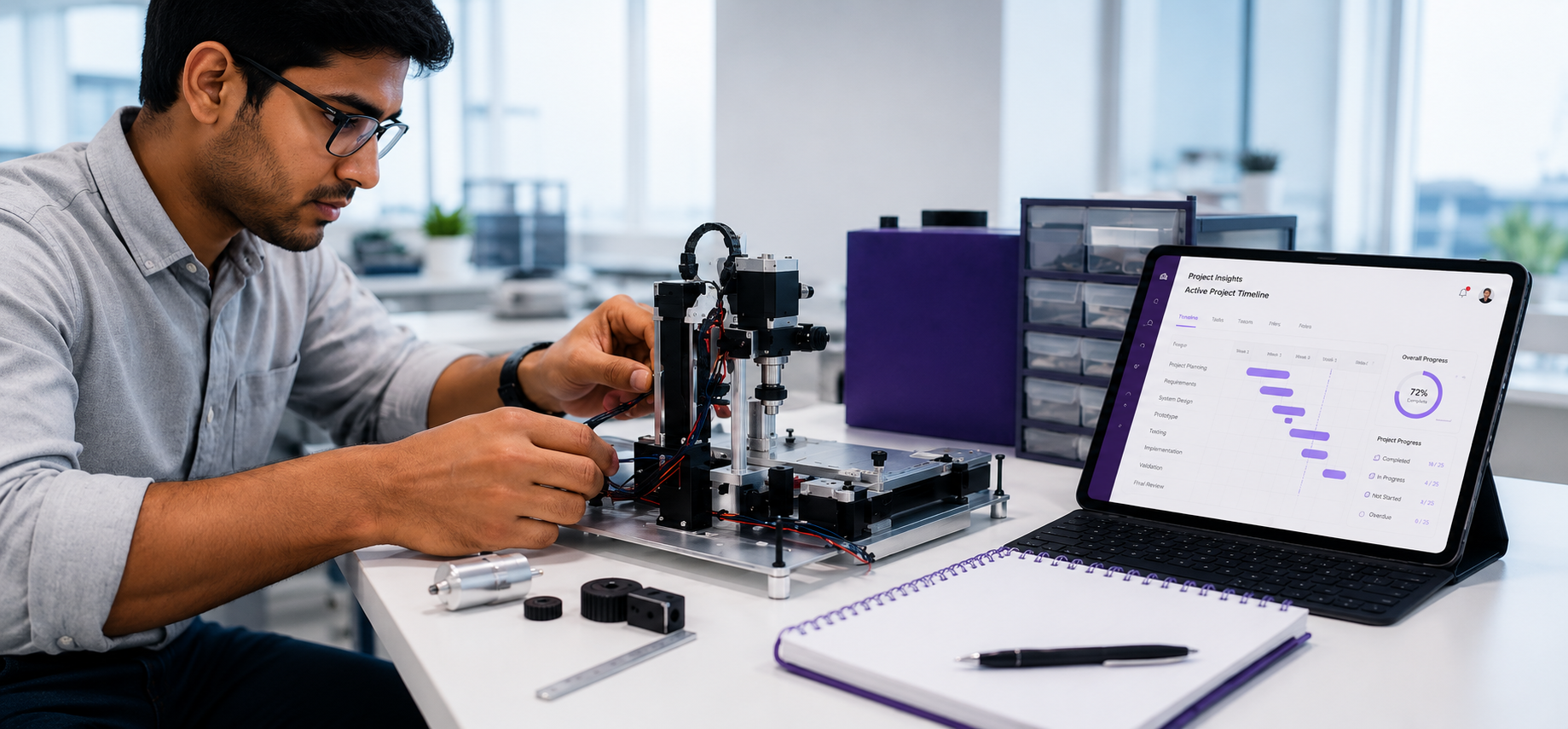
The shift of engineers from core branches into IT over the past decade was largely driven by employment trends rather than a preference for software careers. At the time, IT services offered abundant opportunities, while hiring across manufacturing and other core engineering sectors remained limited. Today, that equation is gradually changing—not because engineers are moving away from IT, but because core industries themselves are creating significantly more opportunities.
A major reason for this shift is the renewed investment in India’s manufacturing sector. The Government of India’s Production Linked Incentive (PLI) Scheme, launched in 2020, was introduced to strengthen domestic manufacturing by encouraging companies to expand production across sectors such as electronics, automobiles, semiconductors, pharmaceuticals, telecom, and advanced manufacturing. By August 2024, the scheme had attracted approximately ₹1.46 lakh crore in actual investment and supported around 9.5 lakh direct and indirect jobs, according to the Department for Promotion of Industry and Internal Trade (DPIIT). These investments are creating demand for engineers across multiple core domains—not just traditional manufacturing roles, but also automation, electronics, industrial systems, and advanced production technologies.
Alongside this investment, factories themselves are becoming more technology-intensive. The International Federation of Robotics’ World Robotics 2025 report recorded a record 9,100 industrial robot installations in India during 2024, making the country the sixth-largest market globally. As industries adopt automation, robotics, digital manufacturing, and connected production systems, employers increasingly seek engineers who can combine core engineering knowledge with modern technologies.
The software market, meanwhile, has become uneven rather than uniformly expansive. Naukri JobSpeak data through early 2026 shows IT-services hiring flat in several months even as other sectors grew, a marked change from the near-guaranteed absorption of the previous decade. The premise on which many core engineers entered IT has weakened.
What the people who switched back actually report
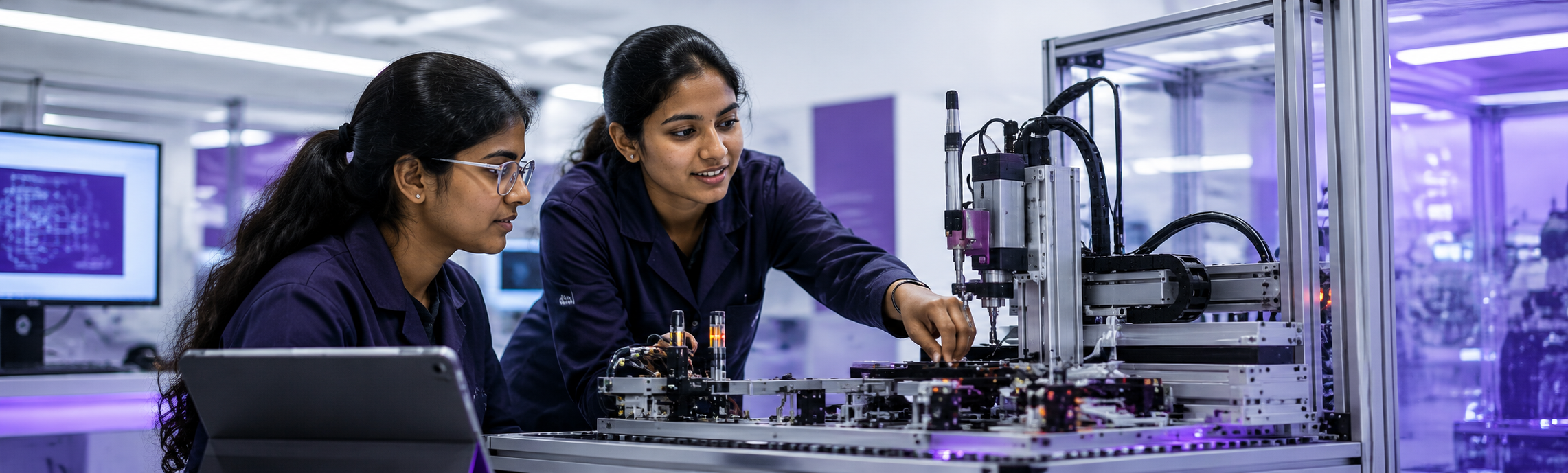
Perhaps the strongest evidence that a transition from IT to core engineering is possible comes not from market statistics, but from the people who have already made it. Among NAMTECH’s 2024 cohort is a mechanical engineer who spent three years working in the IT sector before making a conscious decision to return to manufacturing. The move was not driven by dissatisfaction with IT, but by the realization that his long-term aspirations lay in building solutions for the industry he had originally trained for. Rather than making an impulsive switch, he planned the transition carefully, recognizing that returning to core engineering would require new technical capabilities aligned with the realities of modern manufacturing.
What made the transition possible was understanding that his IT experience was not a detour, but an advantage. The analytical thinking, familiarity with digital systems, and software skills he had developed became valuable assets in an industry where manufacturing is increasingly driven by automation, connected systems, and data-led decision-making. At the same time, he knew that software proficiency alone would not be enough. To become industry-ready, he needed hands-on exposure to technologies such as industrial automation, programmable logic controllers (PLCs), robotics, and digital manufacturing systems.
NAMTECH practice-led master programs provided exactly that bridge. Through immersive laboratory work, exposure to industry-grade technologies, and learning rooted in real manufacturing environments, the program helped him combine his IT background with advanced manufacturing expertise. Instead of starting over, he was able to build on his existing strengths while acquiring the practical skills required for today’s hybrid engineering roles, making his transition into the core sector both structured and industry-relevant.
Where a structured return fits

This is the specific transition NAMTECH was built to support. As a not-for-profit initiative by ArcelorMittal Nippon Steel India, NAMTECH offers two-year techno-managerial master programs across Smart Manufacturing, Semiconductor Manufacturing, Robotics Engineering, Sustainability Engineering, Automotive Technology, Heavy Industry (Mining, Ports) and Data Analytics & Artificial Intelligence. Each program combines hands-on learning in on-campus micro-factories with a six-month industry capstone, preparing engineering graduates for technology-driven manufacturing careers.
For someone leaving a software role, the structure converts scattered self-study into a coherent, demonstrable qualification — and pairs the returning engineer’s existing digital skills with the physical-systems command the sector requires.
The engineers who have made this switch tend not to describe it as a retreat. They describe it as a correction — a return to the work they would have chosen at the outset had the job market of the time allowed it. The market of this decade allows it. That is the substantive change.

21 July, 2026