Announcements
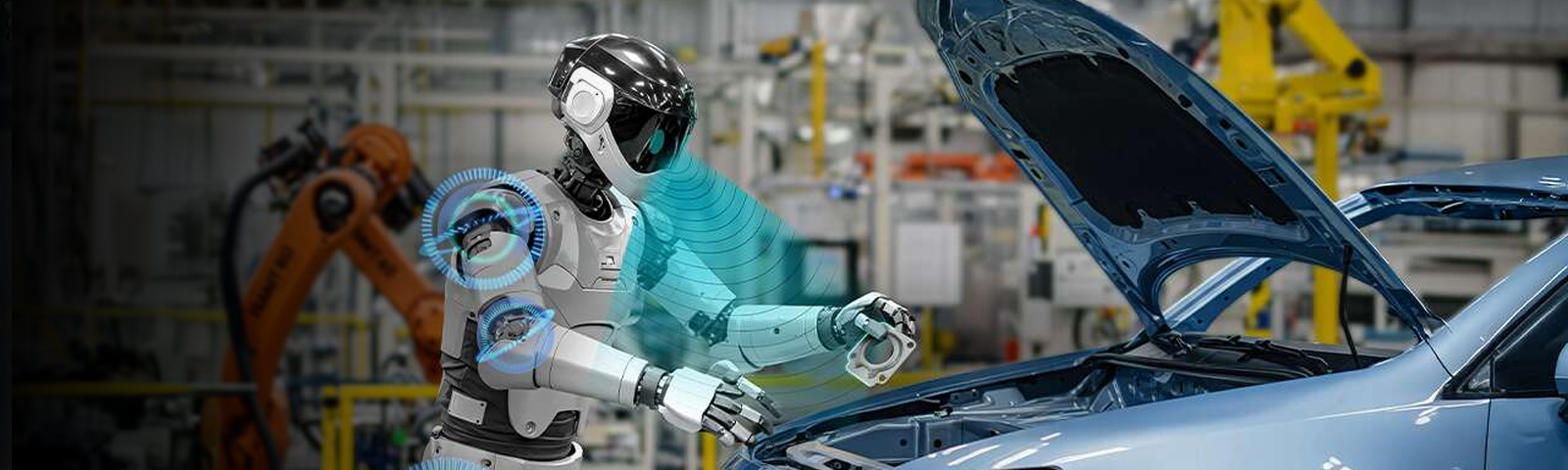
A humanoid robot is already inspecting car parts on a BMW assembly line. Another one moves totes inside an Amazon-linked warehouse. In China, a company called UBTECH is shipping thousands of humanoid robots a year to factories owned by BYD, Foxconn, and Audi. This is not science fiction anymore. It is happening right now, in 2026.
And it is coming to India faster than most engineering students realize. A Kochi-based company called iHub Robotics is already producing around 300 humanoid robots a month. Another Indian startup, Ati Robotics, is building humanoid robots without relying on Chinese parts, a smart move as global supply chains shift. India’s robotics market is projected to grow from about $1.98 billion in 2025 to $7.38 billion by 2034. That is a huge jump in less than ten years.
So here is the real question every engineering student should be asking: if humanoid robots and advanced automation are about to reshape Indian factories, is a standard engineering degree enough to keep up?
What’s Actually Changing in Indian Manufacturing Right Now
For years, factory automation in India meant fixed robotic arms doing one repetitive task, welding, painting, or picking. That is changing fast. Humanoid robots can walk, use tools, and adapt to spaces built for humans. They do not need a factory to be redesigned around them. This makes them far easier to deploy in real Indian factories, warehouses, and assembly lines.
Globally, companies like BMW, Mercedes-Benz, and Schaeffler are already running live pilots with humanoid robots on their factory floors. Nvidia’s CEO Jensen Huang put it simply at a major tech conference this year: physical AI has arrived, and every industrial company is becoming a robotics company. India will not sit this one out. With Make in India, PLI schemes for manufacturing, and a fast-growing EV and electronics sector, Indian factories are exactly the kind of environment where this next wave of humanoid robots in India will land first.
The Gap Between a Robotics Degree and a Robotics Career
Here’s the uncomfortable part. India produces one of the largest pools of engineering graduates in the world. But a large share of them are not ready for the automation-heavy factories they are meant to work in. Nearly 50% of Indian engineering graduates lack the industry-relevant skills companies are actually hiring for. Even more specific to robotics, fewer than 5% of engineering students in India get real hands-on exposure to industrial robots during their degree.
Think about that. Thousands of robots are being sold into Indian factories every year, but very few graduates have ever actually operated, programmed, or troubleshot one in person. Most robotics engineering courses in India are still built around theory-heavy classroom learning, with limited lab time and even less exposure to live industry projects. Even students who specifically search for masters in robotics India options often find programs that are strong on fundamentals but light on real industrial exposure. That gap is exactly what companies are struggling with when they say they can’t find “job-ready” robotics talent.
What Most Robotics Programs Teach vs. What the Industry Needs Now
The competition for robotics talent in India isn’t limited to a handful of premier government institutes. It spans more than 300 engineering colleges offering robotics-related degrees, several IITs and NITs with dedicated robotics labs, private universities, and a growing wave of certification platforms and ed-tech providers offering robotics and automation courses online. Most of them still follow a familiar pattern: strong fundamentals in mechanics and electronics, a few programming electives, and a final-year project. That foundation matters. But it is no longer enough on its own.
Here’s what the industry is actually asking for today:
- Hands-on experience with real industrial robots and cobots, not just simulations
- AI and computer vision skills, since most modern robots rely on vision systems to sense and adapt to their environment
- ROS (Robot Operating System) and Python fluency, the backbone of most commercial robotics platforms
- Exposure to warehouse, aerial, and humanoid-adjacent systems, not just single-arm industrial robots
- A business and management mindset, because engineers are increasingly expected to lead automation projects, not just build them
Most postgraduate robotics programs in India are strong on the first point and thin on the rest. That is the gap a new generation of engineers needs to close, and quickly, as humanoid and AI-driven robotics start moving from pilot programs into real production lines.
Where NAMTECH’s Master Program Is Built Differently
This is exactly the gap the Master Program in Robotics Engineering and Management at NAMTECH was designed to close.
The curriculum goes far beyond theory. Students work directly with industrial manipulators, robot kinematics, computer vision, and AI-driven control systems from semester one. Advanced labs cover collaborative robotics, warehouse automation, aerial systems, and vision-based applications, the same categories of robotics driving India’s fastest-growing automation markets. NAMTECH highlights this directly: the program is built to help students enter India’s $51 billion warehouse automation sector and $43 billion medical robotics sector, two of the areas where humanoid and advanced robotics adoption is accelerating fastest.
Just as important, the program doesn’t stop at engineering. It builds in real management training, project management, supply chain management, strategic leadership, and entrepreneurship, so graduates are ready to lead automation projects, not just execute them. A summer internship after year one and a hands-on capstone project in industry during the final semester make sure every student graduates with real, demonstrable experience, not just a transcript.
Students also graduate with a direct line into the industry. NAMTECH placement partners include names like ABB, FANUC, Bosch Rexroth, Siemens, Addverb, Mahindra, Hyundai, and Honda, companies that are actively building the automated and robotics-driven factories of India’s future. Scholarships of up to 100% on tuition are available based on academic performance and merit, making this level of training more accessible than many students expect.
Why This Matters More Than Ever, Right Now
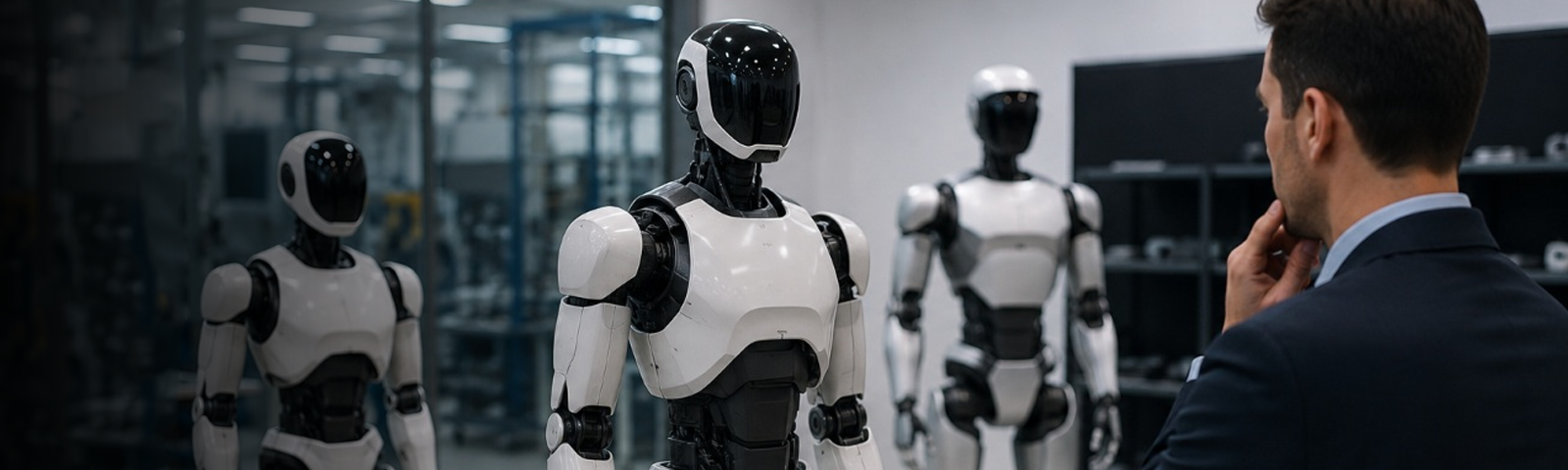
Humanoid robots are not going to replace engineers. They are going to change what engineers are expected to know. The engineers who understand AI-driven robotics, vision systems, and automation management today will be the ones leading India’s smart factories tomorrow, not watching from the sidelines as machines they don’t fully understand take over the floor.
India is entering its most important decade for robotics and automation. The market is growing, the government is investing, and global companies are already testing humanoid robots on factory floors that look a lot like the ones India is building right now. The only real question left is whether your engineering education is built for where the industry is going, or where it used to be.
If you want your degree to actually prepare you for the robotics revolution already underway in Indian factories, it’s worth seeing what a program built around it looks like. Explore the Master Program in Robotics Engineering and Management
Frequently Asked Questions
-
Are humanoid robots really being used in factories in India?
Yes, though adoption is still early. Indian companies like iHub Robotics are already manufacturing humanoid robots at scale, and global players like BMW, Mercedes-Benz, and Foxconn are running live humanoid robot pilots in their factories. India’s own robotics market is projected to grow from $1.98 billion in 2025 to $7.38 billion by 2034, and humanoid and advanced automation systems are a major part of that growth.
-
Will humanoid robots replace engineering jobs in India?
Not in the way people often assume. Humanoid robots are mostly taking on repetitive, physically demanding, or hazardous tasks. What’s changing is the skillset engineers need. Engineers who understand AI, robotics control, and automation management will be the ones designing, deploying, and managing these systems, not being replaced by them.
-
Why do most robotics engineering courses in India not prepare students for real industry jobs?
Many programs are still built around theory-heavy coursework with limited access to real industrial robots and live projects. Studies show fewer than 5% of engineering students in India get hands-on exposure to industrial robots during their degree, which creates a big gap between what students learn and what companies actually need.
-
What skills should I learn if I want a career in robotics in India?
Beyond core robotics fundamentals, focus on AI and computer vision, ROS (Robot Operating System) and Python programming, hands-on experience with cobots and industrial robots, and project or automation management skills. These are the areas most traditional programs cover the least, and where the industry demand is growing fastest.
-
What makes NAMTECH’s Master Program in Robotics Engineering and Management different from other robotics programs in India?
Unlike most robotics programs that focus on either pure technical training or theoretical coursework, NAMTECH’s program combines hands-on labs in AI, computer vision, and industrial robotics with structured management and leadership training. Delivered through the School of Robotics, it includes a summer internship and an industry capstone project, so graduates gain both technical depth and real-world, industry-tested experience, not just classroom learning.
-
Is this program only for students with a robotics background?
No. The program accepts graduates from mechanical, electrical, electronics, computer science, instrumentation, mechatronics, and several other engineering branches. It’s designed to help engineers from a range of backgrounds build strong robotics and automation expertise, even if robotics wasn’t their original specialization.

05 October, 2026