Announcements
Ask ten engineering students which sector will hire the most people in the next five years, and you’ll get ten confident, contradictory answers. EVs, because every carmaker in India is retooling. Aerospace, because defence budgets keep climbing. Semiconductors, because the government keeps announcing new fabs. Robotics, because everyone says automation is “the future.”
They’re all half right. That’s the actual problem.
The old question assumed one winner
Manufacturing hiring used to be sequential — one sector booms, absorbs talent, plateaus, and the next one takes over. That model is broken. India’s automotive semiconductor market alone is projected to more than double between 2024 and 2030, growing at roughly 15% a year, driven by EV adoption, ADAS, and vehicle electrification. That growth doesn’t sit inside one sector. It sits at the intersection of four connected capabilities that increasingly power every advanced manufacturing sector:
- Automotive, where electrification, connected vehicles, and advanced mobility are reshaping engineering roles.
- Semiconductors, which provide the chips and electronic systems behind EVs, aerospace platforms, and smart factories.
- Robotics & Automation, enabling precision manufacturing, productivity, and flexible production across industries.
- Digital & Intelligent Manufacturing, where AI, industrial data, simulation, and smart systems optimise how products are designed, built, and maintained.
This is why asking “Which sector will hire the most engineers?” is becoming the wrong question. These industries are no longer growing in isolation—they are building on the same technological foundation and increasingly competing for engineers with overlapping, future-ready skills.

Automotive: the sector rewriting its own playbook
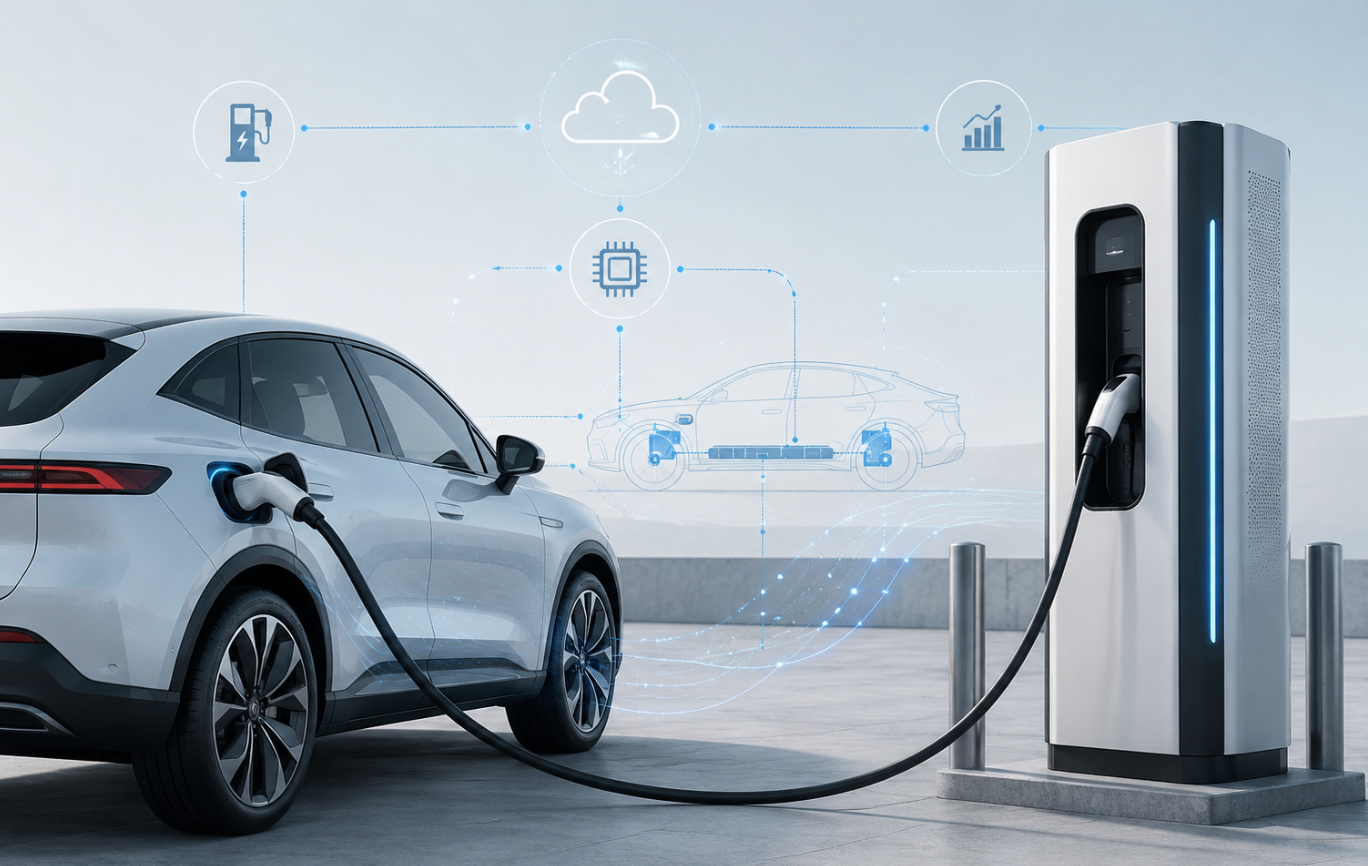
The EV shift didn’t just change what’s under the hood — it changed who gets hired. Industry research from SIAM and Deloitte found that only about a quarter of a traditional ICE engineer’s skills transfer directly to EV roles; a much larger share needs fresh skilling in battery systems, power electronics, and embedded software. That’s not a small tweak to a curriculum. That’s a different engineer.
Aerospace: smaller, slower, but structurally hungry
Aerospace won’t out-hire automotive in raw numbers — entry salaries for aerospace engineers in India still trail EV and semiconductor roles. But it’s structurally starved for talent. HAL, ISRO, DRDO, Tata Advanced Systems, and the India engineering centres of Boeing and Airbus are all hiring against a backdrop of defence acquisition approvals running into the tens of thousands of crores this year alone. When precision manufacturing, composites, and systems integration are your bottleneck, you can’t hire your way out with volume. You need depth.
Semiconductors and robotics: the force multiplier
Neither EVs nor aerospace happen without chips or automation underneath them. India’s semiconductor workforce — currently in the low hundreds of thousands — sits at the base of a value chain the government has committed over ₹1.27 lakh crore to expanding under ISM 2.0. Robotics, meanwhile, isn’t a sector so much as a layer now running through every other one: India’s industrial robot installations crossed a record high in 2024, per the International Federation of Robotics, making the country the sixth-largest installer in the world.
So which sector wins?
Wrong question. The engineers who win are the ones who can move across automotive, semiconductor, and robotics fluently — because the hiring managers building EVs, fighter jet components, and chip fabs are increasingly looking for the same underlying competencies: systems thinking, hands-on manufacturing exposure, and the ability to be productive from day one, not month six.
That’s precisely the gap NAMTECH’s Master in Automotive Technology and Management, Semiconductor Manufacturing Technology and Management, and Robotics Engineering and Management programs are built to close — not by picking a sector for you, but by building the cross-domain manufacturing fluency all four sectors are competing for.

18 August, 2026