Announcements
 |
| 

NAMTECH offers seven two-year techno-managerial master programs, and the right one for a given candidate depends less on ambition in the abstract than on undergraduate background and the specific work the candidate wants to do. What follows is a direct guide to matching the two. Each program runs as a full-time residential course with a total fee of ₹14,00,000, and each requires a B.E. or B.Tech degree with at least 60% across Class 10, Class 12, and graduation, with no active backlog.
Start with your branch, then your intended role
Smart Manufacturing Technology and Management
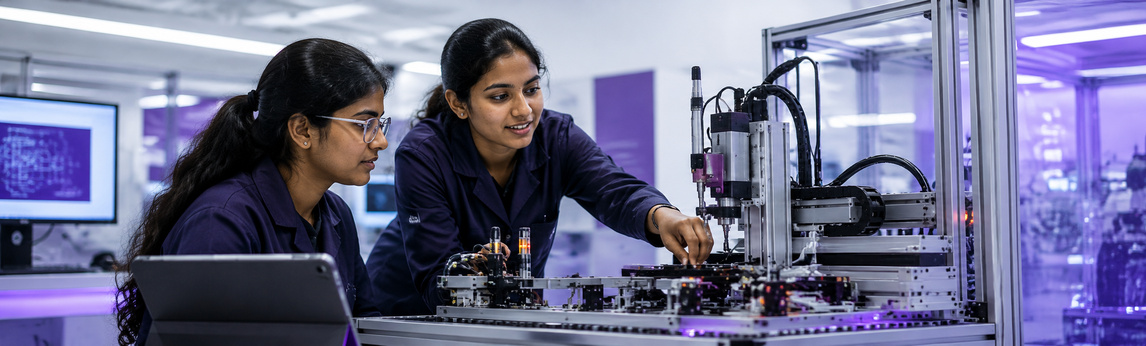
This program is the broadest of the programs and the natural fit for mechanical, electrical, electronics, instrumentation, mechatronics, production, and industrial engineers who want to work at the center of the Industry 4.0 transition.
The program covers precision manufacturing, intelligent automation, Industrial IoT (IIoT), digital twins, programmable logic controllers (PLCs), and Manufacturing Execution Systems (MES), preparing graduates for roles such as Digital Manufacturing Engineer, Smart Factory Engineer, MES Manager, Automation Controls Engineer, Industrial IoT Engineer, and Manufacturing Systems Consultant. Career prospects are expanding rapidly as manufacturers accelerate Industry 4.0 adoption. India’s smart manufacturing market is projected to grow at a 15.7% CAGR through 2033, while the global MES market is expected to grow at 11.7% CAGR through 2033. The demand for these skills is already visible, with 800+ MES-related job openings listed in India across sectors such as automotive, electronics, semiconductors, and industrial automation, creating strong opportunities for engineers with expertise in digital manufacturing technologies.

Semiconductor Manufacturing Technology and Management
Semiconductor Manufacturing Technology and Management suits electronics, electrical, and communication engineers, as well as physics and materials science graduates, who want to build careers in India’s rapidly expanding semiconductor industry. The program covers semiconductor devices, integrated circuit fabrication, wafer processing, assembly and packaging, testing, and quality systems, preparing graduates for roles such as Process Engineer, Process Integration Engineer, Yield Engineer, Equipment Engineer, and Semiconductor Manufacturing Engineer.
The timing for entering this sector has rarely been stronger. India’s Semiconductor Mission and a series of government-approved fabrication and OSAT projects are driving unprecedented investment in the domestic chip ecosystem. The India semiconductor market is projected to grow from approximately USD 38 billion in 2023 to over USD 100 billion by 2032, while the global semiconductor industry is expected to surpass USD 1 trillion in annual revenue by the end of the decade. This expansion is creating demand for engineers across fabrication, packaging, testing, equipment, and process engineering, making semiconductor manufacturing one of the country’s fastest-growing engineering career paths.
Robotics Engineering and Management
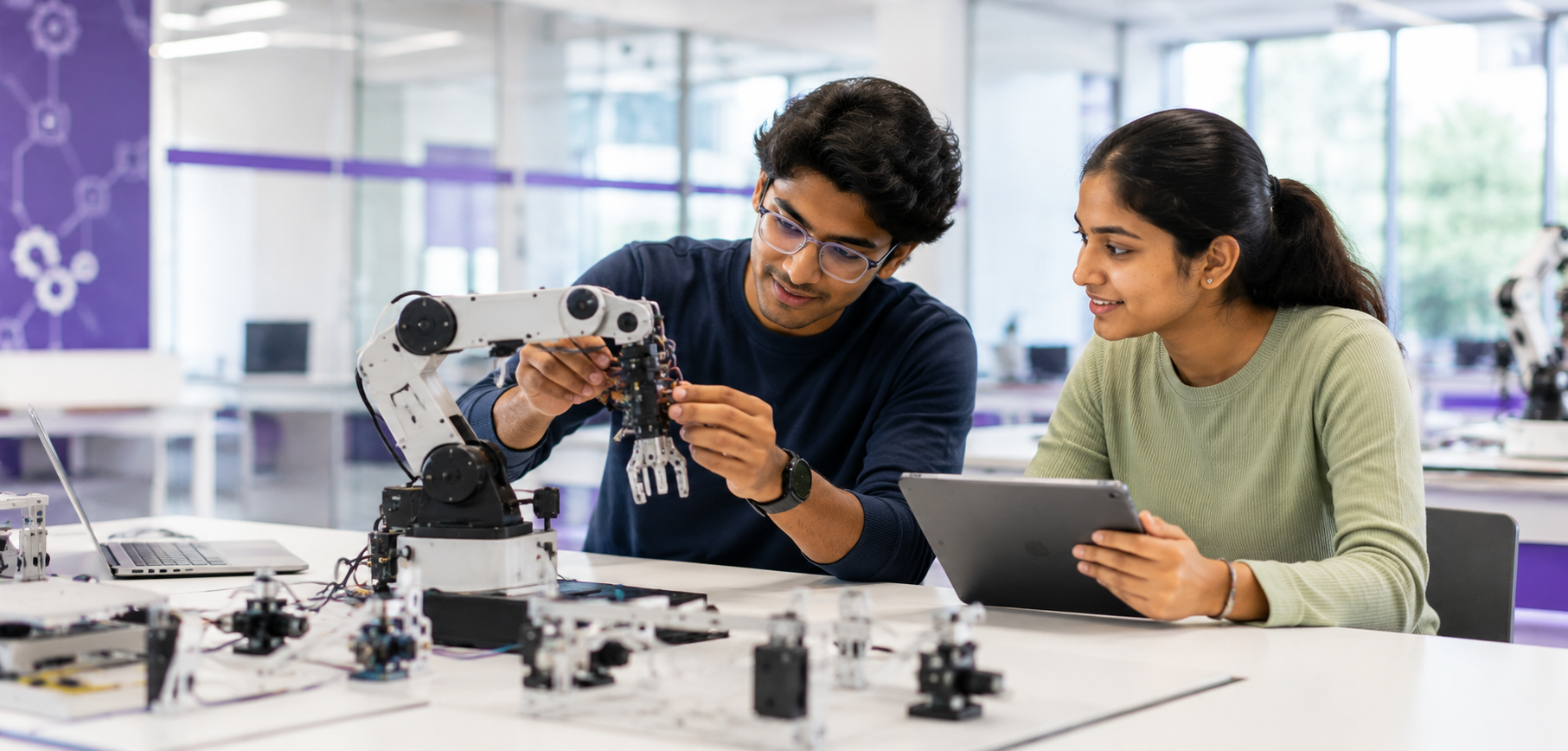
Robotics Engineering and Management is built for mechanical, electronics, mechatronics, electrical, and instrumentation engineers who want to work at the intersection of robotics, automation, and intelligent systems. The program combines robot kinematics and dynamics with programming, Robot Operating System (ROS), computer vision, AI-enabled robotics, industrial automation, and control systems, preparing graduates for careers as Robotics Engineers, Automation Engineers, Robotics Software Engineers, Controls Engineers, and Autonomous Systems Engineers.
Demand for robotics professionals is accelerating across manufacturing, logistics, healthcare, warehousing, and mobility as automation becomes central to modern industry. According to the International Federation of Robotics, India recorded a record 9,100 industrial robot installations in 2024, ranking sixth globally. At the same time, the global robotics market is projected to grow at a CAGR of over 15% through the next decade, driven by increasing adoption of industrial robots, autonomous mobile robots (AMRs), and AI-powered automation. As organizations continue investing in smart factories and intelligent automation, engineers with expertise in robotics and control systems are expected to remain in high demand across industries.
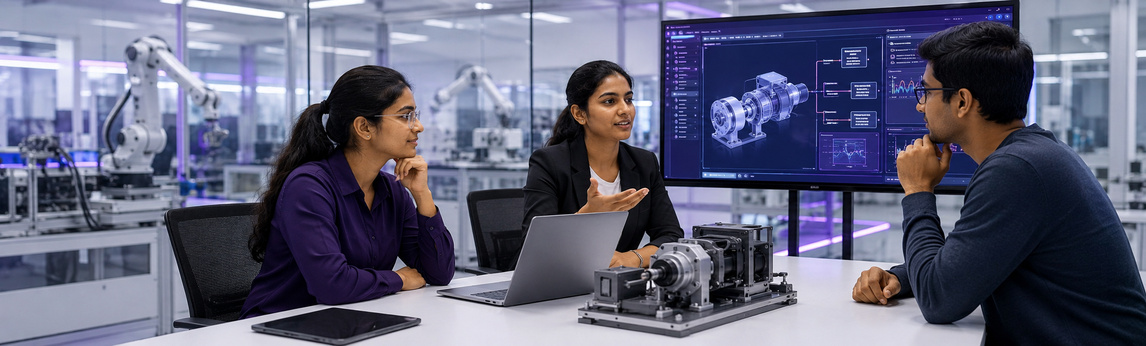
Heavy Industry Engineering
Offered as a Master in Technology and Management and co-created with the ArcelorMittal Design and Engineering Centre, is the program for engineers targeting steel, mining, ports, and large-scale infrastructure.
It is open to graduates in Mechanical, Materials Science, Metallurgy, Production, and Industrial Engineering, and is structured as 16 months of immersive on-campus learning followed by an eight-month paid internship at the ArcelorMittal Design and Engineering Centre (AMDEC), with a monthly stipend of ₹30,000. The program is designed with an assured career pathway at AMDEC, enabling students to gain real-world heavy industry experience and seamlessly transition into professional engineering roles.
Students choose four electives across three tracks — Metals and Mining Technology, Smart Capital Project Management, and AI and Digital Engineering in Plant Design — and graduate toward careers across integrated steel plants, EPC firms, port operators, mining companies, and digital engineering. It is the most direct route for anyone who wants to work inside India’s heavy manufacturing base rather than adjacent to it.
Sustainability Engineering and Management
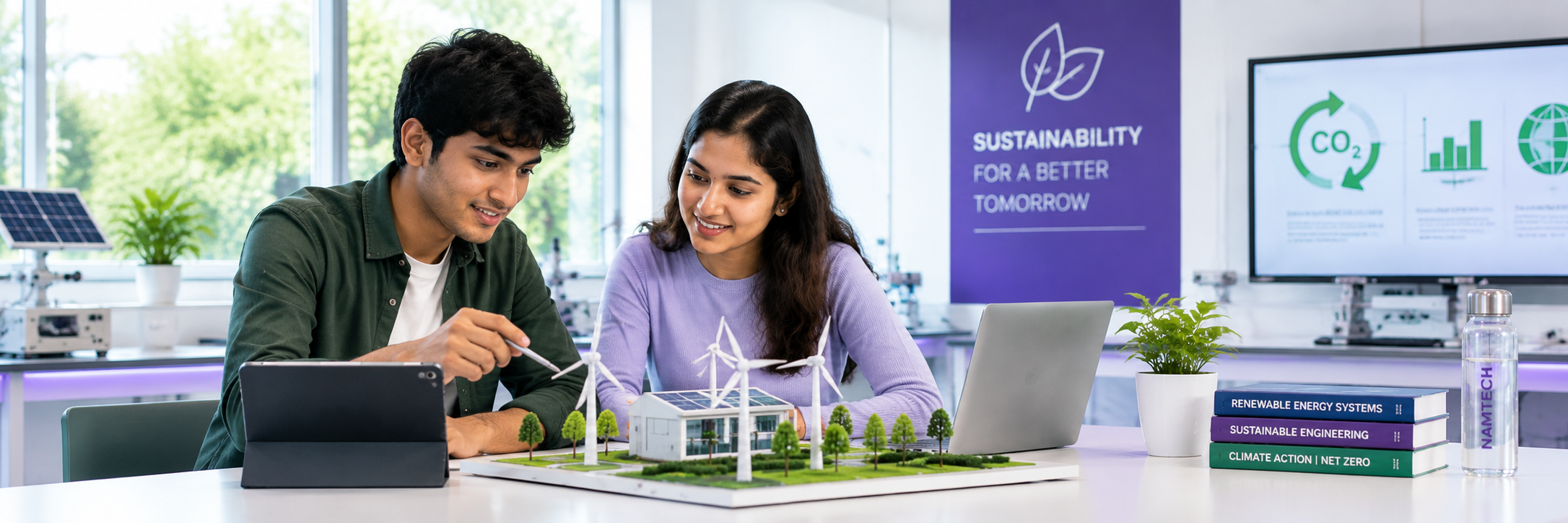
This Program accepts graduates from civil, chemical, environmental, energy, petroleum, and architecture backgrounds who want to build careers in decarbonization, renewable energy, and ESG. The program covers emission modelling, life-cycle assessment (LCA), renewable energy systems, environmental economics, and ESG, preparing graduates for roles such as Sustainability Engineer, Renewable Energy Analyst, ESG Consultant, Environmental Engineer, and Climate Change Analyst. As industries accelerate their net-zero commitments, demand for sustainability professionals continues to grow. India is targeting 500 GW of non-fossil fuel energy capacity by 2030, while the global ESG reporting software market is projected to grow at over 16% CAGR through 2030. Co-created with KPMG in India, the program combines industry-aligned learning with hands-on exposure through 10+ living and experimental labs, equipping graduates with practical skills for one of engineering’s fastest-growing domains.
Automotive Technology and Management
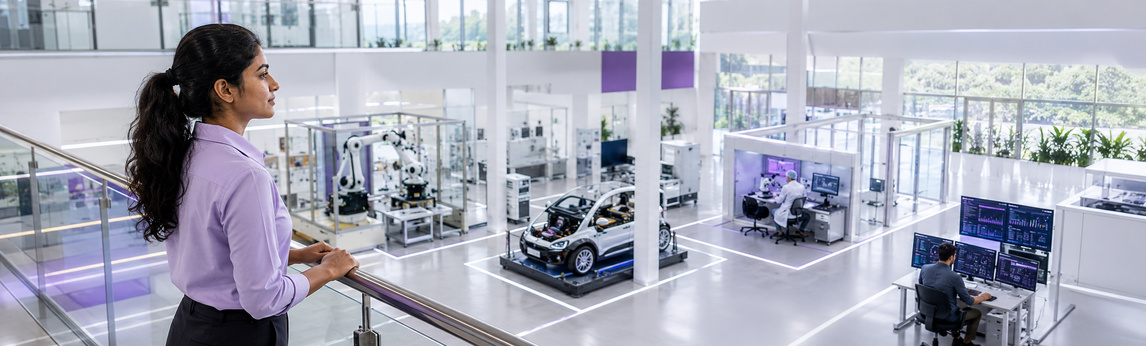
This program is designed for mechanical, automobile, electrical, electronics, and mechatronics engineers who want to build careers in electric vehicles and next-generation mobility. The program covers electric and hybrid power trains, battery systems, advanced driver-assistance systems (ADAS), vehicle dynamics, and automotive cybersecurity, preparing graduates for roles such as EV Engineer, Automotive Design Engineer, ADAS Engineer, Battery Systems Engineer, and Vehicle Integration Engineer.
As the automotive industry rapidly shifts towards electrification, connected vehicles, and intelligent mobility, demand for skilled engineers continues to rise. India’s EV market is projected to grow at a CAGR of over 28% through 2030, while the global ADAS market is expected to grow at over 17% CAGR during the same period, creating strong career opportunities for engineers equipped with expertise in next-generation automotive technologies.

Data Analytics and Artificial Intelligence
This program is the most software-intensive program and is ideal for computer science, IT, electronics, and interdisciplinary engineering graduates who want to build careers in AI and data-driven technologies. The program covers machine learning, deep learning, computer vision, natural language processing (NLP), generative AI, and data engineering, preparing graduates for roles such as Data Scientist, AI Engineer, Machine Learning Engineer, NLP Engineer, and AI Solutions Specialist.
As AI transforms every industry—from manufacturing and healthcare to finance and logistics—the demand for skilled professionals continues to surge. India’s AI market is projected to grow at a CAGR of over 25% through 2030, while the global AI market is expected to exceed USD 1.8 trillion by the end of the decade, creating significant opportunities for engineers with expertise in artificial intelligence and advanced analytics.
A simple way to decide

| Your Engineering Background | Recommended NAMTECH Program | Best Suited For |
| Mechanical Engineering | Smart Manufacturing, Automotive Technology, Robotics Engineering, or Heavy Industry Engineering | Depending on whether your interest lies in factories, vehicles, robotics, or heavy industrial plants |
| Metallurgy, Materials Science, Production Engineering | Heavy Industry Engineering | Careers in steel, mining, and heavy engineering |
| Electronics, Electronics & Communication, Physics | Semiconductor Manufacturing | Semiconductor fabrication, chip manufacturing, and electronics manufacturing |
| Mechatronics, Instrumentation, Robotics | Robotics Engineering | Industrial robotics, automation, and intelligent systems |
| Civil, Chemical, Environmental, Petroleum Engineering | Sustainability Engineering | Sustainable manufacturing, energy transition, ESG, and environmental engineering |
| Computer Science, Information Technology | Data Analytics & Artificial Intelligence | AI, industrial analytics, and digital transformation. Those interested in digital manufacturing may also consider Smart Manufacturing. |
The programs are distinct in content and in the careers they open, but they share a structure: a heavily applied model culminating in a substantial industry immersion, designed so that graduates enter the workforce with demonstrated experience. NAMTECH — a not-for-profit initiative by ArcelorMittal Nippon Steel India — reports a 100% placement record across its two graduating batches, with a class average of ₹8.42 lakh and a highest package of ₹20 lakh (figures self-reported by the institute). The decision, in the end, is not which program is best in general, but which one leads to the work you actually want to do.

22 July, 2026