Announcements
Visit any modern warehouse, manufacturing facility, or hospital today and you will notice one thing — machines have reached a point where they operate with minimal human assistance. These systems perform decision-making tasks, handle process optimisation, and manage operations with remarkable precision.
Robots are assembling cars. AI systems are managing logistics. Automated machines are sorting packages faster than any human team could. But here’s what people often miss: behind every successful automation system, there are people making strategic decisions about how and where these technologies should be used. That’s where a Master’s in Robotics comes in.
Why Robotics Needs Business Leaders
Robotics has traditionally been seen as an engineering field. Building machines is the responsibility of engineers. Developing algorithms belongs to program. Maintaining systems is handled by technicians.
However, before any of that begins, companies face bigger questions:
- Should we automate this process?
- What will it cost?
- How quickly will it deliver returns?
- How will it impact our workforce?
Today, these decisions lie with business leaders rather than engineering teams alone. A Master’s in Robotics equips students with the skills needed to answer these questions by combining technical understanding with the strategic thinking required for large-scale implementation.
For those exploring robotics colleges or looking for a reputable robotics degree in India, this kind of program represents a significant step forward — one that goes beyond engineering fundamentals to develop leadership capability.
Understanding the Technology Without Being an Engineer
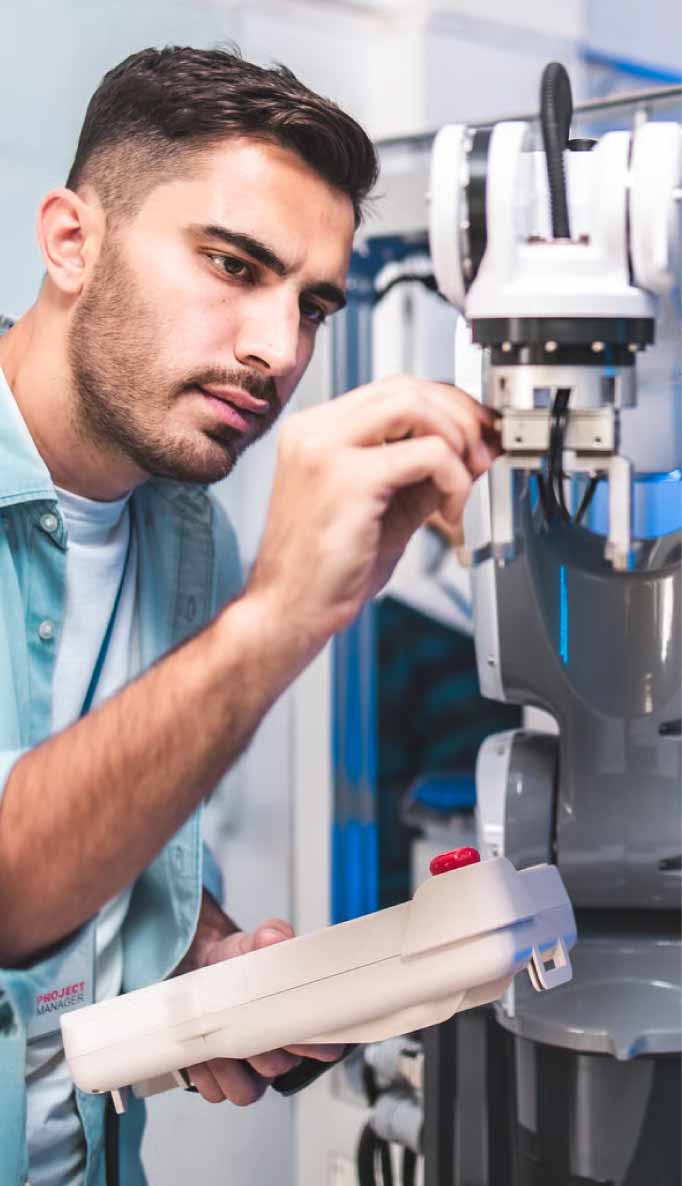
Leading automation projects does not require you to build robots from scratch. However, it does require a solid understanding of how the technology works and what it is capable of.
Most robotics program cover areas such as:
- Industrial robotics
- Artificial intelligence and machine learning
- Autonomous systems
- Human-robot interaction
The focus is not on programming robots. Instead, it is on helping students evaluate how these systems can create business value. This foundational understanding enables better decision-making within organisations. The best robotics colleges in India are increasingly aligning their curricula with this approach — prioritising applied understanding over purely theoretical training.
Learning How Automation Transforms Businesses
Automation is not just about improving speed — it is about transforming entire industries.
Smart manufacturing enables factories to build connected systems where machines communicate with each other. Logistics companies use robotics to process volumes far beyond human capacity. Hospitals are exploring robotic surgery and automated diagnostics.
A Master’s in Robotics examines how these technological changes influence business models, supply chains, workforce structures, and customer experiences. Students learn through real-world examples, gaining insight into both opportunities and operational challenges.
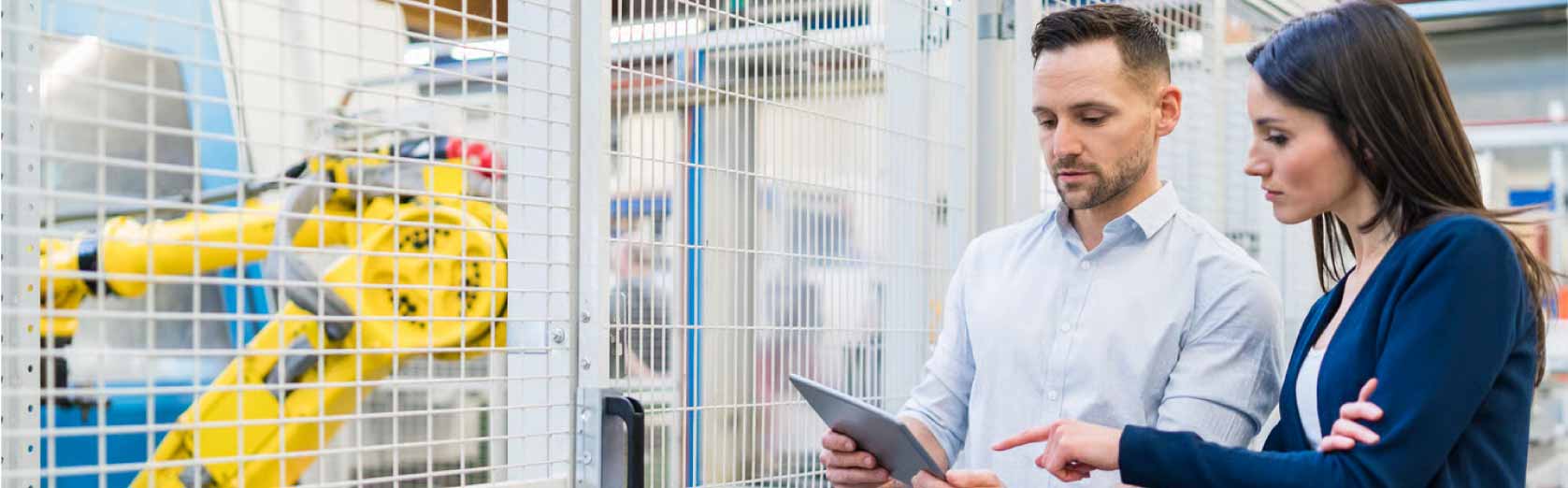
When automation is implemented without sufficient expertise, the costs — financial and operational — can be significant. This is why organisations increasingly need professionals who can bridge the gap between technical teams and executive leadership. Leading robotics engineering colleges in India, as well as global institutions, now recognise this and are shaping their program accordingly.
Building In-Demand Skills
A Master’s in Robotics helps develop skills such as:
- Evaluating automation investment decisions
- Managing large-scale technology deployments
- Analysing robotics-driven supply chains
- Leading digital transformation initiatives
- Aligning automation strategies with business objectives
Companies don’t just need people who understand robotics — they need professionals who can translate robotics into business value. That’s the key difference. A quality robotics and automation engineering institute will build both dimensions: the technical literacy and the strategic mindset.
NAMTECH’s Master’s in Robotics Engineering & Management is designed with exactly this in mind. The “Management” in the degree title is not incidental — it signals that graduates are being prepared for roles that require them to make decisions, not just execute them. In a field where organisations often struggle to find people who can speak both the language of engineering and the language of business, that preparation carries real weight.
Career Opportunities Across Industries
Automation is impacting nearly every industry, creating opportunities across sectors. Graduates with a Master’s in Robotics can explore roles in:
- Manufacturing and smart factories
- Logistics and warehouse automation
- Autonomous vehicles and mobility technology
- Healthcare robotics
- AI and robotics consulting
- Technology product management
For businesses today, adopting automation is no longer optional — it is essential to remain competitive. Robotics is now a core component of digital transformation across industries. Whether you attend a dedicated school of robotics or pursue a broader engineering program with a robotics specialisation, the career pathways remain strong and continue to grow.
Leading the Future of Work
Automation is fundamentally reshaping the workplace. As robots take over repetitive tasks, the nature of human work is evolving. Employees are moving into roles that require creativity, problem-solving, and strategic thinking. Managing this transition is a key responsibility of business leaders.
Automation should not only improve efficiency but also create opportunities for employees to upskill and move into more meaningful roles. A Master’s in Robotics prepares leaders to balance technological advancement with its human impact. Every robotics engineering school in India and around the world that takes this mission seriously is contributing to a workforce that can thrive alongside intelligent machines.
Why This Degree Matters Now
Over the next decade, automation will accelerate rapidly. Robotics systems are becoming more affordable, artificial intelligence is advancing quickly, and businesses are under constant pressure to improve productivity.
Organisations that implement automation thoughtfully will gain a significant competitive advantage. However, technology alone is not enough — success depends on leadership that can guide its adoption and integration effectively. This is precisely the kind of professional that a strong robotics technology school in India or abroad is designed to produce.
What makes this moment particularly relevant for Indian students is the scale of industrial transformation happening domestically. Manufacturing, logistics, and healthcare sectors across India are investing heavily in automation. Institutions like NAMTECH, which have built their program around this convergence of robotics and management, are responding to a genuine and growing domestic need — not just a global trend.
Final Thoughts
Robotics is often seen purely as an engineering discipline focused on building machines. While engineers and scientists are essential, the field also requires leaders who can connect technology with business strategy.
A Master’s in Robotics prepares individuals to operate at this intersection. It enables them to understand automation systems, evaluate their business impact, and guide organisations through one of the most significant technological shifts of our time. Whether you are exploring options at a robotics engineering institute in India — such as NAMTECH — or evaluating program globally, the decision to pursue this degree is a decision to lead, not just participate, in the automation era.
The real challenge of the future lies in defining how humans and machines will work together. This program is designed to develop the leadership needed to navigate what comes next.

10 April, 2026