Announcements
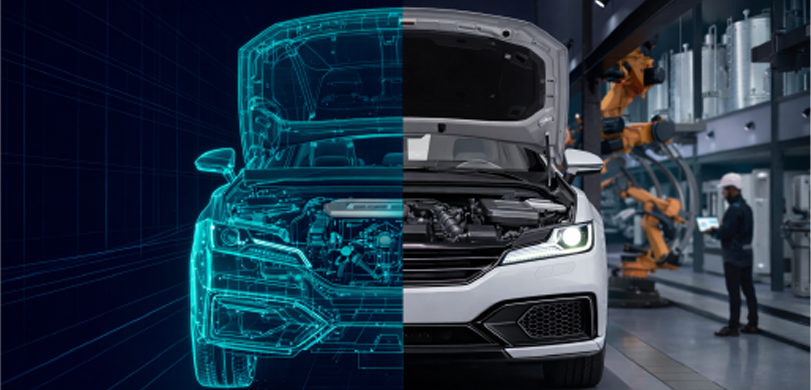
Factories of tomorrow will not start with machines or blueprints; they will start with data. At the heart of this data-led architecture is the Digital Twin (DT): a virtual twin that simulates, foretells, and optimizes a factory even before it is physically built.
The Digital Twin has morphed from being a computerized replica of a machine. When hosted in the cloud and connected across engineering, manufacturing, and enterprise levels, it becomes a Factory Twin, an organic digital entity that perpetually learns and improves from its physical twin.
This transition is not hypothetical anymore. Industry-wide, digital-first factory approaches are demonstrating how risk can be mitigated and CAPEX optimized before a single asset must be ordered.
“The best way to predict the future is to invent it.”
— Alan Kay
Three Major Shifts in Manufacturing Industries:
- From Physical-First to Digital-First: The Shift in Logic
Traditional factory design was a linear process that included design, build, install, then optimize. That meant large upfront capital and limited flexibility when the first bottleneck appeared.
The digital-first approach flips that completely. A factory today can be designed, simulated, and stress-tested entirely in the cloud.
Every process layout, logistics flow, cycle time, energy flow, and manpower utilization can be validated virtually before execution. When construction begins, the decisions are already proven.
A global medical-device manufacturer reported in McKinsey’s “Smarter Growth, Lower Risk” study that by developing a cloud-based digital twin, it could test multiple factory configurations virtually, reducing overall construction time and investment risk (McKinsey,2023).
When the physical factory is eventually built, every decision is already validated by data, not by assumption.
“A factory that exists virtually before it exists physically has already paid for itself in avoided mistakes.”
- From Asset Twin to Factory Twin
People tend to use the term Digital Twin in too narrow a sense for single machines. However, the true potential is only unlocked if we create system-level twins, that is, the entire factory network, not separate assets.
A holistic Factory Twin integrates:
- IIoT (Industrial Internet of Things) data from equipment and robots
- MES (Manufacturing Execution System) data from production and process control
- ERP (Enterprise Resource Planning) and SCM (Supply Chain Management) data from business operations and supply chains
Together, they form a digital nervous system that mirrors the physical enterprise in real time.
In the well-designed state, this twin can reproduce “what-if” scenarios, ranging from product mix variations to changes in manpower, and suggest the best decision before the disruption takes place.
“Digital twins will be to the physical world what simulation was to design, a revolution that makes optimization continuous.”
– Dr. Michael Grieves, Father of the Digital Twin Concept
- From Reactive to Predictive: Engineering Out Risk
Manufacturing has always been uncertain: variable demand, equipment breakdowns, delayed suppliers. Conventional systems respond only after these things have happened. A Factory Twin anticipates them in advance.
With IIoT and MES data streams, digital twins make it possible:
- Simulation of scenarios for new product launch or capacity changes
- Real-time machine data-based predictive maintenance
- Energy and sustainability simulation under fluctuating load conditions
- Historical and real-time variance-based bottleneck forecasting
A Siemens and Wipro PARI case study demonstrated how virtual commissioning testing automation changes within a twin before physical rollout reduced debugging time and cut commissioning duration significantly (Siemens, Wipro PARI Case Study, 2024). Such predictive accuracy transforms what was previously reactive firefighting into risk-engineered foresight.
“Predicting failure before it happens is not magic, it is systems engineering powered by data.”
Digital Twin Types:
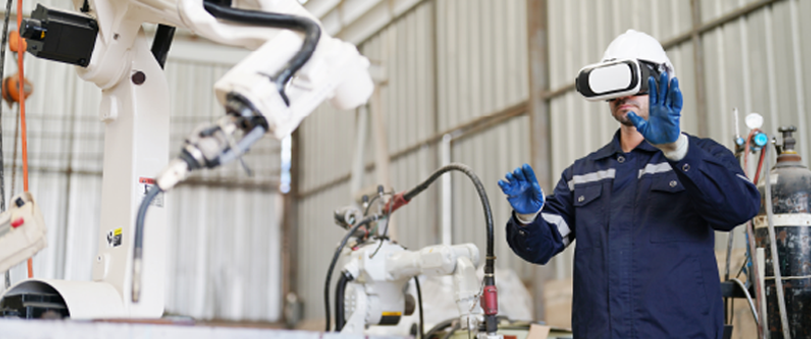
Digital twins exist at multiple levels in manufacturing operations. Understanding these types helps leaders decide the scope and sequence of digital deployment.
- Component / Part Twin
Models the performance, physics, or wear of a single component such as a motor, gear, or sensor.
- Asset / Machine Twin
Replicates an individual machine or production line to monitor health, maintenance needs, and output rates.
- Process Twin
Simulates end-to-end manufacturing processes such as assembly, packaging, or quality control.
- Factory / System Twin
Represents the full factory ecosystem including layout, materials, workforce, utilities, and scheduling.
- Enterprise Twin
Connects factories, suppliers, logistics, and business operations to optimize supply chain decisions.
The Factory Twin sits at the critical intersection of process, machine, and enterprise data, unlocking continuous optimization and strategic planning.
What Is a Digital Thread and Why It Is Needed
A digital twin is the model. A digital thread is the connection.
The digital thread creates traceability across the entire lifecycle of a product or process, from design to manufacturing to supply chain and after-sales service. It ensures that the right data flows to the right system at the right time.
A digital thread is needed because:
- It connects operational and enterprise systems so information is never isolated
- It provides end-to-end visibility for traceability, compliance, and quality control
- It enables one source of truth across engineering, manufacturing, and business teams
- It makes continuous learning possible by feeding back real-world results into virtual models
The guiding principle is simple:
“Interoperability before intelligence.”
Only when systems can talk to each other can intelligence truly emerge.
Why the Cloud Is the Natural Home for the Factory Twin
The cloud is not just storage; it is the operating environment for modern manufacturing intelligence.
A cloud-native Factory Twin enables:
- Unified data integration: Seamlessly merging IIoT, MES, ERP, and supply data
- Scalable analytics: Running complex simulations without infrastructure constraints
- Global collaboration: Engineers, planners, and suppliers working on a shared live model
- Edge-cloud synchronization: Real-time machine data continuously refining the twin
Even legacy systems can connect through standards like OPC-UA (Open Platform Communications Unified Architecture), MQTT (Message Queuing Telemetry Transport), or REST APIs (Representational State Transfer Application Programming Interfaces), ensuring that transformation does not demand full system replacement, only interoperability.
“Think of your factory as an app that updates overnight, not a static building that ages every year.”

The New Factory Blueprint
Factories of the future will be engineered digitally, validated virtually, and deployed physically. Those who embrace cloud-native digital twins early will lead this transformation not by owning more machines, but by mastering the data that drives them.
The evidence is now clear. According to McKinsey, the integration of digital twins across the manufacturing lifecycle can increase throughput by 10 percent, reduce operational cost by 10 percent, and accelerate time-to-market by up to 50 percent (McKinsey / Open Text, The Ever-Evolving Digital Twin, 2023).
The competitive advantage will belong to organizations that view their factories not as fixed assets, but as living systems continuously optimized, continuously learning.
“As the saying goes, the factory of the future will have only two employees — a man and a dog. The man will be there to feed the dog.
The dog will be there to keep the man away from touching the equipment.”

Designation : Associate Professor
23 December, 2025