Announcements
India’s government has now put an officially confirmed ₹60,000 crore behind the idea that skilling institutes, not just factories, determine whether the country’s manufacturing ambitions actually materialize. NAMTECH’s confirmed, named role in two of that scheme’s earliest approved projects is a useful, concrete case study in why.
The scale of the government’s commitment, as officially disclosed
Per Ministry of Skill Development and Entrepreneurship press releases, PM-SETU’s ₹60,000 crore outlay is split as ₹30,000 crore from the Centre, ₹20,000 crore from states, and ₹10,000 crore from industry, funding the modernization of 1,000 government ITIs and five National Skill Training Institutes. Individual projects are structured as Special Purpose Vehicles with industry holding 51% ownership and government 49%, with government co-funding up to 83% of project costs. This is a genuinely large, carefully structured national investment, not a symbolic gesture.
NAMTECH’s confirmed position within it
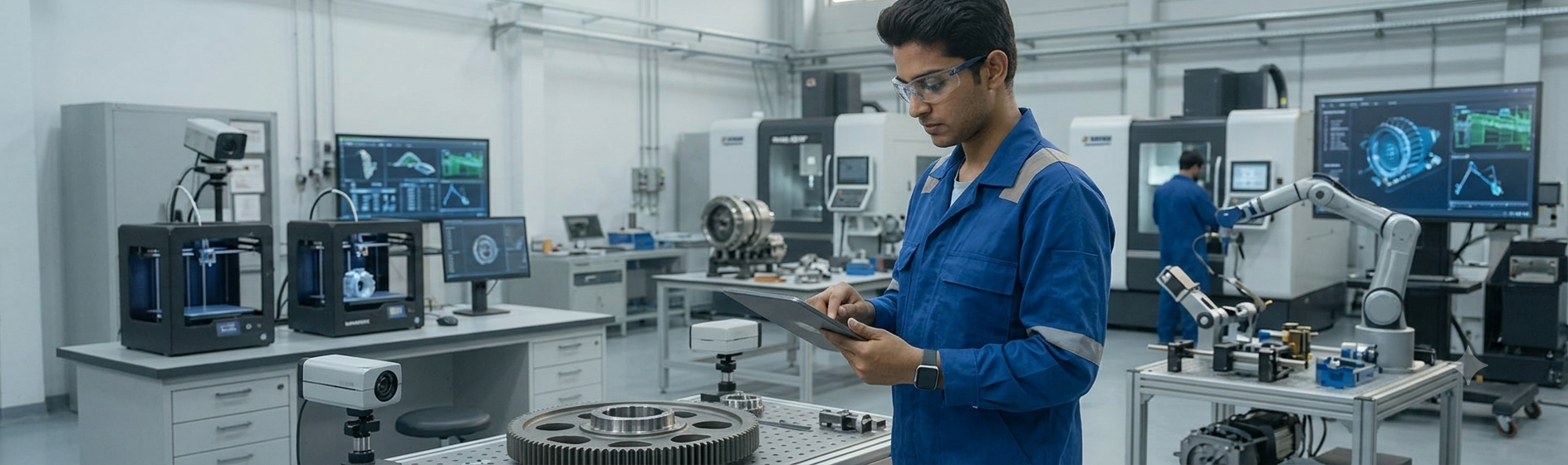
Official PIB releases name New Age Makers Institute of Technology, NAMTECH, as academic partner alongside ArcelorMittal Nippon Steel India on two projects: the Visakhapatnam, Andhra Pradesh cluster, confirmed by the Ministry as the first Strategic Investment Plan approved nationally under the scheme (May 30, 2026), and the ₹240 crore Surat, Gujarat cluster (announced July 10, 2026), targeting 3,528 new seats and around 25,000 trainees over five years.
Why this matters beyond any single institution
A modernized ITI network feeds directly into the sectors India is trying to grow: the Surat cluster’s own stated focus areas, advanced manufacturing, steel, engineering, process industries, textiles, and Industry 4.0 technologies, are a direct match for where India’s industrial policy is putting its weight. Skilling institutes and government-backed schemes working together through structures like PM-SETU’s SPV model, rather than skilling being treated as a separate policy track from industrial growth, is what actually connects factory expansion to an available, trained workforce.
Why the honest picture matters too
It’s worth noting plainly that PM-SETU’s broader rollout has moved more slowly than the government initially hoped in many states, with industry participation lagging in a majority of states pursuing the scheme, according to government statements to parliamentary committees reported in the press. Against that backdrop, NAMTECH and AM/NS India’s confirmed, named role in two early approved projects is a genuine outlier rather than a typical outcome, which is part of why it’s worth examining specifically rather than treating every institution’s stated ITI ambitions as equally verified.
Where NAMTECH fits into the bigger picture
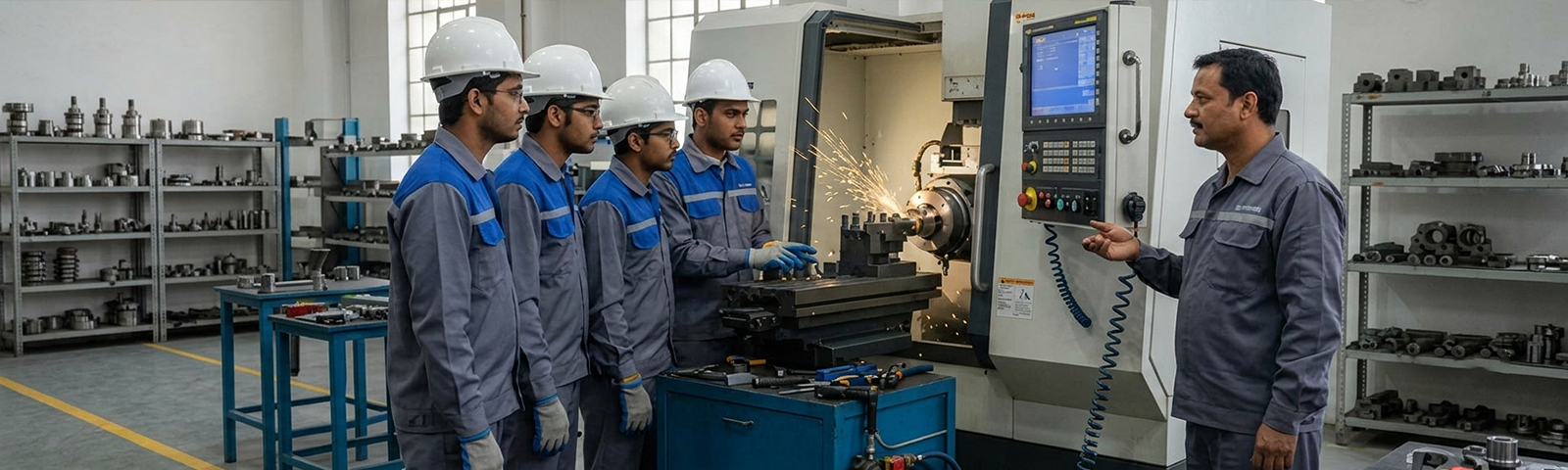
NAMTECH’s confirmed PM-SETU work sits alongside its undergraduate engineering programs, both reflecting the same underlying model, curriculum and training shaped directly with industry input, applied at different levels of India’s technical workforce.
The takeaway
Manufacturing capacity and manufacturing talent have to scale together, and the officially confirmed structure of PM-SETU, combined with NAMTECH’s verified early role in two of its first approved projects, is a concrete, fact-checkable example of what that actually looks like in practice, not just a policy aspiration.
FAQ
What is the total, officially confirmed budget behind India’s ITI modernization push?
₹60,000 crore under PM-SETU, split as ₹30,000 crore Centre, ₹20,000 crore states, and ₹10,000 crore industry, per official Ministry of Skill Development and Entrepreneurship releases.
Is NAMTECH’s role in this scheme independently confirmed, or based only on its own claims?
Independently confirmed. Two official PIB press releases name NAMTECH by name as academic partner on approved PM-SETU projects in Andhra Pradesh and Gujarat.
Which manufacturing sectors is the Surat project specifically targeting?
Advanced manufacturing, steel, engineering, process industries, textiles, and Industry 4.0 technologies, per the official PIB announcement.
How does the SPV funding model actually work for these projects?
Industry partners hold 51% ownership of the SPV managing each project, government holds 49%, and government can co-fund up to 83% of project costs, per official Ministry disclosures.
Has the broader PM-SETU scheme met its industry-participation goals so far?
Not fully. Government statements reported in the press indicate industry partner participation has been slower than expected in many states, making NAMTECH’s confirmed early role a notable exception rather than the norm.
Where should readers go to verify any of these figures independently?
Directly to pib.gov.in, searching under the Ministry of Skill Development and Entrepreneurship, where each release cited in this article can be located by its press release ID.

13 November, 2026