Announcements
Ask a NAMTECH robotics student what surprised them most, and it is rarely the coursework. It is the pace. The 2024-25 cohort of NAMTECH’s Master Program in Robotics Engineering and Management did not just study robotics in theory: 100% of them were placed, across 44 recruiters, with one student bringing home a bronze medal at WorldSkills 2024 in the Industry 4.0 category. That is the outcome. This is what students say got them there.
Real hardware, not simulation slides
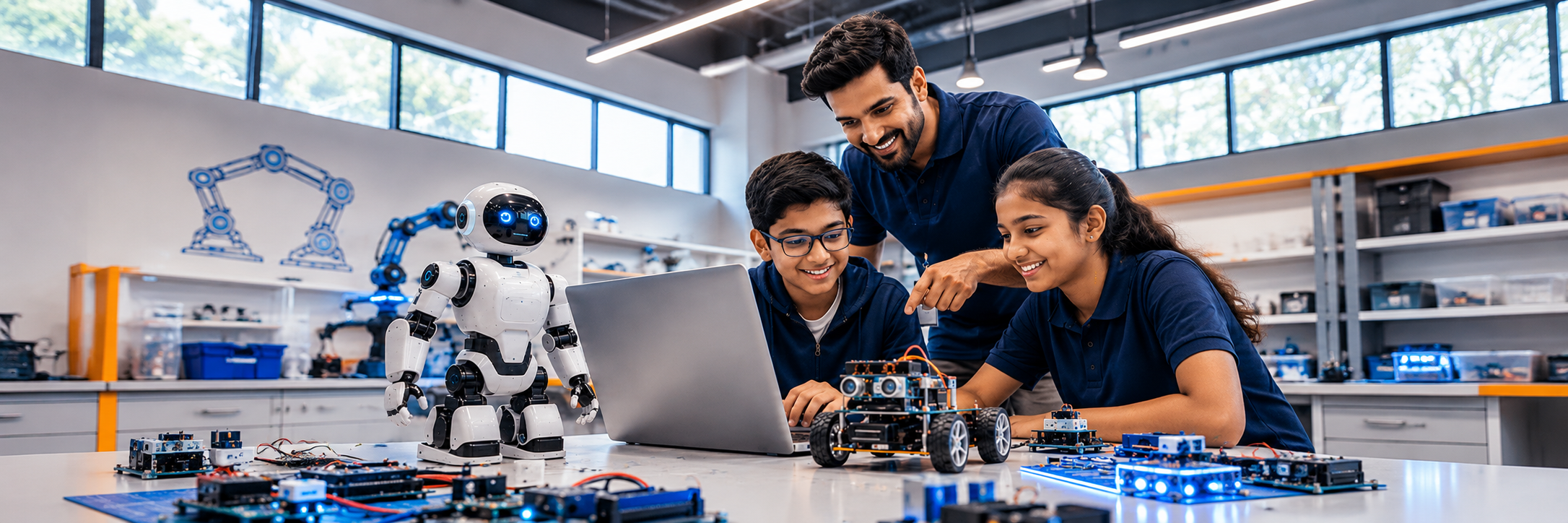
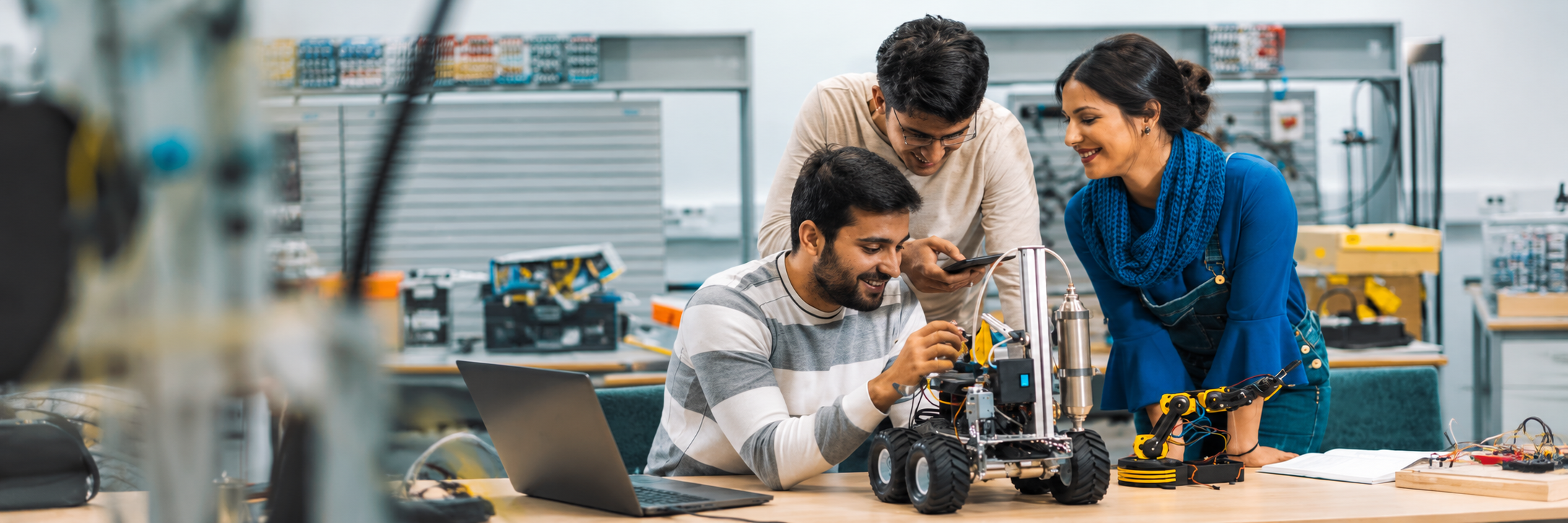
Most robotics coursework nationally still leans heavily on simulation software and outdated lab equipment, a gap NASSCOM has specifically flagged as a national training shortfall. Students describe NAMTECH’s program differently: they work with the categories of automation systems ABB and FANUC actually deploy in industry, from early in the program rather than a final-year capstone.
What a typical week looks like
Students describe a week that blends structured coursework with hands-on lab time, project sprints tied to real industry problems, and direct interaction with engineers from partner companies, closer to an apprenticeship than a traditional degree structure. The open-ended nature of those project problems is deliberate: it mirrors the ambiguity of an actual job, not a textbook exercise with one correct answer.
Why students say it is demanding, and worth it
This model asks more of students upfront: more lab hours, more iteration, more tolerance for problems without a clean solution. Students who have been through it consistently describe it as demanding. They also describe it as exactly what made the jump into a robotics job afterward feel like a continuation, not a leap, a claim the cohort’s 91% average CTC increase backs up.
Where NAMTECH fits in
The brochure version of studying robotics and the actual student experience of it are usually two different things. At NAMTECH’s School of Robotics, students describe real hardware, real industry problems, and direct partner-company exposure as what produced a 100% placement cohort and a WorldSkills medal, not a coincidence alongside it.
The takeaway
A program’s brochure can describe outcomes. Only students can describe what actually got them there. At NAMTECH, that description consistently comes back to real hardware, applied problems from day one, and a pace that students say is demanding but directly connected to the job they end up doing.
FAQ
Do NAMTECH robotics students work with real industrial hardware or mostly simulations?
Real hardware. The program is built directly with ABB and FANUC, and students work with the categories of automation systems those partners deploy in industry, not scaled-down simulations alone.
What does a typical week look like for a NAMTECH robotics student?
A mix of structured coursework, hands-on lab time, project sprints tied to real industry problems, and direct interaction with partner-company engineers.
Is the program harder than a typical engineering degree?
Students consistently describe it as more demanding, with more lab hours and more open-ended, ambiguous problems than a standard lecture-and-exam structure.
Does the hands-on approach actually translate into job outcomes?
Yes. The 2024-25 cohort achieved 100% placement across 44 recruiters with a 91% average CTC increase, and one student won a WorldSkills 2024 bronze medal.
Is this rhythm normal for a robotics-focused master’s program in India?
Not universally. NASSCOM has flagged robotics-specific vocational and applied training as an underdeveloped area nationally, which is part of why NAMTECH’s hands-on model is notable.
What do students say made the biggest difference in landing a job?
Students point to working on real industry problems and real hardware from early in the program, rather than only in a final-year project, as what closed the gap between coursework and job readiness.

25 November, 2026