Announcements
Ask a mechanical engineering student from 2010 what “sustainability” meant in their coursework, and you’d probably get a shrug, maybe an elective on renewable energy tucked away in the final semester. Ask that same question today, and the answer looks completely different. Sustainability isn’t a bolt on anymore. It’s showing up in how products get designed, how factories get run, and increasingly, in what employers expect a fresh engineering graduate to already know.
The World Economic Forum’s Future of Jobs Report 2025 puts a number on this shift. Environmental stewardship skills are among the fastest growing skill categories employers are hiring for, right alongside AI and big data. That’s a real hiring signal, not a niche trend.

So what changed?
A few things, really. Regulations tightened: carbon disclosure norms, extended producer responsibility rules, energy efficiency codes. Companies needed engineers who could design within those constraints, not work around them after the fact. Consumers started caring, which meant product teams started caring too. And manufacturing became more energy intensive to scrutinize, because energy costs money and boards notice money.
What does this actually look like in a curriculum?
It’s not a single “green engineering” class tacked on somewhere. It’s life cycle assessment built into product design modules. It’s material selection taught alongside cost and durability, not after it. It’s manufacturing processes evaluated on energy and waste footprint as a standard metric, the same way you’d evaluate tolerance or strength.
Where NAMTECH fits in
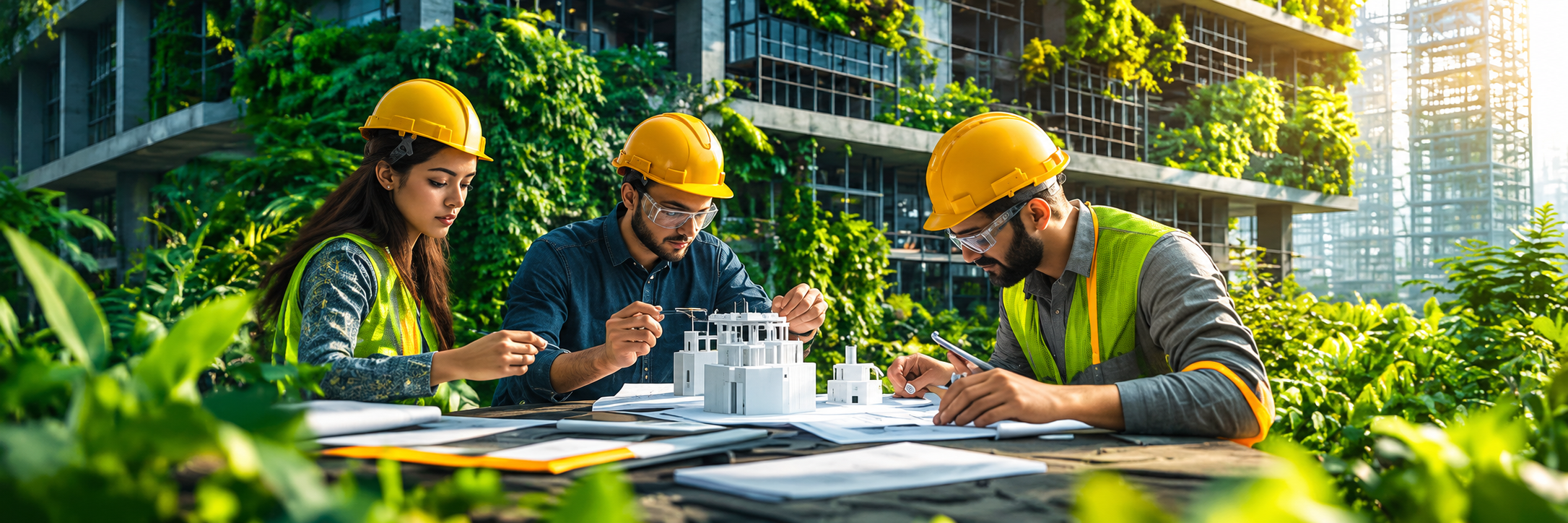
NAMTECH’s Master Program in Sustainability Engineering and Management builds these skills into the core of the degree. About 60% of the curriculum is core, and the first semester alone covers digital platforms for ESG reporting, industrial emission modelling and decarbonization pathways, and life cycle assessment and circular economy tools. The program was co-created with KPMG in India and TUM Asia.
What’s in it for students
- Skills employers are hiring for. Students work on ESG reporting and measurement, decarbonization planning, life cycle assessment, energy storage and management, and industrial water management, alongside operations, supply chain, and leadership modules. That mix suits roles such as sustainability consultant, ESG analyst, renewable energy engineer, and circular economy strategist.
- Hands-on practice, not only theory. Learning runs through live projects, simulations, and dedicated labs, including an Energy Lab, a Smart Factory Lab, an EV Lab, and a Sustainable Urban Infrastructure Lab.
- Real industry exposure. The final semester is an industry internship or capstone project, supported by industry residencies, mentorship, guest lectures, and case studies.
- A global option. An optional global immersion program is available.
- Financial support. NAMTECH lists scholarships of up to 100% of tuition, based on academic performance, interview, and family income, along with education loan partners.
The takeaway
Sustainability used to be something you learned about. Now it’s something you’re expected to design with, every time. Students who understand this early, who can talk fluently about embodied carbon or circular material flows in a job interview, have a real edge. Most of their peers still think of it as a semester elective they took once.
FAQ
Is sustainability engineering a separate degree or part of mechanical/other engineering programs?
It’s increasingly integrated rather than separate. Most programs, including NAMTECH’s, weave sustainability principles into core mechanical and manufacturing coursework rather than isolating it into one standalone track.
Do employers actually ask about this in interviews?
Yes, particularly in manufacturing, automotive, and consumer goods companies that face regulatory reporting requirements. Expect questions about life cycle thinking or material trade offs.
Is this only relevant for students wanting to work in “green” industries?
No. It’s relevant across mainstream manufacturing, automotive, and industrial roles, since most large employers now have sustainability targets that touch product design.
What foundational skills should a student build alongside sustainability knowledge?
Strong grounding in materials science, thermodynamics, and manufacturing processes. Sustainability engineering builds on these fundamentals rather than replacing them.
Does NAMTECH offer sustainability as a specialization or is it embedded across programs?
Both. NAMTECH has a dedicated program focus while also embedding sustainability principles into its broader engineering curriculum.
How is this different from an MBA sustainability elective?
An MBA elective typically covers sustainability from a policy or strategy lens. Engineering programs like NAMTECH’s teach the technical execution: how to actually design and build with these constraints.

23 November, 2026