Announcements
7:45 AM. Not a typical engineering student wake up time, but at NAMTECH’s Godhavi campus, mornings start early because the day is genuinely full, and not with back to back lectures.
Here’s roughly how a Tuesday might unfold for a first year student in one of NAMTECH’s undergraduate programs.
Morning: Core theory, but applied immediately
Classes run in focused blocks rather than the traditional hour long lecture grind. A materials science session isn’t just definitions and formulas. It’s followed almost immediately by a lab exercise where students test the properties they just learned about. The idea is simple: don’t let theory sit disconnected from practice for weeks. Close the gap the same day.
Midday: Project work, industry style
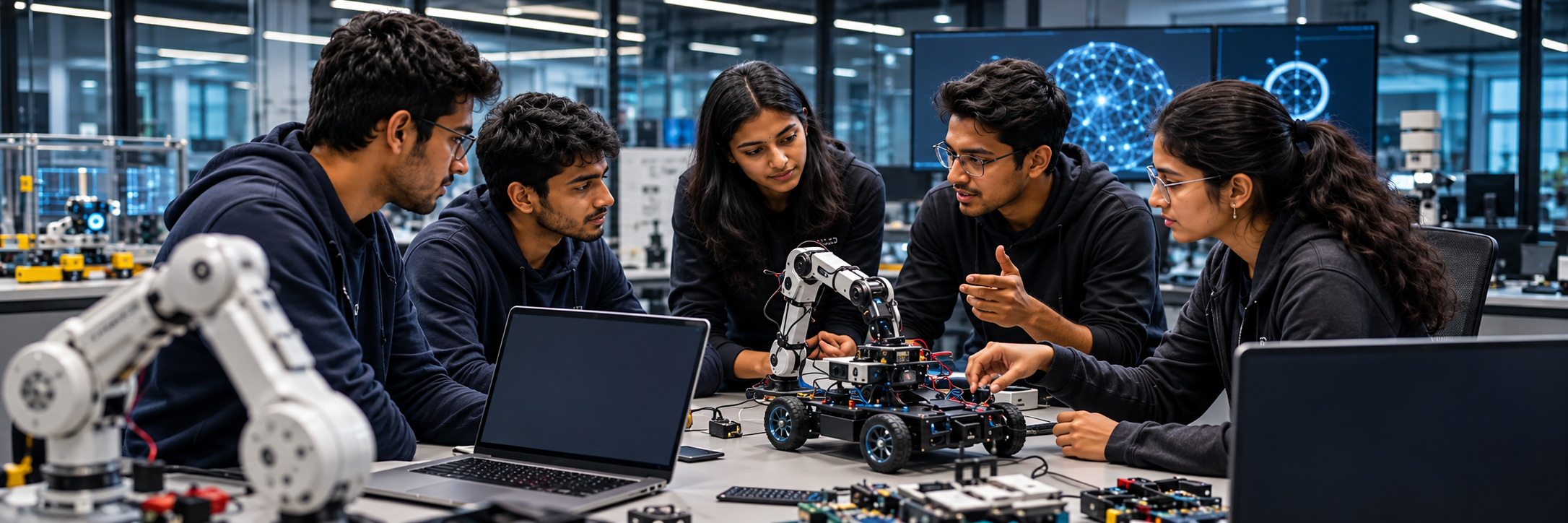
This is where NAMTECH’s model diverges most from a conventional engineering college. Instead of isolated lab assignments, students work on projects structured the way industry actually operates: in small teams, with deliverables, deadlines, and feedback from mentors who’ve worked in the field. A robotics student might spend this block debugging a control system with a teammate. A sustainability focused student might be knee deep in a life cycle analysis of a real product.
Afternoon: Industry exposure
Guest sessions from practicing engineers, site visits, or workshops tied to NAMTECH’s industry partnerships happen regularly, not as occasional add ons, but as a built in part of the week. Students hear directly from people solving the exact problems their coursework is preparing them for.
Evening: Independent work and peer collaboration
Study groups, project continuation, sometimes mentorship check ins. The campus stays active well past standard school hours, which students describe less as a burden and more as a reflection of how genuinely engaged they are with what they’re building.

Where NAMTECH fits in
This rhythm isn’t incidental. It’s designed. NAMTECH’s industry-first model exists specifically to close the gap between classroom learning and workplace readiness, something India’s engineering education system has struggled with for years. Only around 45 to 50% of engineering graduates are considered employable, according to various industry estimates. NAMTECH’s full range of undergraduate programs share this same model, and the admissions page has more details on how the program structure works for prospective students, including the robotics program and smart manufacturing program specifically.
The takeaway
A day at NAMTECH doesn’t look like a typical engineering college schedule, and that’s the point. When companies say they want industry ready graduates, this is what that actually requires: not a single capstone project in the final year, but daily exposure to how real engineering work gets done.
FAQ
How many hours a day do NAMTECH students typically spend on campus?
Full days are common, often extending beyond standard classroom hours due to project work and industry sessions. Students describe it as intensive but engaging rather than purely academic.
Is the industry exposure limited to certain programs, or is it across all specializations?
It’s built into the model across NAMTECH’s undergraduate programs, though the specific industry partners and exposure vary by specialization.
Do students get direct interaction with working professionals, not just faculty?
Yes. Guest sessions, mentorship, and industry visits are a regular part of the structure, not occasional events.
Is this schedule sustainable for students, or is it overly demanding?
Students report it as demanding but manageable, largely because the applied nature of the work keeps it engaging rather than purely rote.
How does this differ from internships at a traditional engineering college?
Traditional internships are typically a short block, often in the final year. NAMTECH integrates industry exposure throughout the program rather than concentrating it into one internship period.
What kind of projects do first year students actually work on?
Projects vary by specialization but are structured to mirror real industry problems: team based, deadline driven, and mentored, even at the introductory level.

20 November, 2026