Announcements
Modernizing technical education in India isn’t really about buying newer machines, even though that’s usually what gets the most attention. The harder, more important work happens in two less visible places: what’s actually being taught, and who’s teaching it.
Curriculum: designed with industry, not just for it
A lot of technical curricula in India get written once and then updated only occasionally, which means students can graduate having learned processes and tools that are already a step or two behind what industry is actually using. NAMTECH’s approach flips that sequence. Curriculum is developed directly with input from industry partners across robotics, manufacturing, sustainability, and other specializations, and it’s built to evolve as those industries evolve, not fixed once and left alone for a decade.
Faculty: practitioners, not just academics
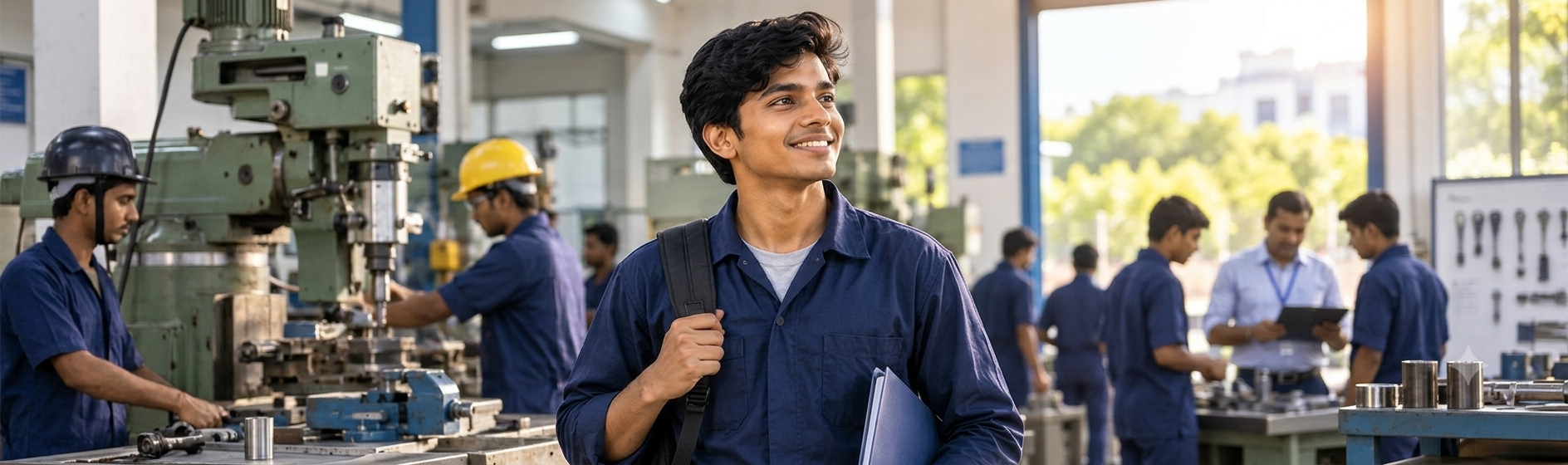
The second piece matters just as much, and it’s talked about far less. A modern curriculum taught by faculty without recent industry exposure only gets you partway there. NAMTECH’s industry-first model extends to who’s in the classroom too, drawing on practitioners and industry experts alongside traditional academic faculty, so students are learning from people who’ve actually done the work, not just people who’ve read about it.

Why both pieces have to move together
Updating curriculum without updating who teaches it produces a strange gap: modern material delivered through an outdated teaching approach. Updating faculty without updating curriculum has the opposite problem: great practitioners teaching an outdated syllabus. Real modernization requires both to move in sync, which is harder to pull off than it sounds, and it’s a big part of what distinguishes institutions that are genuinely industry-aligned from ones that just claim to be.
Where this shows up for students
In practice, this looks like project-based coursework mentored by people with real industry experience, curriculum reviews that happen on a regular cadence rather than sporadically, and direct channels between NAMTECH and its industry partners that feed straight back into what gets taught. More detail on the specific programs shaped this way is available on the programs page, and admissions has information for students considering applying.
The takeaway
The most visible signs of a modern technical institute, new buildings, new equipment, are the easy part to point to. The harder, more meaningful modernization happens in curriculum design and faculty composition, and that’s exactly where NAMTECH has focused its model from the start.
FAQ
How often does NAMTECH update its curriculum?
This is best confirmed directly with NAMTECH’s academic team for exact review cycles, though the model is built around regular, industry-informed updates rather than static, long-term fixed syllabi.
What does “industry faculty” actually mean in practice, are these full-time staff or visiting experts?
This typically includes a mix of both, full-time faculty with industry backgrounds and visiting practitioners, though exact composition can vary by program and should be confirmed with NAMTECH directly.
Does this modernization approach apply to all NAMTECH programs, or just some?
It reflects the underlying philosophy across NAMTECH’s undergraduate programs, though the specific structure and industry partners vary by specialization.
How can prospective students evaluate whether a program’s faculty is genuinely industry-experienced?
Look for specific, named faculty backgrounds and current industry roles rather than general claims, and don’t hesitate to ask admissions directly for faculty profiles.
Is curriculum co-design with industry unique to NAMTECH, or common across Indian engineering colleges?
It’s becoming more common as a stated goal, but the depth and consistency of actual industry involvement varies significantly between institutions.
What’s the best way for a prospective student to learn more about NAMTECH’s specific curriculum structure?
Direct outreach through the admissions page is the most reliable way to get current, program-specific details.

12 November, 2026