Announcements
There was a time when being an automotive engineer mostly meant understanding engines, transmissions, vehicle design and manufacturing. Those skills still matter—but they are no longer enough on their own.
Today’s vehicle can combine electric powertrains, batteries, sensors, software, connected systems, ADAS and smart manufacturing. That means the automotive engineer is no longer working on only the mechanical side of a vehicle.
The job is changing because the vehicle itself is changing.
Why Is the Automotive Engineer’s Role Changing?
India’s automotive industry is already operating at a massive scale. In FY 2025–26, India produced more than 3.47 crore vehicles, including passenger vehicles, commercial vehicles, three-wheelers and two-wheelers.
At the same time, electric mobility is becoming a bigger part of the market. SIAM reported that EV registrations in India reached 1.97 million units in FY 2024–25, up 16.9% from the previous year. Electric passenger-vehicle registrations alone crossed 1 lakh units.
This means automotive engineers are working in an industry where the technology underneath the vehicle is changing quickly.
The question is no longer just:
“Do you know how a vehicle works?”
It is increasingly:
“Do you understand how the new technologies inside that vehicle work together?”
What Does an Automotive Engineer Need to Know Now?
The modern automotive engineer may need to work across several areas:
- Electric and hybrid vehicles
- Battery systems and power electronics
- Automotive electronics
- ADAS and autonomous systems
- Software and connected vehicles
- Smart manufacturing
- Vehicle testing and safety
- Sustainability and emissions
This does not mean every engineer needs to become an expert in all of them.
It means engineers need enough understanding to work across different teams and connect different technologies.
For example, an EV engineer may need to understand how battery performance affects vehicle design. A manufacturing engineer may need to understand how automation and data can improve battery or vehicle assembly. An ADAS engineer needs to understand sensors, electronics and vehicle systems together.
The boundaries between automotive roles are becoming less clear—and that is changing the skill set companies need.

How Are EVs Changing the Engineering Skill Set?
The shift to EVs is one of the clearest examples.
A traditional vehicle is built around an internal combustion engine, transmission and related mechanical systems. An EV adds a very different set of engineering challenges involving battery packs, electric motors, power electronics, battery management and thermal management.
SIAM reported that electric passenger-vehicle registrations increased by more than 80% in FY 2025–26 compared with the previous year.
As this market grows, engineers who understand only traditional vehicle systems may need to add new skills.
The good news is that the foundation remains useful.
Mechanical, electrical, electronics, automobile and mechatronics engineers can build on what they already know and add skills in electric mobility, electronics, software, data and smart manufacturing.
That combination is becoming more valuable than knowing one technology in isolation.
What About Software, Data and ADAS?
The next change is happening inside the vehicle itself.
Modern vehicles increasingly use cameras, sensors, electronic control units and software to support features such as driver assistance, connectivity and automated functions.
This creates new engineering needs around:
- Sensor systems
- Vehicle electronics
- Embedded systems
- Automotive cybersecurity
- Data and diagnostics
- ADAS
- Software-defined vehicles
These technologies also change how vehicles are tested and maintained.
An engineer may now need to understand not only how a physical component works, but also how its data is collected, processed and used by the vehicle.
That is why the automotive engineer’s role is becoming more connected to digital engineering.
Why Does Manufacturing Still Matter?
It is easy to focus on the vehicle and forget how it gets built.
But India’s automotive industry produced more than 55 lakh passenger vehicles and 2.66 crore two-wheelers in FY 2025–26, according to SIAM.
At that scale, manufacturing technology becomes just as important as vehicle technology.
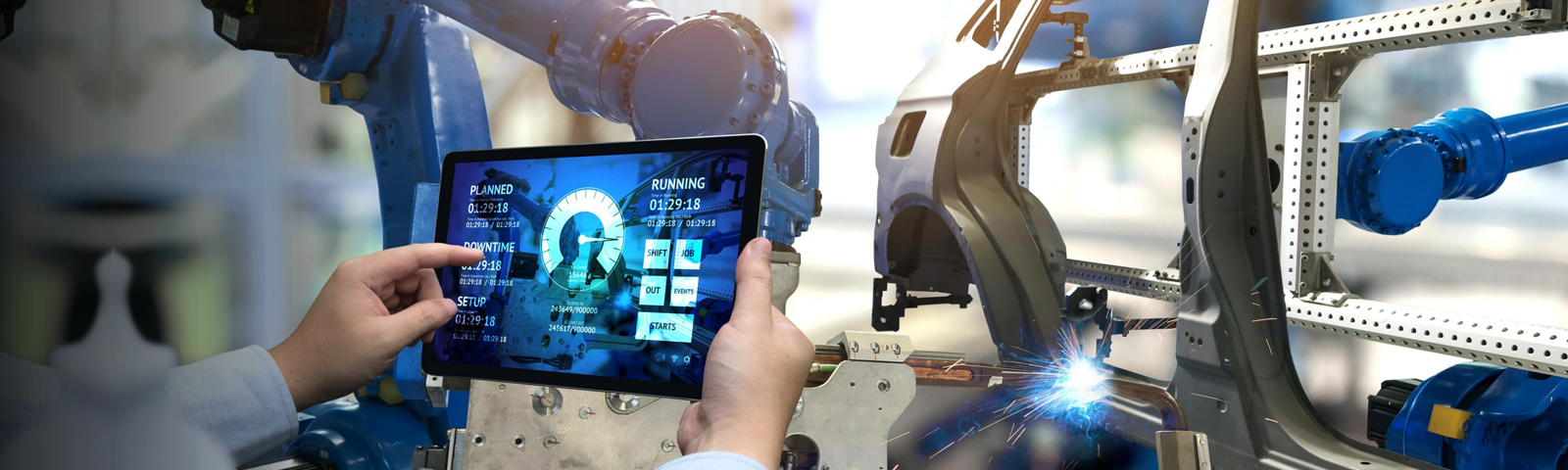
Factories increasingly use:
- Robotics
- Automation
- Industrial IoT
- Data analytics
- Digital manufacturing
- Smart inspection systems
- Connected production lines
So the automotive engineer of the future may need to understand both the product and the process that builds it.
This is where manufacturing and automotive engineering begin to overlap.
How Can Engineers Prepare for the New Automotive Role?
The answer is not simply learning another software tool or collecting more certificates.
Engineers need opportunities to work with the technologies they are expected to use in industry.
This is the approach taken by NAMTECH‘s Master Program in Automotive Technology and Management. The programme brings together automotive engineering, electric mobility, smart manufacturing and management.
Its curriculum includes Hybrid and Electric Vehicles, Automotive Electrical & Electronic Systems, ADAS & Autonomous Vehicles, Automotive Cybersecurity, Smart Automotive Manufacturing, Automotive Testing and Certification, Vehicle Dynamics and Design and more.
The programme is also designed around hands-on learning. NAMTECH says its automotive programme includes mini factories for BIW and vehicle assembly and battery assembly, along with industry immersion and an industry capstone project.
That matters because knowing a concept in a classroom and being able to apply it to a real automotive problem are two different things.
What Should Your Skill Set Look Like?
If you are an engineering student or early-career engineer looking at automotive careers, ask yourself five simple questions:
- Do I understand EV and hybrid vehicle systems?
- Do I understand automotive electronics and sensors?
- Can I work with data, automation or connected systems?
- Do I understand how modern vehicles are manufactured and tested?
- Can I work across engineering and management teams?
You do not need to answer “yes” to everything today.
But the gaps in your answers can show you where your next learning step should be.
And that is the real point: the automotive industry is not replacing traditional engineering skills. It is building new skills on top of them.
What Does This Mean for the Next Automotive Engineer?
India’s automotive sector is growing while moving towards electric mobility, connected vehicles, ADAS, smart manufacturing and cleaner technologies.
That creates a wider range of roles—from EV and battery engineering to vehicle testing, automotive electronics, manufacturing, ADAS and vehicle integration.
NAMTECH’s Automotive Centre of Excellence reflects this wider shift, covering IC engines, electric vehicles, hydrogen and fuel-cell vehicles, smart manufacturing, ADAS, software-defined vehicles, sustainable materials and alternative fuels.
The automotive engineer’s job description is therefore not becoming less technical.
It is becoming broader.
Conclusion: Is Your Skill Set Ready?
The automotive industry is still built on strong engineering fundamentals. But the vehicle around those fundamentals is changing quickly.
With 3.47 crore vehicles produced in FY 2025–26 and EV adoption continuing to grow, the industry needs engineers who can work across mechanical, electrical, digital and manufacturing systems.
So if your skill set still ends with engines, CAD and traditional manufacturing, it may be time to look at what comes next.
The future automotive engineer will not be defined by one skill.
They will be defined by their ability to connect many skills and use them to solve real automotive problems.
That is the shift—and preparing for it starts before the new job description lands on your desk.
FAQs
1. How is the automotive engineer’s role changing?
Automotive engineers increasingly need skills in EVs, batteries, electronics, ADAS, software, data, smart manufacturing and sustainability, alongside traditional engineering knowledge.
2. Are traditional mechanical engineering skills still useful in automotive?
Yes. Mechanical engineering remains important for vehicle design, manufacturing, materials, thermal systems and vehicle dynamics. The difference is that engineers increasingly need to combine these skills with digital and electrical technologies.
3. What skills should an EV engineer learn?
Key areas include electric power trains, battery systems, power electronics, thermal management, vehicle electronics, testing and battery management systems.
4. Which NAMTECH programme is suitable for automotive careers?
NAMTECH’s Master Program in Automotive Technology and Management covers automotive engineering, EVs, smart manufacturing, ADAS, automotive electronics, testing, cybersecurity and management.
5. Why is hands-on learning important in automotive engineering?
Automotive engineering involves real systems, equipment and testing. Hands-on learning helps engineers move beyond theory and understand how technologies work together in practical applications.

16 September, 2026