Announcements
Completing a B.Tech in Mechanical Engineering from an Indian university opens many professional doors, but the reality of the job market demands a clear understanding of viable career options and strategic next steps. This article lays out practical career trajectories tailored to the Indian context, focusing on entry-level roles, skill development aligned with industry requirements, managerial pathways, and growth sectors shaping India’s economy.
Entry-Level Mechanical Engineering Jobs in India: What to Expect
Fresh mechanical engineering graduates in India often start in roles that involve design, production support, quality control, or project coordination. Common initial positions include:
Design Engineer: Using tools like AutoCAD, SolidWorks, or Creo to create component and assembly drawings for manufacturing, often collaborating with production teams.
Project Engineer: Coordinating timelines and materials for engineering projects, working closely with site teams, procurement, and clients in sectors such as automotive, infrastructure, or energy.
Manufacturing Engineer: Optimizing assembly lines and shop floor processes, improving production efficiency in factories of companies like L&T, Tata Motors, or Bosch India.
Expect tasks such as preparing technical documentation in line with Indian Standards, conducting root cause analysis during quality failures, liaising with vendors, and ensuring compliance with safety norms. These roles provide the foundation for accelerating your career in core engineering.
Skills That Matter Most in the Indian Market
Technical proficiency remains paramount. Mastery of CAD software — CATIA, SolidWorks, and AutoCAD — and understanding of manufacturing processes prevalent in India (casting, forging, CNC machining) are essential. Soft skills matter too: clear communication, teamwork in cross-functional environments, and problem-solving under resource constraints all boost employability.
Indian engineers need to navigate complex team dynamics and often cross-functional coordination. Leadership initiative, adaptability to varied work environments — from large conglomerates to emerging startups — and effective client interaction skills can differentiate you. Internships and training programs within Indian companies focused on these attributes are highly beneficial.
The Techno-Manager: The Profile Indian Industry Is Increasingly Asking For
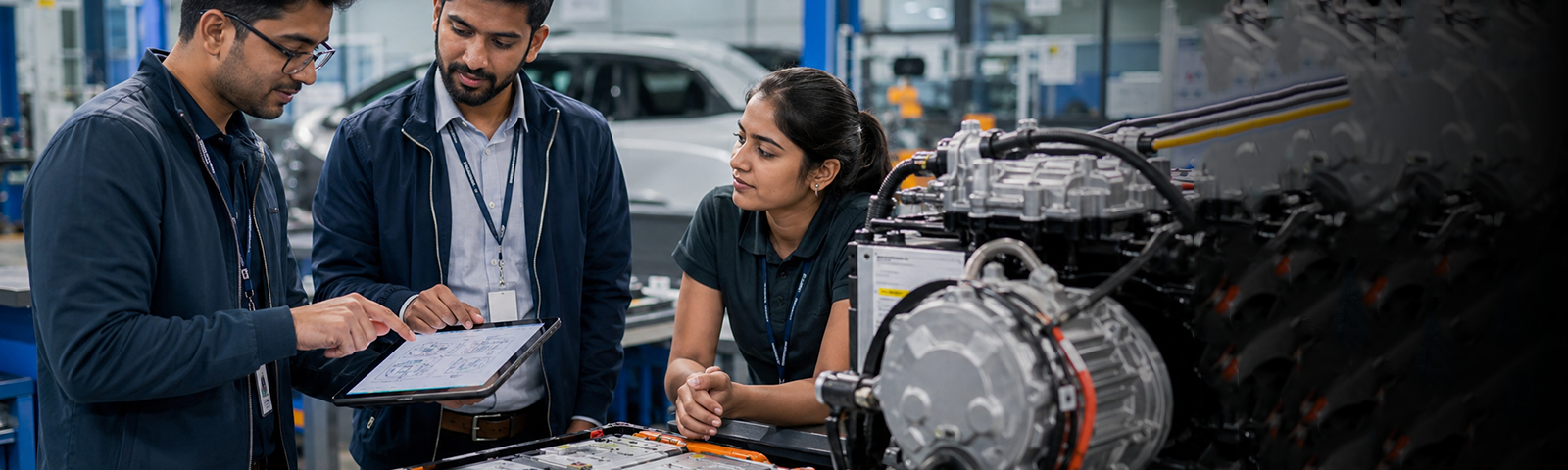
Indian companies increasingly value techno-managers who combine core engineering understanding with management acumen — engineers who can handle project deliverables and strategic decision-making simultaneously. This role suits engineers aiming to transition from hands-on technical work to leadership, especially in sectors like automotive, advanced manufacturing, EV, and energy.
Beyond technical expertise, this profile demands vendor management capability, budget awareness, and stakeholder communication across India’s diverse industrial ecosystem. The traditional route is an MBA or a project management diploma. But a newer category of two-year postgraduate programs is now preparing engineers for this profile more directly — training management against real technical problems rather than in a separate silo.
NAMTECH: Built for the Techno-Manager Profile
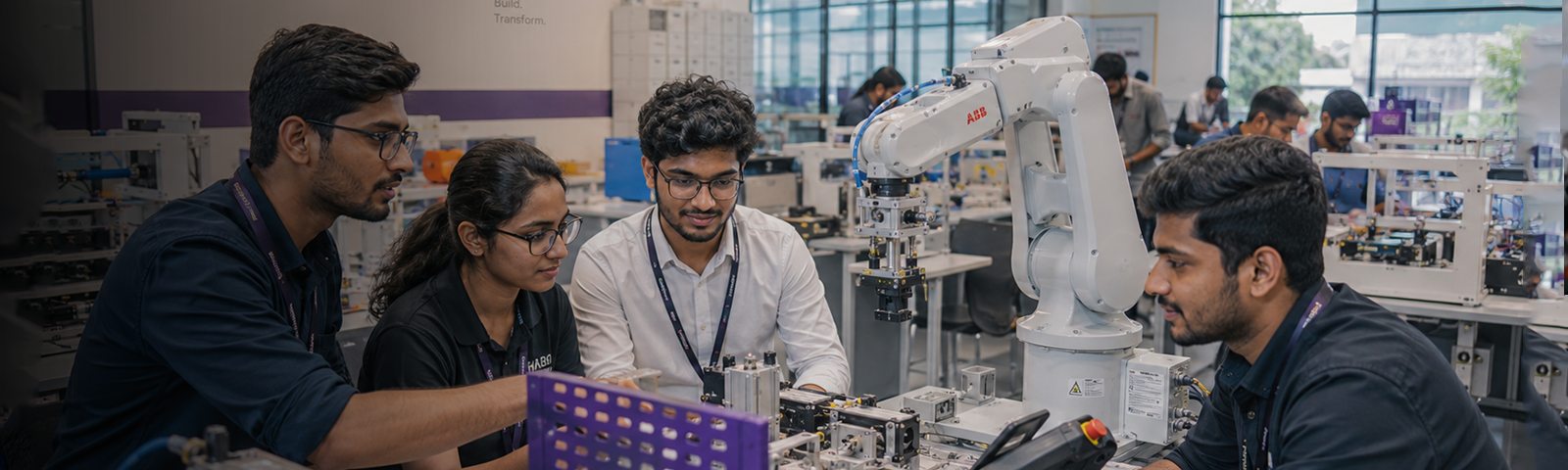
NAMTECH — New Age Makers’ Institute of Technology — is a not-for-profit postgraduate institute founded by ArcelorMittal Nippon Steel India, operating from the IIT Gandhinagar Research Park. Its two-year, full-time, residential master’s programs are designed explicitly to produce techno-managers: engineers who can operate at the intersection of technology and business leadership in advanced manufacturing sectors.
For mechanical engineering graduates specifically, relevant programs include Smart Manufacturing, Robotics Engineering and Management, Automotive Technology, and Sustainability Engineering. The curriculum combines core engineering depth with manufacturing operations, supply chain management, and industry-live projects. Industry partners include Tata Electronics, CG Power, Schneider Electric, Festo, Siemens, ABB, Rockwell Automation, and ArcelorMittal Nippon Steel — companies running real advanced manufacturing operations.
NAMTECH is not a certification program. It is a full two-year master’s-equivalent residential degree that replaces the job-or-MBA binary with a third option built specifically for engineers who want to stay close to the technology while building the leadership skills the industry needs. Admission does not require GATE or CAT as a mandatory gate — selection is holistic, and freshers are welcome to apply.
Emerging Indian Sectors for Mechanical Engineers
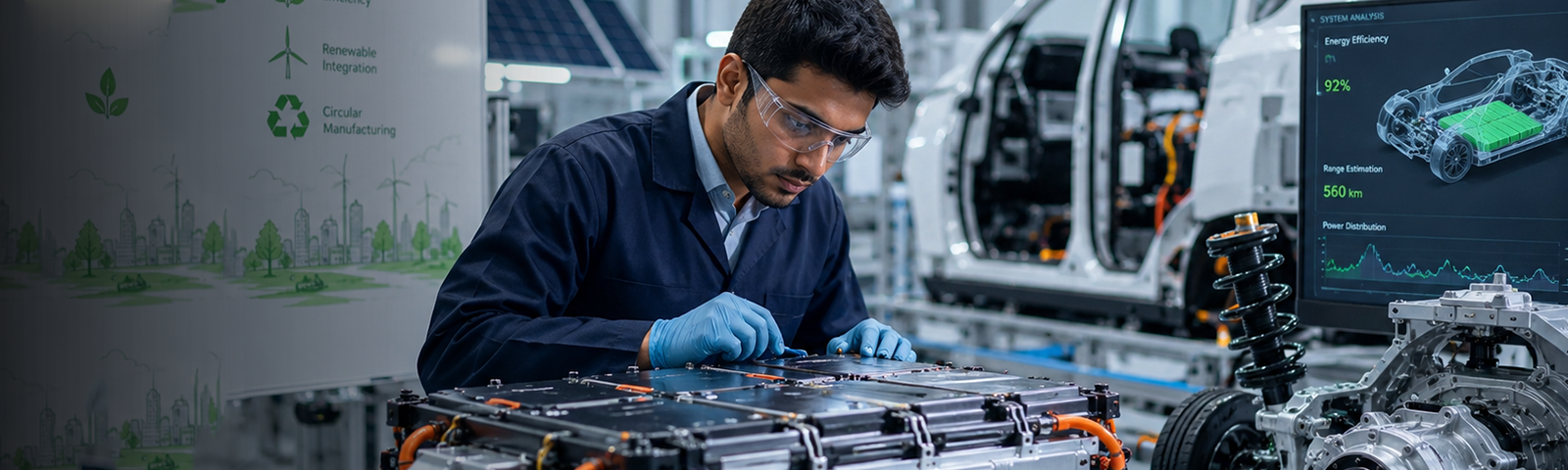
India’s push in renewable energy (solar, wind), electric vehicles, and smart manufacturing is expanding mechanical engineering prospects. The growing industrial automation sector, digital manufacturing hubs, and defense manufacturing provide dynamic opportunities for fresh graduates.
Mechanical engineers can engage in designing energy-efficient systems for commercial buildings, lightweight components for electric two-wheelers, or sustainable manufacturing workflows. Familiarity with IoT-integrated production systems and automation platforms increasingly enhances your candidacy in these sectors.
Certifications and Education Tracks Worth Considering
Certifications relevant in India include Project Management Professional (PMP), Six Sigma Green Belt or Black Belt, and specialized CAD/CAM courses. For engineers targeting advanced manufacturing leadership roles, a focused postgraduate program is a stronger investment than a string of certifications — provided the program is built around current industry technology and real projects rather than legacy curricula.
Postgraduate qualifications — whether an M.Tech from a strong institution or a specialized techno-managerial master’s like NAMTECH’s — consistently show a meaningful salary premium over B.Tech-only profiles, particularly for roles in design leadership, project planning, and engineering management within Indian firms and multinationals operating in India.

07 September, 2026