Announcements
Most engineering programs still follow a familiar pattern. Students spend months learning theories, formulas, and individual manufacturing processes before they are expected to apply them in a final-year project or during their first job.
The assumption is simple: first learn the concepts, then learn how to use them.
Modern manufacturing no longer works that way.
Today’s engineers work in environments where design, automation, production, quality, data, and business decisions are deeply interconnected. They are expected to solve problems across systems rather than within individual disciplines. The challenge for engineering education is no longer simply teaching manufacturing processes—it is teaching students how those processes work together.
This is the philosophy behind NAMTECH’s Master Programs.
Manufacturing Is a System, Not a Subject
A manufacturing plant is never divided into isolated subjects.
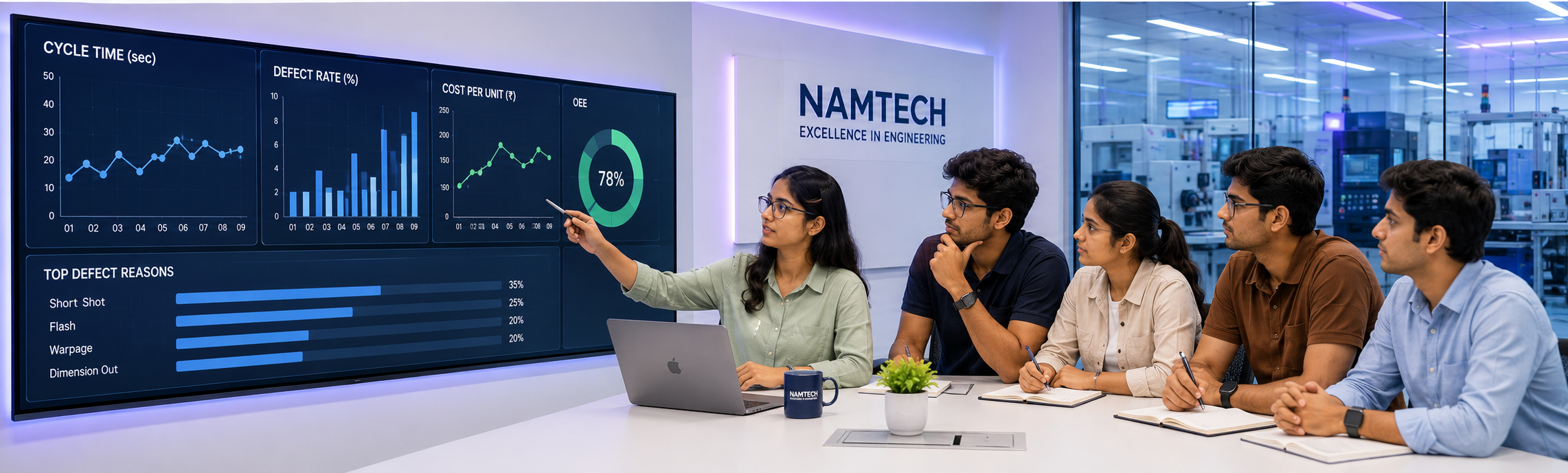
A product is not first designed in complete isolation, then manufactured, then inspected, and then optimized months later. Every decision influences another. A design choice changes manufacturing cost. A process parameter affects quality. A quality issue influences production planning. Automation changes throughput. Data improves every stage.
Yet most engineering curricula continue teaching these areas separately.
Students become familiar with individual technologies but often graduate without understanding how they interact within an actual production system.
Modern industry expects exactly that understanding.
Learning by Building, Not Just Studying
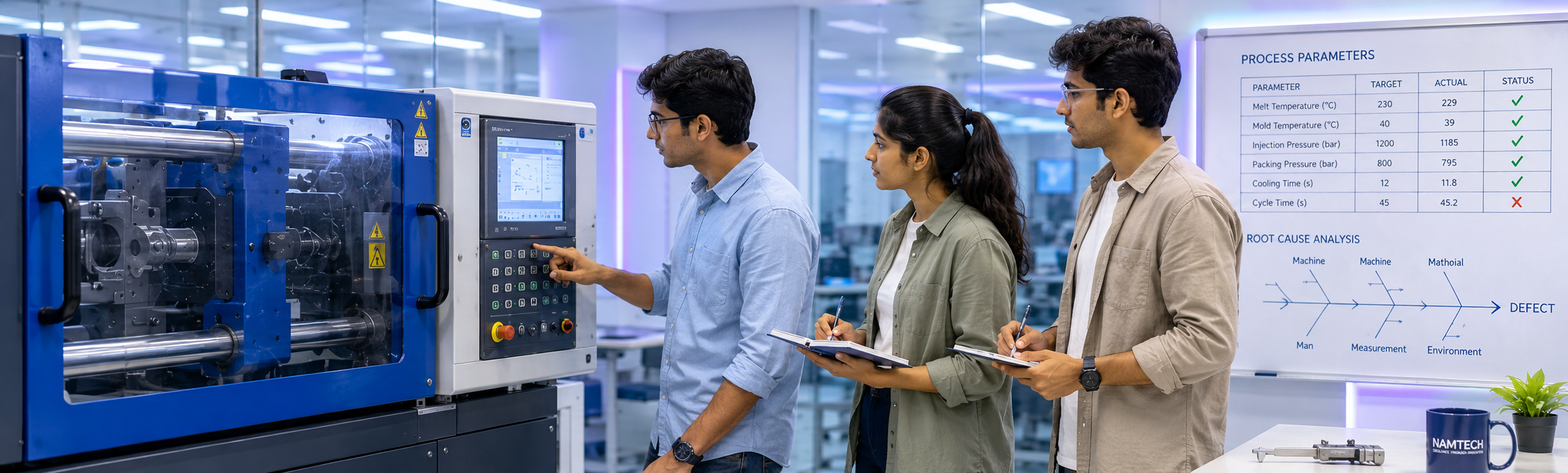
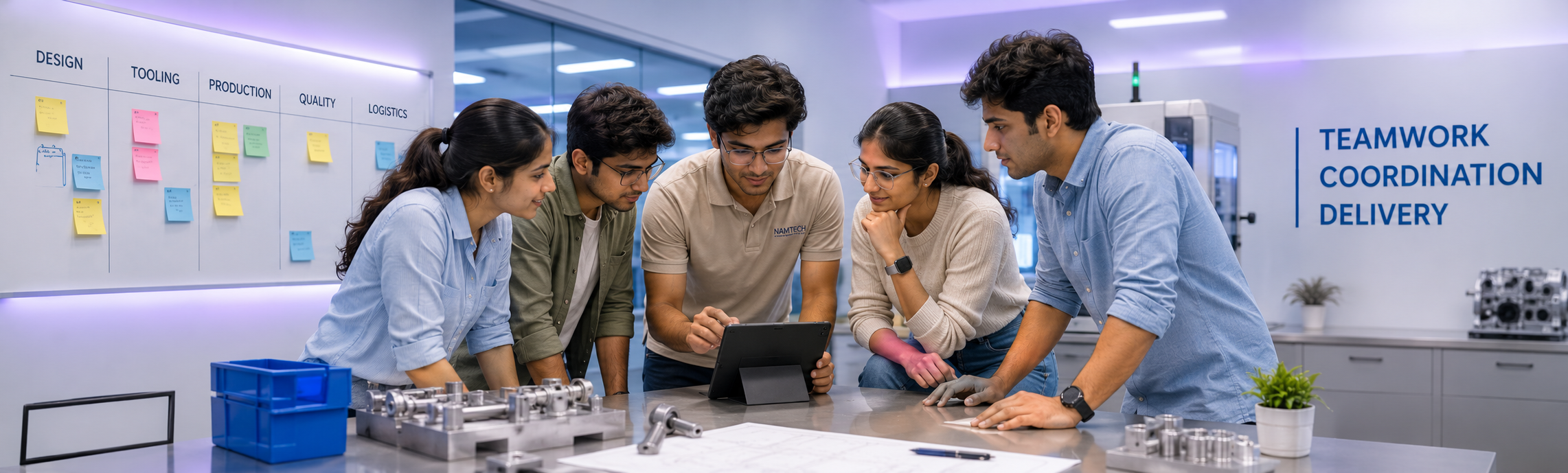
Rather than studying concepts in isolation, students begin with the YO-YO Project, an immersive, hands-on experience that challenges them to think, build, test, and improve. Working through real engineering problems, they develop systems thinking, collaboration, analytical skills, and the confidence to make informed decisions in dynamic, real-world environments.
Instead of asking, “How does injection moulding work?”, students are challenged to ask:
- Is this design manufacturable?
- Can it be produced consistently and in bulk?
- What will it cost?
- How do we improve quality?
- Where will bottlenecks occur?
- What happens when requirements change?
These are the same questions engineers answer every day inside modern factories.
Why Industry Wants Systems Thinkers
Manufacturing itself has changed dramatically.
Industry 4.0 has connected machines, production systems, quality inspection, analytics, robotics, and enterprise software into one digital ecosystem.
Engineers are increasingly expected to understand not just one technology but how technologies interact.
Whether the workplace is a semiconductor fabrication plant, an EV manufacturing facility, a robotics-enabled factory, or a digitally connected production line, the engineer’s role is becoming increasingly interdisciplinary.
Technical depth remains important.
Systems thinking has become equally valuable.
Practice Before Perfection
Many engineering programs reserve real integration for the final semester through internships or capstone projects.
NAMTECH reverses that sequence.
Students encounter integrated engineering challenges early and continue building deeper technical expertise throughout the program.
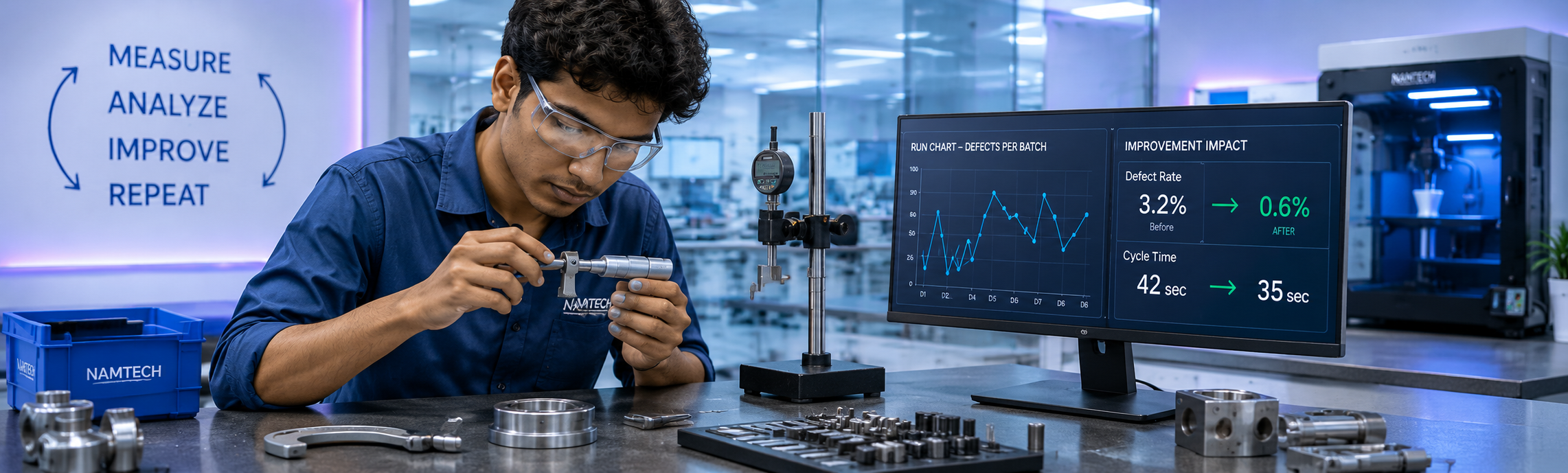
As students later study automation, digital twins, statistical process control, Industrial IoT (IIoT), AI, and manufacturing management, they already understand where each concept fits within a complete manufacturing system.
Learning becomes contextual instead of theoretical.
Engineering Education Should Mirror Engineering Practice
The gap between academia and industry is often described as a skills gap.
In reality, it is frequently an experience gap.
Students may understand manufacturing processes individually but have limited exposure to how those processes interact within real production environments.
Closing that gap requires more than updated syllabi.
It requires a different way of teaching.
A model in which students learn engineering by solving real engineering problems.
Where integration comes before specialization.
Where manufacturing is understood as a connected system rather than a collection of independent subjects.
That is the philosophy behind NAMTECH’s approach to manufacturing education—and increasingly, the kind of engineering education that modern industry demands.

27 July, 2026