Announcements
In recent times, the world has witnessed significant transformations driven by automation, smart technologies, machine learning, and artificial intelligence. Robotics is no longer restricted to industrial factories and research laboratories; today, it plays a significant role in the healthcare, manufacturing, automotive, defense, smart homes, and education sectors. India’s robotics sector, currently valued at ~$4.8 billion, is booming, and the market is expected to expand at a robust 13.3% CAGR to reach $13.4 billion by 2033. Industries worldwide are embracing automation to boost productivity and efficiency, so the demand for skilled robotics professionals is rapidly growing across India and globally. The growing demand for robotics professionals in 2026 has encouraged several students, engineering graduates, diploma holders, and working professionals to enroll in the best robotics programs in India, offering practical knowledge, industry exposure, and career-oriented training.
The Rising Demand for Mechanical Engineers in 2026
Robotics in 2026 has become a vital component of modern engineering operations, making its way to automotive production lines, aerospace systems, industrial automation, and advanced manufacturing facilities. With industries switching to Industry 4.0, the demand for mechanical engineers with sound robotic expertise is growing at a great pace. Employers are currently looking to hire mechanical engineers who are efficient in addressing the gap between traditional engineering principles and emerging robotic technologies. To fulfill this very need of the industry, prominent academic institutions like NAMTECH, in collaboration with TUM Asia, Singapore, have introduced master’s program in robotics engineering and management in Gujarat for mechanical engineers.
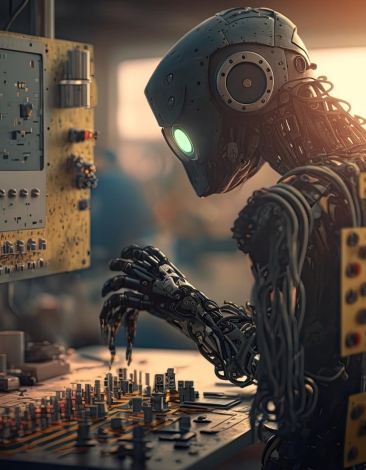
Why Robotics Should be Included in the Skillset of Mechanical Engineers in 2026
Mechanical engineers with a traditional degree will find it challenging to work in the modern automated industries, despite possessing good knowledge in mechanics, machine design, thermodynamics, and manufacturing processes. Thus, mechanical engineers to acquire automation skills can pursue NAMTECH’s best master’s program in robotics engineering and management in 2026 in India, which will also unlock lucrative roles in mechatronics. They will be equipped to build the physical body of robots and will also gain electrical and programming skills to make them move intelligently. Mechanical engineers, after pursuing the best master’s robotics programs, will gain the following abilities:
- Design and develop automated systems
- Work with industrial robots and cobots
- Improve manufacturing efficiency
- Reduce production costs through automation.
- Enhance product quality
- Engage in smart factory initiatives
- Pursue leadership roles in advanced manufacturing
Engineers with multidisciplinary skills and knowledge become valuable assets for organizations transitioning to robotics solutions. These engineers are capable of driving innovation and operational excellence within the organization.
Key Skills Covered in NAMTECH’s Master’s Program in Robotics Engineering and Management
NAMTECH is a prestigious and leading academic institution offering a Master’s Program in Robotics Engineering and Management in association with TUM Asia, Singapore, that is designed specifically for mechanical engineering students. It is a highly effective program offering practical and theoretical knowledge in diverse domains. Key skills that are covered in this program include:
Robot Kinematics and Dynamics – Robotics certification programs cover robot kinematics and dynamics, and participants learn about robot motion and movement control, along with how robot mechanical behavior lays the foundation of robotics engineering. Course participants also learn about robotic arm movement, position themselves, and interact with their environments.
Automation Systems – Modern robotics significantly depends upon industrial automation technologies and so the certification programs cover key topics such as industrial communication systems, programmable logic controllers (PLCs), and automated production workflows.
Sensors and Vision Systems – Sensors and machine vision technologies are used by robots to discover their surroundings, and hence robotic certification programs teach participants to integrate sensors, cameras, and data acquisition systems into robotic applications.
Robot Programming – Robots are programmed to control the robotic system. Mechanical engineers will require an introduction on programming concepts that are applied in simulation software, industrial robots, and automation platforms. The robotic certification programs will introduce them to these concepts and make them familiar with robot programming.
Artificial Intelligence and Machine Learning – AI-driven decision-making and predictive capabilities are integrated in advanced robotics and hence knowledge of AI applications allows mechanical engineers to develop intelligent robotic solutions.
Digital Manufacturing – Mechanical engineers enroll in robotics certification programs, learn to integrate robots with IoT devices, digital twins, smart factories, and manufacturing execution systems, as modern robotics operate within connected manufacturing ecosystems.
Human-Robot Collaboration – The certification programs teach participants about safe interactions between humans and robots while boosting productivity, as cobots are becoming common across industries.
Distinguish Features of the Master’s Program in Robotics Engineering and Management
NAMTECH is a leading academic institute offering an industry-aligned master’s program in robotics engineering and management. Mechanical engineers are preferring this NAMTECH’s master’s program in 2026 due to the following vital factors.
Industry-Relevant Curriculum – Engineers should pick a robotics program that aligns with today’s emerging technologies and industrial requirements. It is good to choose a program with an industry-relevant curriculum covering key topics like automation, AI, data analytics, and smart manufacturing that will offer greater value to their careers.
Hands-On Learning – Engineers should choose a master’s program that focuses on hands-on learning through industrial projects, lab work, simulations, and real-world applications, simply because practical exposure is significant in robotics education.
Industry Exposure – Always prefer a master robotics program that also includes industrial case studies, capstone projects, factory visits, and offers courses in collaboration with manufacturing companies for better practical exposure.
Interdisciplinary Approach – The best robotics master’s program will always have an interdisciplinary approach and will have a fine blend of mechanical, electronics, automation, computer science, and AI engineering to develop professionals with interdisciplinary skills.
Future-Focused Technologies – The best master program in robotics engineering and management in India comprises advanced technologies such as AI, Machine Learning, Industrial IoT, digital twins, smart manufacturing, data analytics, and advanced automation.
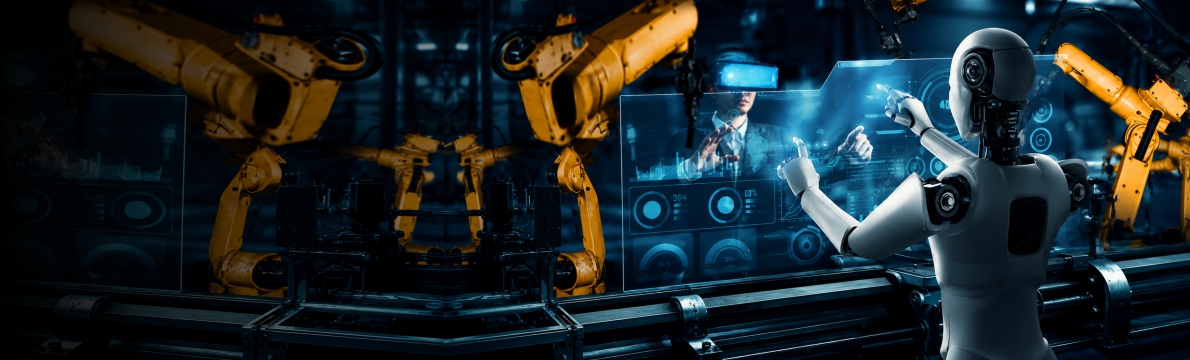
Career Opportunities after the Master’s Program in Robotics Engineering and Management
Mechanical engineers pursuing a master’s program in robotics in Gujarat will unlock some of the most lucrative and sought-after career opportunities:
Robotics Engineer – These engineers are responsible for designing, developing, and optimizing robotic systems that are found in healthcare, logistics, manufacturing, and other sectors.
Automation Engineer – They are responsible for creating automated solutions that help in boosting productivity, reducing costs, and boosts operational efficiency.
Manufacturing Technology Specialist – These specialists are known for implementing advanced technologies like robotics and smart factory solutions into manufacturing processes.
Industrial Automation Consultant – Automation consultants play a vital role in helping organizations embrace automation technologies to optimize production processes.
Robotics Integration Engineer – To seamlessly implement robotic systems within existing production systems, robotics engineers are required.
Smart Manufacturing Engineer – These engineers hold responsibility to create connected and intelligent production systems by making use of Industry 4.0 technologies.
Research and Development Engineer – R&D engineers are responsible for developing advanced automation solutions and innovative robotic technologies.
The Future of Robotics for Mechanical Engineers
The robotics industry is on the verge of experiencing unprecedented growth in the coming days due to the emerging technologies like autonomous systems, collaborative robots, AI-powered automation, digital twins, and smart manufacturing. This industry is expected to create exciting career opportunities for engineers, especially mechanical engineers. Mechanical engineers equipped with robotic expertise will play a significant role in designing intelligent production systems, driving technological innovation, and boosting manufacturing operations. With industries switching to completely connected and automated ecosystems, engineers with the combined knowledge of mechanical engineering and robotic skills will remain highly sought-after for the industries. Mechanical engineers looking to future-proof their careers in 2026 should enroll in NAMTECH’s Master’s Program in Robotics Engineering and Management in Gujarat to scale new heights in their professional lives.
Conclusion
With the transition in the working process of industries, robotics no longer remains a specialized field but has become a must-have competency for modern-day mechanical engineers. Manufacturing, aerospace, automotive, healthcare, logistics, and energy sectors are heavily dependent on robotic technologies to boost efficiency, productivity, and competitiveness. Thus, NAMTECH has come up with a master’s program in robotics engineering and management in Gujarat that is a fine blend of robotics fundamentals with automation, artificial intelligence, smart manufacturing, and digital technologies. Besides, mechanical engineers should value master’s programs that offer industry exposure, hands-on experience, and a strong focus on Industry 4.0 applications, as this will help them obtain lucrative career opportunities and stay relevant in the evolving technological landscape. These professionals will become pioneer in the intelligent manufacturing and automation future.
FAQs
What makes NAMTECH’s Master’s Program in Robotics Engineering and Management unique?
NAMTECH’s Master’s Program in Robotics Engineering and Management is unique because it combines advanced robotics technologies with essential management skills. With a focus on automation, AI-driven systems, industrial robotics, and leadership development, this program equips engineers with industry-relevant skills. Participants gain the technical expertise and strategic thinking through hands-on projects, industry exposure, and practical learning that help them lead robotics-driven innovation in modern industries.
What career opportunities are available after completing the program?
Graduates of NAMTECH’s Master Program in Robotics Engineering and Management can pursue careers as Robotics Engineers, Automation Specialists, Robotics System Integrators, Industrial Automation Consultants, and Technology Project Managers. The program prepares students for opportunities across sectors such as manufacturing, automotive, logistics, healthcare, and smart technologies, where robotics and automation are driving transformation.
Does the program include practical training and industry exposure?
Yes, NAMTECH’s Master’s Program in Robotics Engineering and Management focuses on experiential learning through industry projects, laboratory sessions, simulations, and exposure to real-world automation environments. Participants of the program get the opportunity to work on intelligent systems, robotics applications, and automation solutions, and they also gain insights into industry challenges.
Who should apply for NAMTECH’s Master’s Program in Robotics Engineering and Management?
NAMTECH’s robotic program in India is ideally designed for engineering graduates and professionals who wish to develop expertise in automation, robotics, and technology management. This program is beneficial for candidates interested in developing advanced technical skills. Participants of the program will gain a sound understanding on project management, innovation, and leadership skills, allowing them to effectively contribute to the smart industries’ future.

24 June, 2026