Announcements
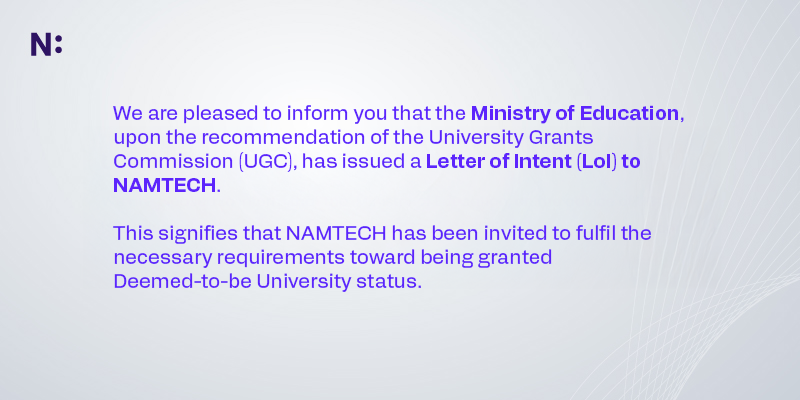
Deemed-to-be University - LOI Received  | Admissions Open | Support the Cause



Dr. Sudhir Kumar Singh
I am an academic and researcher specializing in the application of machine learning and deep learning to engineering systems, with a particular focus on smart manufacturing, mining, and geotechnical domains. My work integrates advanced AI techniques such as computer vision, object detection, and predictive modeling to solve real-world industrial problems, including defect detection, process optimization, and safety assessment. I have hands-on experience developing and deploying deep learning models (e.g., YOLO-based frameworks and transfer learning approaches) for tasks such as weld quality classification and automated inspection systems. In addition, I actively explore the convergence of AI with emerging Industry 4.0 technologies, including digital twins, IoT-enabled systems, and autonomous robotics. As an educator, I design and deliver interdisciplinary curricula that bridge theoretical foundations with practical implementation, enabling students and professionals to apply AI-driven solutions in complex engineering environments. My research and teaching aim to advance data-driven decision-making and intelligent automation across modern industrial ecosystems.
2019-2024 Ph.D.
- Applied ML/DL in the field of Geotechnical Engineering, Indian Institute of Technology, Kharagpur
- Research focused on applying machine learning and deep learning techniques to geotechnical and mining problems, including data-driven modeling and analysis
2013-2017 B.Tech
- Mining Engineering, Indian Institute of Technology, Kharagpur
- Strong foundation in mining systems, rock mechanics, and analytical problem-solving
2024-2025
- Assistant Professor, Teaching and developing courses in AI, machine learning, and Industry 4.0; designing hands-on labs involving computer vision, robotics, and digital twins; mentoring students in applied AI projects, Smart Manufacturing / AI, Namtech
July 2002 to August 2022
- Management Trainee, Worked on mining operations, safety, and production management; gained practical exposure to real-world mining challenges and industrial systems, Mining Engineering, Coal India Limited
- Kumar, S.K. Singh, B. Samanta, et al. Risk assessment in sociotechnical systems based on functional resonance analysis method and hierarchical fuzzy inference tree. Sci Rep 15, 23827 (2025). SCIE. DOI: https://doi.org/10.1038/s41598- 025-10063-5
- A Pandey, K. Singh, SJ Sridharan, et al. Predictive control of underground mine spray chambers: An integrated machine learning and IoT Approach. International Journal of Refrigeration 179, 142-155 (2025). DOI:https://doi.org/10.1016/j.ijrefrig.2025.08.009
- K. Singh, D. Chakravarty, Predicting the Stability of Rock Slopes in the Presence of Diverse Joint Networks and External Factors Using Machine Learning Algorithms. Mining, Metallurgy Exploration. 41, 2421–2440 (2024). DOI: 10.1007/s42461-024-01060-9
- K. Singh, D. Chakravarty (2024), Advanced Machine Learning for Slope Stability Analysis Under Non-homogeneous Conditions: A Comprehensive Mine Study. In: Gorai, A.K., Ram, S., Bishwal, R.M., Bhowmik, S. (eds) Sustainable and Innovative Mining Practices. ICSIMP 2023. Springer Proceedings in Earth and Environmental Sciences. Springer, Cham. DOI: 10.1007/978-3-031-76614-5_22
- K. Singh, D. Chakravarty, Assessment of Slope Stability using Classification and Regression Algorithms Subjected to Internal and External Factors. Archives of Mining Sciences. 68 (1), 87–102 (2023). SCIE. DOI: 10.24425/ams.2023.144319
- K. Singh, D. Chakravarty, Efficient and Reliable Prediction of Dump Slope Stability in Mines using Machine Learning: An in-depth Feature Importance Analysis. Archives of Mining Sciences. (2023). DOI: 10.24425/ams.2023.148157
- K. Singh, D. Chakravarty (2023). Interpretable Predictions: Machine Learning Approaches to Understand Slope Stability in the Presence of Joint Networks. In: Sinha, A., Sarkar, B.C., Mandal, P.K. (eds) Proceedings of the 10th Asian Mining Congress 2023. AMC 2023. Springer Proceedings in Earth and Environmental Sciences. Springer, Cham. DOI: https://doi.org/10.1007/978-3-031-46966-4_16
- AI-driven predictive analytics for sustainable manufacturing and geotechnical systems, focused on safety, efficiency, and resilient infrastructure design.
Leadership